






 Portuguese
  Spanish
 3 min of reading



The Court of Justice of the State of Rio de Janeiro (TJRJ) Will Analyze a Lawsuit Involving a Possible Refund of R$ 10 Billion in ICMS for the Oil Sector, a Dispute Between Subsea7 and the State. Experts Discuss the Legality and Economic Impacts of This Decision.
Understand the Legal Dispute – The Court of Justice of the State of Rio de Janeiro (TJRJ) is Set to Rule on a Lawsuit That Could Bring R$ 10 Billion to the Oil Sector. The Legal Dispute is Between the Oil Company Subsea7 and the State of Rio de Janeiro.
The Company Aims to Review Article 8 of the State Law 8.890/2020, Which Establishes the Condition of Waiving Resources and Administrative and Judicial Defenses, as Well as the Waiver of Rights That Challenge the Incidence of ICMS on the Import of Goods or Merchandise Under the State Repetro.
Legal View of Mariana Valença: The Waiver of Rights as Disproportionate Restriction and Incompatible with Constitutional Precepts.
Mariana Valença, Tax Attorney at Murayama, Affonso Ferreira and Mota Advogados, Explains That the State Repetro Plays a Crucial Role in the Effective Operation of the Industry, Being Essential for Maintaining Competitiveness and Attracting Investments in the Sector. “However, by Imposing the Requirement of Waiving Legitimate Rights to Challenge the Incidence of ICMS, the Regulation Establishes a Disproportionate Restriction That Is Incompatible with the Constitutional Precepts of Broad Defense and Contradictory.”
-
The next few hours will be marked by increasing tension regarding the stance to be adopted by the Central Bank’s Monetary Policy Committee (Copom/BC) concerning the benchmark interest rate (Selic) at the end of this Wednesday’s (17th) meeting. Although the market is ‘divided’ on the committee’s decision, the stronger trend in recent weeks is that the rate will remain unchanged at the current level of 14.50% per year. Meanwhile, a minority faction still ‘bets’ on a 0.25 percentage point (p.p) decrease.

-
Casa CazéTV transforms internet chat into a live event during the World Cup, targeting over 100,000 fans in São Paulo and Rio, and boosts a Brazilian experience company that expects to grow up to 60% with shows, big screens, activations, and Brazil’s games.

-
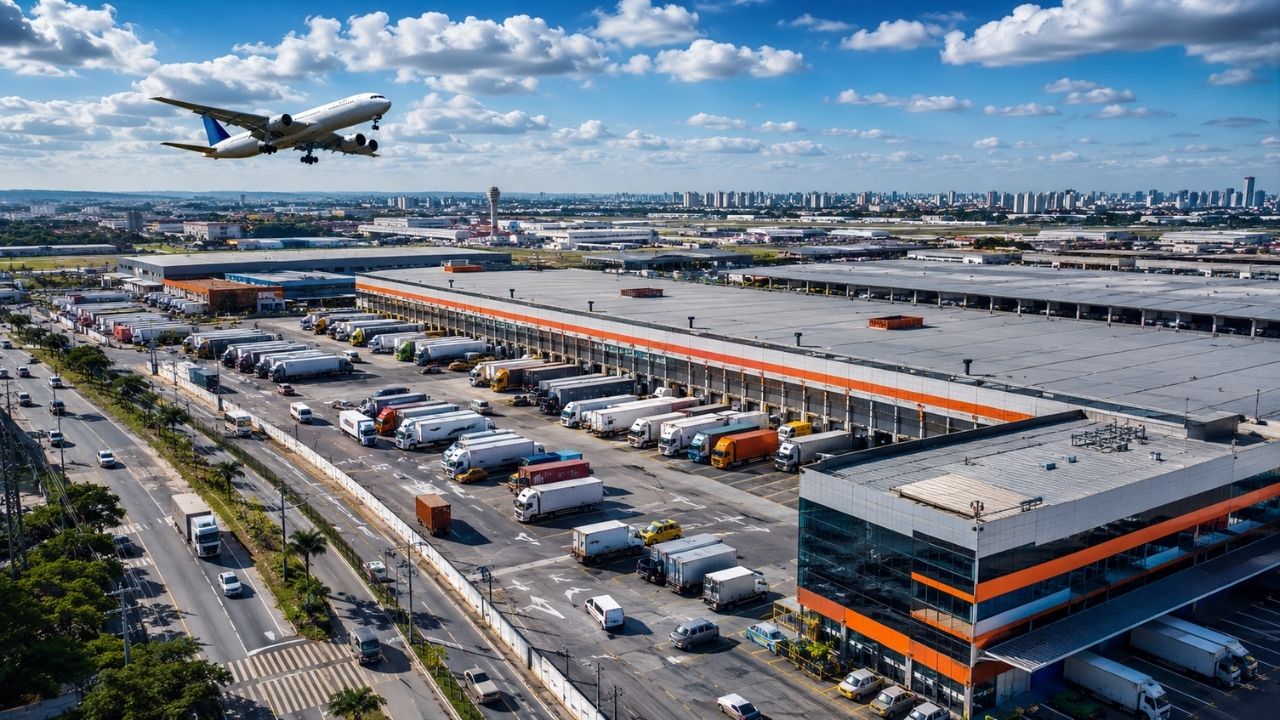
Guarulhos becomes the “Faria Lima of warehouses” with logistics square meter at R$ 37.11, more expensive than the São Paulo capital, while Shopee, Mercado Livre, Amazon, and billion-dollar funds compete for space near the largest airport in South America.
-
Amazon plans to invest more than R$ 1 billion to transform the Brazilian airport into a major cargo hub; the agreement with the city hall is expected to be signed by 2026 and could generate around 5,000 jobs.




“The Unconstitutionality of This Condition Is Based on Preserving the Right of Taxpayers to Seek, Within Due Process, the Review of Tax Issues, Ensuring Their Protection and Defense of Their Legitimate Interests. In This Sense, the Imposition of Waiving Procedural Rights Conflicts with Basic Constitutional Principles, Demanding a Careful Review of the Regulation in Question,” Emphasizes the Specialist.
Repetro and Economic Development: The Risks of Discouraging Investment and Harming Growth.
The Attorney Also Points Out That the Imposition of This Condition Contradicts the Principle of Tax Equality by Creating an Unjustified Discrimination Among Taxpayers Who Wish to Adhere to the State Repetro Regime. “Such Discrimination Does Not Find Support in the Legal System and May Result in Differentiated and Disadvantageous Treatment for Certain Taxpayers, Compromising Fairness in the Tax System,” She States.
“The Implementation of the Repetro Seeks to Promote Economic Development and Job Creation, Enhancing the Competitiveness of the Sector. However, by Imposing the Requirement of Waiving Legal Rights to Challenge, the Regulation Creates an Unfavorable Environment for Taxpayers, Discouraging Investment and Harming the Economic Growth of the State,” Concludes Mariana Valença.
Impact on the Competitiveness of the Oil Sector: Leonardo Roesler Discusses the Potential Reduction of Tax Pressure and the Implications for Companies.
For Leonardo Roesler, Tax Attorney and Partner at RMS Advogados, the Ruling of the TJRJ May Lead to a Mitigation of Tax Pressure on the Oil Sector, Considering the Unnecessity of Collecting the Mentioned Share to the Temporary Budget Fund (FOT).
“This, In Turn, May Propel the Competitiveness of the Oil Sector, Since, With the Mitigation of Burdens, Companies Will Be Able to Operate with an Optimized Cost Structure. Furthermore, the Decision Establishes a Jurisprudential Paradigm That May Be Invoked in Similar Lawsuits That Challenge the Constitutionality of the Deposit in the FOT,” the Attorney Declared.
Source: Larissa Passos, Q Comunicação








Be the first to react!