Portuguese
  Spanish


While The Chip Crisis Still Echoes In The Industry’s Memory, Scarcity Of Rare Earth Magnets, Dominated By China, Threatens To Paralyze Factories In Europe, The US, And Japan And Impact Brazil With Price Increases And Shortages
The global automotive industry is on the brink of a new crisis of historic proportions, and this time, the villain is not semiconductors. Rare earth magnets, essential components in modern vehicles, are about to disappear from global supply chains due to severe restrictions imposed by China. The logistical collapse threatens to disrupt the production of electric and combustion cars in factories across Europe, the United States, and Asia by July.
Giants like General Motors, BMW, and Mercedes-Benz have entered emergency mode, initiating shutdowns, activating strategic stockpiles, and seeking technological alternatives that are still years away from being viable. As if that weren’t enough, countries like Brazil, reliant on imported parts, may also feel the impact with rising prices and delivery delays. The source of the problem: the powerful yet discreet rare earth magnets.
-
Sales of Brazil’s Cheapest Electric Car Halted Before First Deliveries: E-Motors Suspends Emova Easy Due to Import Tax Increase and Rising Freight Costs

-
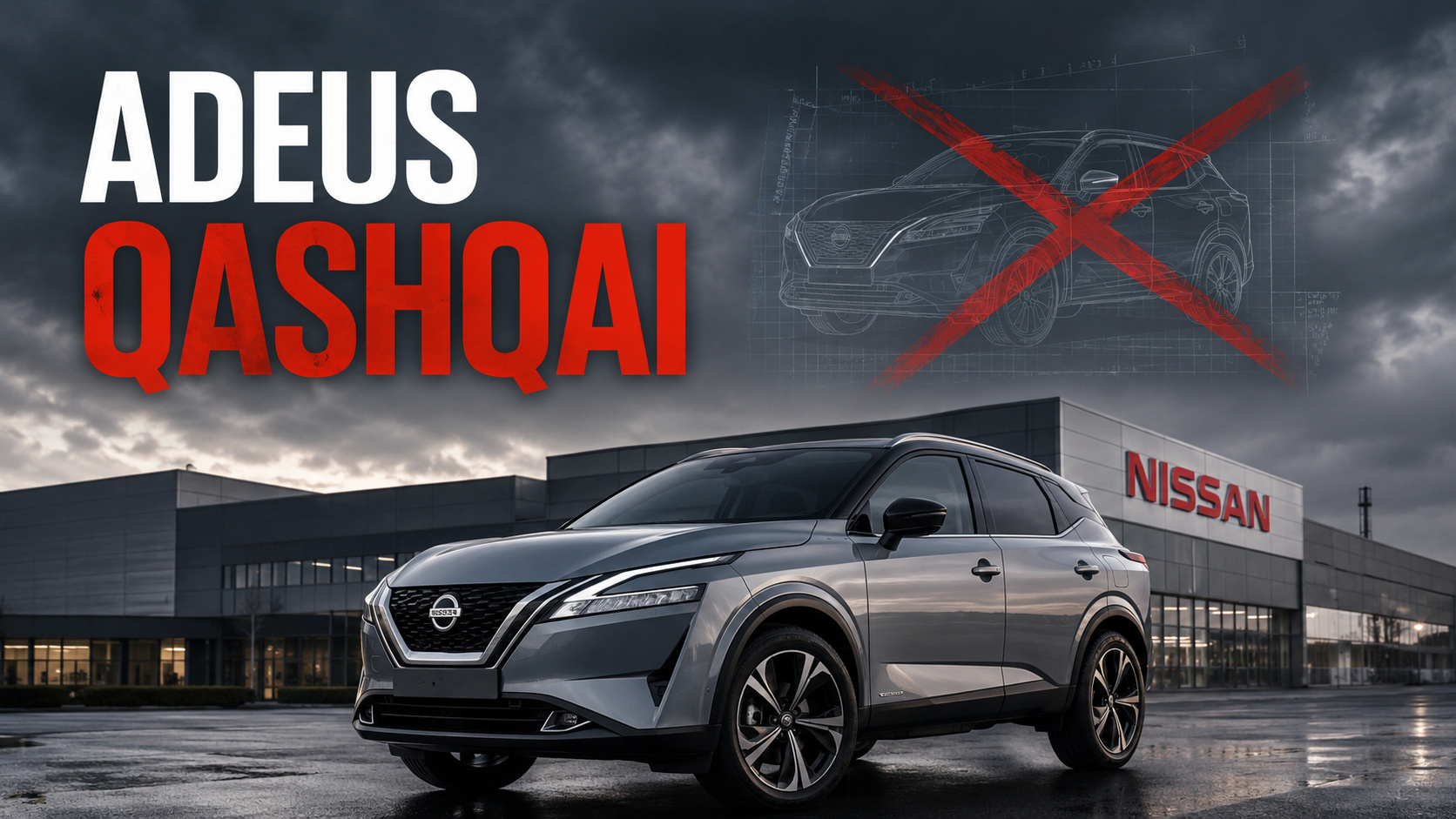
Nissan Discontinues Qashqai SUV Amid Cost-Cutting, Chinese Competition, and Product Line Review

-
BYD Patents Revolutionary System Using Computer Vision to Detect Animals Under Cars Before Starting, Preventing Tragedies

-
Study Reveals Why Cars Are More Expensive to Produce and Buy in Brazil Compared to Mexico, Highlighting Taxes, Logistics, and Industrial Costs as Key Factors.



An Announced Crisis: The Panic In Automakers
By 2025, automakers like Ford, Suzuki, and Mercedes-Benz have already started targeted shutdowns of their assembly lines due to a lack of permanent magnets, according to reports from Reuters and Motor Show. In Germany, the CEO of magnet manufacturer Magnosphere reported that “the entire industry is in total panic” and that “executives are willing to pay any price” to secure supply.
The reason for the imminent collapse is the extreme dependency on China. The Asian country holds 70% of global rare earth mining, 85% of refining capacity, and 90% of the production of magnets that equip electric motors, sensors, brakes, and over 30 systems in modern cars, ranging from premium vehicles to urban compacts.
The situation worsened in April when Beijing imposed new export restrictions on seven critical elements, requiring special licenses for sending magnets abroad. Only 25% of requests have been approved, blocking shipments and causing a ripple effect in global supply chains.
American automakers have already requested direct intervention from the White House, and the European Union has accelerated its debate on its Critical Raw Materials Act, seeking to mine and refine rare earths on the continent itself.
What Are Rare Earth Magnets And Why Are They So Important?
Rare earth magnets, especially neodymium (NdFeB), are the most powerful in the world. Developed in the 1980s by General Motors and Sumitomo, they replaced ferrite and alnico magnets in modern applications that require extremely high magnetic performance, with energy density up to 18 times greater.
Compact, lightweight, and with immense magnetic strength, they are essential in electric motors, wind turbines, hard drives, medical equipment, and of course, in automobiles. An electric car can contain between 1 kg and 2 kg of these elements. Even combustion models, like the Jeep Compass, use up to 1 kg in brake sensors, electric steering, speakers, cameras, seat adjustments, among others.
The big problem: the production of these magnets is highly concentrated and difficult to replicate outside of China. Refining is complex, environmentally sensitive, and expensive. Heraeus, a recycling company in Germany, operates at only 1% of its capacity due to a lack of competitive demand in the face of Chinese hegemony.
Companies like Tesla, Renault, and BMW are working to reduce or eliminate the use of rare earth metals in their motors, but alternatives like ferrite magnets or motors without permanent magnets still do not scale in performance or cost.
Brazil At Risk: Dependency And Rising Prices
Although Brazil has not yet recorded shutdowns due to a lack of magnets, the risk is imminent. The 100% growth in sales of electrified vehicles in 2024 has increased the national exposure to the global crisis. Models like the Toyota Corolla Cross Hybrid, BYD Dolphin, and Volvo XC40 Recharge heavily rely on these imported components.
The country imports parts from North American and European suppliers, precisely those already facing bottlenecks. In a scenario of prolonged scarcity, there is an expectation of rising prices and reduced availability of hybrid and electric models.
Despite having rare earth reserves in Minas Gerais and the Northern region, Brazil has not yet developed a robust production chain to explore or refine them. Initiatives like the magnet factory in Lagoa Santa (MG) are still in their infancy.
Alternative Solutions: Innovation Or Illusion?
Some startups are attempting to break China’s hegemony. The American company Niron, for example, raised over US$ 250 million to develop rare earth-free magnets. Its first model may hit the market by 2029. Meanwhile, the English company Warwick Acoustics is developing magnetic speakers without rare earths, expected to be used in luxury cars by 2025.
Other automakers are seeking alternatives such as synchronous reluctance motors or ferrite magnets, but these technologies still do not deliver the same necessary magnetic performance in premium models or SUVs. General Motors, even having created neodymium magnets, is now racing to substitute them.
The reality is that replacing such a strategic component requires time, capital, industrial scale, and disruptive innovation, elements that are not ready by 2025. Analysts like Andy Leyland affirm that China’s dominance goes beyond magnets: the country also controls a significant part of the global supply of manganese, graphite, and aluminum.
If there is not a real diversification of supply chains, the industry may face a repetition, perhaps worse, of the semiconductor crisis. And this time, without chips or magnets, there will be no car to drive.