






 Portuguese
  Spanish
  4 min of reading
  14 comments


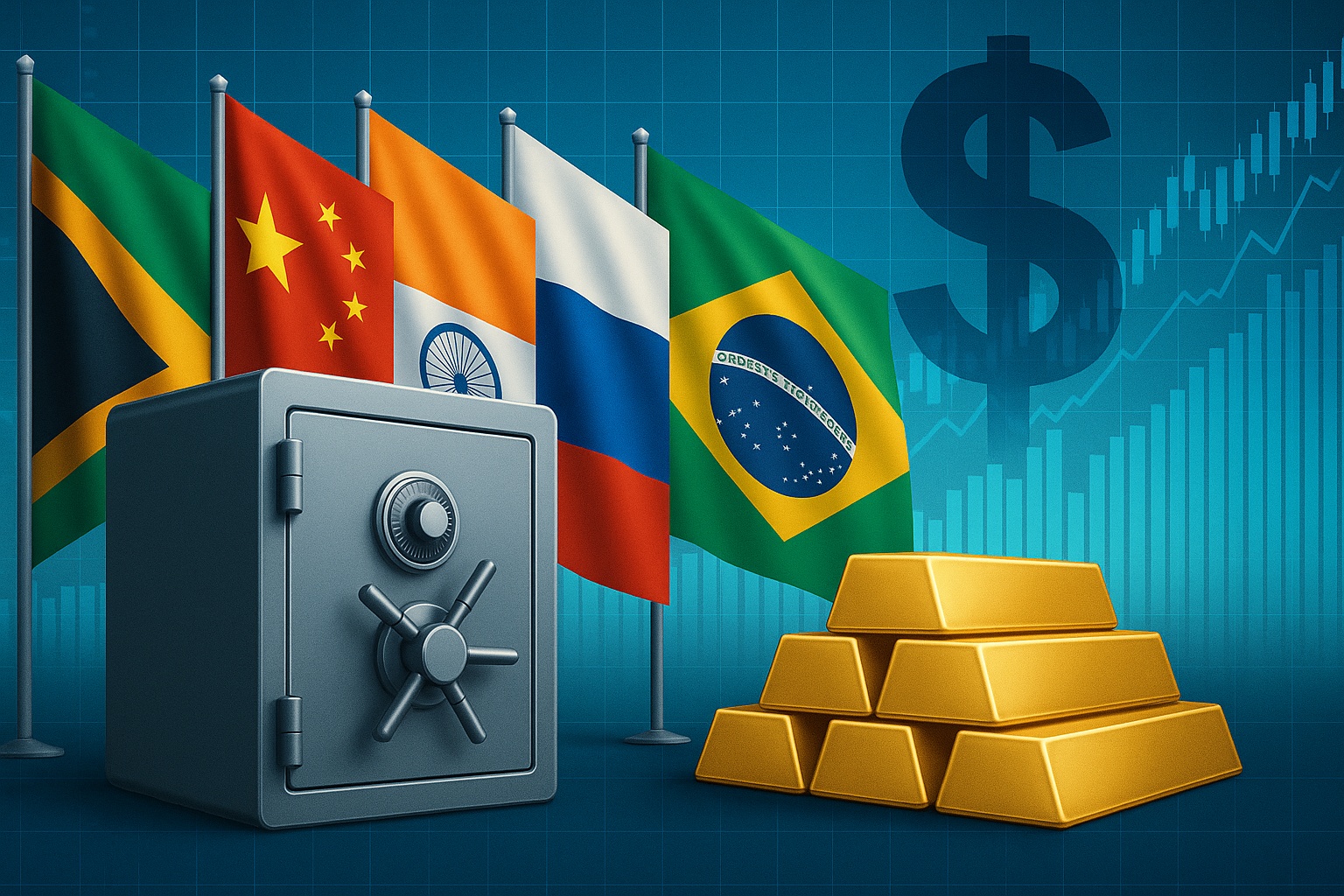


BRICS Resumes US$ 100 Billion Fund in 2025 to Shield Emerging Economies from Currency Shocks, Reduce IMF Power, and Project Brazil’s Protagonism.
In 2015, BRICS discreetly launched the Contingent Reserve Arrangement (CRA), a fund of US$ 100 billion aimed at protecting its economies from currency crises — a historic step towards the bloc’s independence from the International Monetary Fund (IMF). For years, the CRA remained almost invisible, overshadowed by other more visible initiatives such as the New Development Bank (NDB).
But in 2025, amid growing global instability, the fund returned to the spotlight. Paulo Nogueira Batista Jr., former vice president of the NDB and expert on BRICS mechanisms, argues that the arrangement could become a shield against capital flight and speculative attacks. In this context, Brazil could take on an unexpected leading role in this new chapter of the global financial architecture.
Why is the Fund Gaining Relevance in 2025?
The past few years have shown how emerging economies remain vulnerable to the tides of global markets. It takes only the Federal Reserve (the U.S. central bank) to raise interest rates, and billions of dollars quickly migrate from countries like Brazil, India, or South Africa to American bonds in search of safety.
-
Brazilian Joins Homeownership Consortium, Faces Decade of Dual Payments Totaling $141,000, Surpassing Traditional Mortgage

-
Land Rover to Halt Production in July, Putting 371 Jobs at Risk, as Chinese Automaker Negotiates to Convert Factory to 100,000 Vehicles Annually by 2027

-
Mexican Pest Threatens U.S. Cattle Herds at Historic Lows, Potentially Boosting Brazilian Beef Exports as Burger Prices Soar

-
Brazilian Freight Bill Progresses in Congress with $5,000 Minimum Wage, 70% Advance Payment, and Fines Up to $1 Million, as Agriculture and Industry Warn of Rising Costs and Legal Uncertainty


This was what happened in 2024, when Brazil registered a net outflow of US$ 1.8 billion in portfolio investments in just one month. Although Brazil’s international reserves remain robust, around US$ 340 billion, the pressure on the real reinforced the alert: without additional instruments, currency shocks could create dangerous instability.
It is at this point that the BRICS’ US$ 100 billion fund becomes strategic. It was designed precisely to provide emergency loans among members, reducing the need to resort to the IMF — an institution historically viewed as a tool of Western influence.
How the CRA Works
The Contingent Reserve Arrangement operates as a type of collective savings of BRICS.
- China accounts for the largest contribution, with US$ 41 billion.
- India, Russia, and Brazil each contribute US$ 18 billion.
- South Africa completes the total with US$ 5 billion.
In return, each country can withdraw funds in times of need, according to proportional quotas. This means that, in the event of capital flight or currency depression, Brazil could quickly access billions in resources, without depending on lengthy negotiations or the harsh conditions of the IMF.
Brazil’s Role in This New Arrangement
For Brazil, the CRA gains importance at a delicate moment.
- The country already faces currency volatility whenever the dollar strengthens globally.
- The Central Bank frequently resorts to currency swaps — expensive and short-term instruments.
- The Brazilian economy is still heavily dependent on commodities, vulnerable to fluctuations in global prices.
With a strengthened CRA, Brazil could rely on an immediate liquidity shield, reducing costs and ensuring greater financial stability. Furthermore, alongside China, the country could position itself as a political leader in the BRICS agenda for independence from the IMF.
The Contrast with the IMF
The main objective of the fund is not only technical: it is symbolic. For decades, emerging countries have been forced to turn to the IMF in crises, accepting harsh conditions such as privatizations, spending cuts, and structural reforms.
The CRA represents the possibility of an alternative “from the Global South to the Global South.” Instead of depending on Washington, countries could solve liquidity problems among themselves, creating a parallel system.
Of course, the scale is still limited: US$ 100 billion does not compare to the trillions available in institutions like the IMF. But the fund is a seed of autonomy, which could grow if countries increase their contributions.
The Geopolitical Factor: IMF vs. BRICS
The dispute is evident.
- For the U.S. and Europe, the creation of instruments like the CRA represents a threat to Western influence in the international financial system.
- For China, it is an opportunity to consolidate its role in global leadership, offering concrete alternatives to the dollar.
- For Brazil, it could be the chance to position itself not as a follower, but as a relevant actor in a new multipolar financial order.
In 2025, with discussions reignited, experts believe that Brazil could use the fund not only as protection but as a diplomatic tool to enhance its weight in the bloc.
The BRICS CRA in 2025 is both a strategic victory and a potential trap.
- Victory because it represents a real step towards financial independence, reducing vulnerability to the IMF and the dollar.
- Trap because its limited scale may create a false sense of security, leading countries to delay deeper internal reforms.
For Brazil, the message is clear: the US$ 100 billion fund could be the trump card to protect its economy in times of capital flight. But, if not accompanied by internal planning, it will remain merely a temporary cushion in a financial world still dominated by the dollar.
Brazil as a Protagonist in the New Financial Order?
Amid the debate, the central question is: to what extent is Brazil willing to assume a leading role within BRICS?
With robust reserves, one of the largest economies in the bloc, and an increasingly close relationship with China, the country has the conditions to use the CRA as a showcase for a new international stance: no longer as a follower of policies imposed by Western organizations, but as a co-producer of a new global financial architecture.
If Brazil seizes this window, it could transform its participation in the CRA into a symbol of sovereignty and an instrument of international influence.





Já pesquisaram quem vai ser o presidente do banco do BRICS, kkk.
É preciso que o banco do BRICS aceite projetos de Brasileiros nas diversas áreas em que possamos possibilitar melhorias diante a hegemonia domínio ocidental norte das América.
Bobeira sem tamanhonpois só permite usufruir da grana proporcional ao investimento. Então, por que não fazer o próprio caixa ao invés de acumular externamente?
Tem caroço nesse angu.
Larga de ser tonto rapaz, toda vez que o governo Lula fez superavit em seus governos, o congresso nacional surrupiou tudo, esses deputados federais ****, sempre estão contra o Brasil, entreguistas canalhas, melhor guardar nesse fundo do BRICS mesmo, se tivesse guardado aqui, o centrão e o PL,..ta teriam roubado tudo em emendas secretas.
Já tem mané. Ouviu falar em reservas cambiais? Kkkkkkkk…O Brasil tem uma de 340 bilhões de dólares e se você procurar a informação em boas fontes verá que esse CRA é mais um colchão para desmandos dos EUA e da Europa. Entendeu ou preciso desenhar?