






 Portuguese
  Spanish


State Launches A R$ 1.2 Billion Project To Rebuild And Adapt Roads And Bridges, Leveraging Technical Studies And Climate Resilience. The Program Prioritizes Safety And Regional Development After The Historic Floods Of 2024. Focusing On Mobility And The Economy, The Government Bets On The Future To Overcome Extreme Challenges.
A billion-dollar investment promises to transform the transportation infrastructure of Rio Grande do Sul in response to the challenges posed by the devastating floods of 2024.
The governor Eduardo Leite announced a package of works that goes far beyond simple reconstruction, aiming to prepare the state to withstand future climate adversities.
But what makes this project so ambitious? The details of this historic initiative show how the state seeks to rise efficiently with strategic vision.
-
With 26 Million Brazilian Families in Substandard Housing, Churches to Launch 2026 Challenge: Each Parish to Build or Renovate a Home for a Local Family

-
Wood-Look Aluminum Emerges as a High-Tech Alternative for Facades and Gates, Offering Sophisticated Aesthetics and Low Maintenance

-
Couple Transforms 1964 Concrete Water Tower into Four-Bedroom Home with Views of London Over Four Years
-
Family Quietly Transforms Old Sawmill into $700 Million Business, Opens 25 Stores in Two Years Across 22 Brazilian States


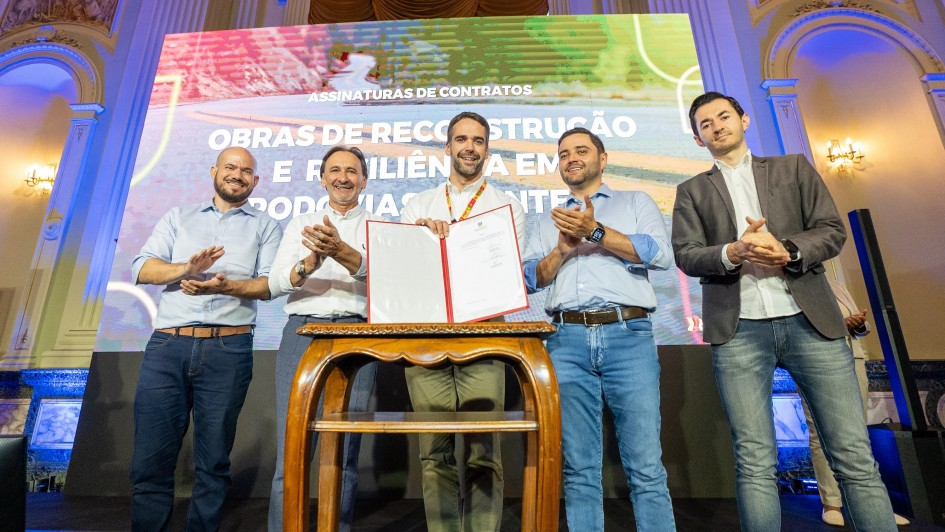
On the last Monday (1/20), during a ceremony at Palácio Piratini, Eduardo Leite and the Secretary of Logistics and Transport, Juvir Costella, officially announced the investment of R$ 1.2 billion for the reconstruction of bridges and highways.
The amount will be directed to 15 lots that cover 11 highways and three bridges, positively impacting various regions of the state.
Priority Works: Safety And Resilience
According to Leite, the works were planned based on technical criteria that prioritize safety and efficiency of the roads.
“It’s a set of interventions that deserved special treatment, with emergency hiring and technical rigor. It’s not just about rebuilding damaged structures, but ensuring they withstand new extreme climate events,” emphasized the governor.
This approach is part of the Rio Grande Plan, a program launched in 2024 that combines reconstruction, adaptation, and climate resilience.
The initiative aims to mitigate the social, economic, and environmental impacts caused by the floods. Of the R$ 1.2 billion allocated, R$ 1.18 billion will be invested in highways and R$ 65.6 million in bridges.
Studies And Criteria That Underpinned The Projects
To ensure the efficiency of resources, the works were prioritized based on seven factors: current condition of the highways, additional travel time, number of affected people, impact on the local economy, urban mobility, health, and traffic volume.
Another distinguishing feature of the project is the scientific support provided by the Hydraulic Research Institute (IPH) of the Federal University of Rio Grande do Sul (UFRGS).
The studies considered climate changes and risks of new extreme events, ensuring that the new structures are more resistant and durable.
Details Of The Interventions
Among the highways that will receive investments are:
- ERS-332 (Encantado to Anta Gorda and from Anta Gorda to Soledade);
- ERS-431 (Bento Gonçalves to Santa Bárbara);
- ERS-444 (Bento Gonçalves/Monte Belo do Sul to Santa Tereza);
- ERS-448 (Nova Roma do Sul to Rio das Antas and Rio das Antas to Farroupilha);
- ERS-452 (Bom Princípio to Caxias do Sul);
- VRS-826 (Feliz to Farroupilha);
- ERS-129 (Estrela to Roca Sales);
- ERS-149 (Nova Palma);
- ERS-348 (Dona Francisca to Agudo and other interconnections);
- ERS-437 (Vila Flores to Antônio Prado);
- ERS-640 (São Vicente do Sul to Rosário do Sul).
Among the bridges included are:
- Vista Alegre do Prata Bridge (ERS-441);
- Faxinal do Soturno Bridge (ERS-348);
- Arroio Capivari Bridge (Alegrete);
- Feliz Bridge (VRS-843, in project);
- Itati Bridge (ERS-417, in project);
- Sinimbu Bridge (RSC-471, in project).
The Vision Of The Future
Juvir Costella emphasized that this is a moment of rebirth for Rio Grande do Sul.
“Returning modern and safe structures to the gaucho people is to ensure mobility and dignity for those who need to rebuild their lives,” he stated.
The expectation is that the works will bring improvements not only for mobility but also for the regional economy.
Regional And Strategic Impact
With the reinforcement of roads and bridges, essential sectors such as agriculture, industry, and tourism are expected to benefit directly.
The increase in transportation efficiency will reduce logistical costs and boost the competitiveness of gaucho products in the national and international markets.
The plan is audacious, but reflects a proactive stance of the government in the face of climate crises. Is the rest of Brazil also prepared to follow this example?







Enquanto o noroeste do estado e a ponte de barra do guarita e itapiranga continuam esquecidos em nome de um bando de fiscais e servidores corruptos. Só Deus na esperança de melhoria para o extremo noroeste gaúcho.