Portuguese
  Spanish


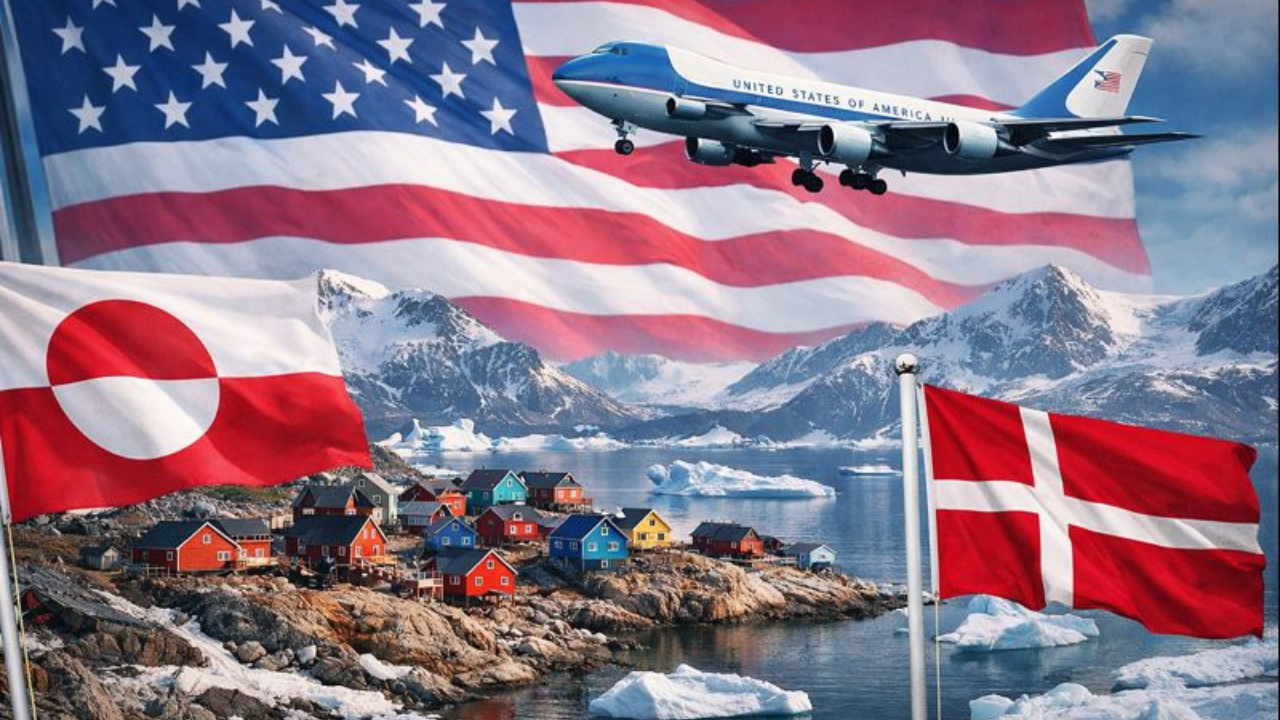


White House Analyzes Payments to Greenland Population as Part of Territorial Annexation Plan and National Security Enhancement.
The United States, under the leadership of President Donald Trump, is discussing plans to pay directly to the residents of Greenland with the aim of encouraging the territory’s separation from Denmark and eventually promoting a territorial annexation.
The talks are taking place within the White House, have gained momentum in recent days, and are part of a larger strategy of international geopolitics and national security, according to sources close to internal deliberations of the U.S. government.
Direct Payments Enter the Heart of U.S. Strategy
Among the proposals being analyzed by White House advisors is sending individual payments to around 57,000 inhabitants of Greenland.
-
U.S. Military Intervention Risk in Brazil Raises Alarm, Highlights National Sovereignty Amid Tensions Over Washington’s Terrorist Designation of PCC and Comando Vermelho

-
Brazilian Air Force’s Sole KC-30 Aircraft Completes Strategic Mission to Spain for 105mm Anti-Tank Ammunition for Leopard 1A5 Tanks

-
Brazilian Air Force Seeks to Acquire More Gripen Fighter Jets
-
U.S. Air Force Launches Air-to-Air Missile Project with Range of Up to 1,850 km for Indo-Pacific Operations



According to sources familiar with the matter, the amounts discussed range between US$ 10,000 and US$ 100,000 per person, although there is still no definition on logistics or timeline.
The idea seeks to create a financial pathway to enable territorial annexation, even in light of the official positions of Copenhagen and Nuuk that Greenland is not for sale.
Despite this, the proposal raises criticism for treating a complex political decision as a direct economic transaction.
Local Reaction Exposes Limits of Territorial Annexation
The Prime Minister of Greenland, Jens-Frederik Nielsen, publicly reacted to Trump’s recent statements.
“Enough! No more fantasies about annexation,” wrote the Greenlandic leader in a social media post on Sunday (4).
The statement reflects a recurring sentiment among the local population, which has been discussing its independence for decades but rejects the idea of integrating with the United States.
Surveys indicate that while there is majority support for separating from Denmark, the idea of joining the U.S. does not have popular backing.
Europe Reacts and Reinforces Greenland’s Sovereignty
Trump’s statements also provoked a strong reaction among European allies.
On Tuesday (6), France, Germany, Italy, Poland, Spain, the United Kingdom and Denmark issued a joint statement asserting that only Greenland and Denmark can decide about the territory’s future.
The stance holds weight as it involves NATO member countries, of which the United States and Denmark are part.
The episode raised diplomatic tensions and broadened the debate on the limits of American influence in international geopolitics.
White House Admits Studies on the Purchase of Greenland
When questioned about the discussions, the White House confirmed that the subject is being examined.
During a press briefing, press secretary Karoline Leavitt stated that Trump and his national security advisors are evaluating “what a possible purchase would look like.”
Secretary of State Marco Rubio announced that he will meet with Danish authorities in Washington to discuss the matter.
The Danish embassy preferred not to make an official comment.
National Security Drives U.S. Interest
Trump argues that Greenland is strategically important for the national security of the United States.
The territory contains mineral resources deemed essential for advanced military technologies and occupies a key position in the Arctic.
“We need Greenland from a national security standpoint, and Denmark won’t be able to do that,” Trump stated to reporters aboard Air Force One.
Additionally, the president asserts that the Western Hemisphere must remain under Washington’s direct influence.
Plan Gains Strength After International Operation
Sources indicate that the internal debate on territorial annexation has existed since before Trump’s inauguration.
However, discussions intensified after a recent operation that resulted in the capture of Venezuelan dictator Nicolás Maduro.
Advisors see the moment as an opportunity to advance long-term strategic objectives in international geopolitics.
Free Association Agreement Emerges as an Alternative
Another possibility under consideration is the signing of a Free Association Pact, a model already adopted by the U.S. with countries like Micronesia and Palau.
In this format, the United States offers military protection and essential services while gaining strategic operational freedom and commercial advantages.
For this to happen, Greenland would need to become independent from Denmark, which would require a complex political process.
Direct payments could theoretically be used as an incentive for a referendum.
Local Resistance Remains the Main Obstacle
Despite external pressures, the economic costs of independence still hinder internal advancements.
The financial dependence on Denmark and the rejection of incorporation into the United States keep the scenario undefined.
Thus, even with financial proposals and strategic interests, the territorial annexation of Greenland remains distant.
However, the debate is already repositioning the territory at the center of global power struggles, national security, and international influence.