






 Portuguese
  Spanish


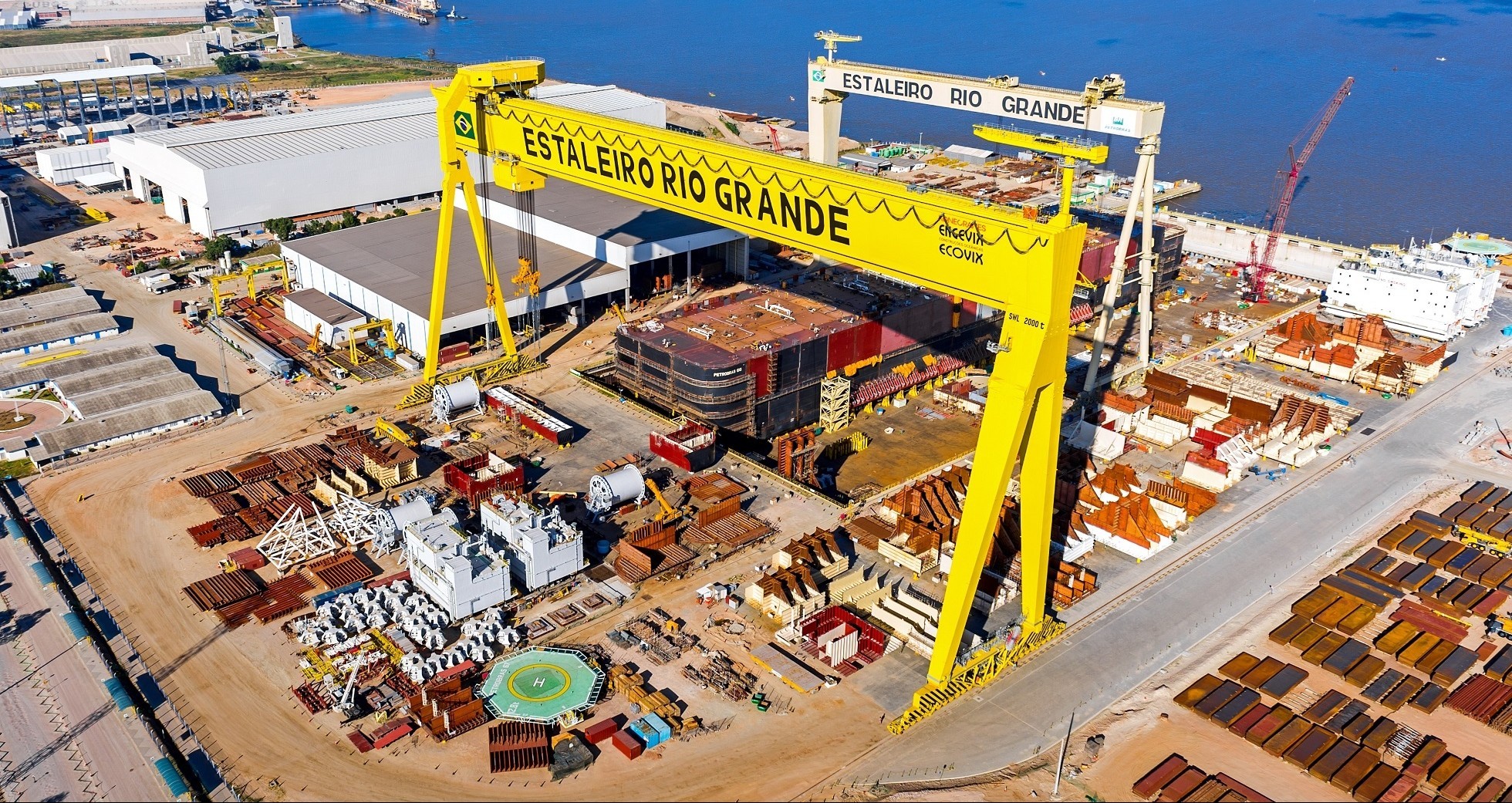

The Rio Grande Shipyard Will Repair the Vessel Siem Helix I. There Are Job Openings for Welders, Mechanics, and Plumbers
In the state of Rio Grande do Sul, the Rio Grande Shipyard has resumed operations after 5 years. The Siem Helix I, a well stimulation vessel operating in the Campos Basin, has entered the dry dock of the facility, where it will remain for about 45 days for repairs. With this operation, about 500 new jobs are open for painters, plumbers, and mechanics. Also read this news: Jurong Aracruz Shipyard Is Hiring for Many Job Openings
- ANTAQ: Cargo Movement in the Port Sector Grew 8.44% in Recent Months
- Maersk, Wilson Sons, and Rumo Offer Job Openings at High School, Technical, and Higher Education Levels
- Jurong Aracruz Shipyard Is Hiring for Many Job Openings on This Day 03
- Itaqui Port Receives 800 Million in Investments to Expand and Build New Terminals
- São Miguel Shipyard and the São Gonçalo City Hall Reach Agreement to Create New Job Openings
Job Generation in the Area
The resumption of the Rio Grande Shipyard has revived the economy of the state of Rio Grande do Sul, with the opening of 500 positions in various areas of the naval sector, especially for painters, welders, mechanics, and plumbers. INTERESTED PARTIES CAN CONTACT VIA EMAIL: recrutamento@ecovix.com.br.
For four years, the construction of platforms for oil extraction drove the activities of the shipyard. During this period, the city’s naval sector had up to 30,000 workers. However, in 2016, it began to suffer the impacts of Operation Car Wash, which investigated irregularities in Petrobras contracts.
-
The FLIP: A 108-Meter Ocean Laboratory That Stood Vertically for 60 Years, Dismantled in 2023

-
France Revamps 530 Social Housing Units with Large Balconies and Glass Facades Without Demolishing Existing Buildings
-
10-Year-Old Max Makes History with Paris Fashion Show, Launches Own Brand, Hires Staff, and Sets World Record as Youngest Runway Designer

-
Bolivian Female Construction Workers Form Association to Combat Discrimination and 38% Pay Gap in the Industry



The work on the vessel marks the resumption of the Shipyard’s operations in the naval area, after the cessation of activities in 2016 due to the sector’s crisis. Since then, Ecovix, the owner of the space, has undergone a judicial recovery process and, in the last two years, has been working to diversify the services at the facility. The Siem Helix I is 158.59 meters long and 36.8 meters wide. The service will be carried out in partnership between Ecovix and DockBrasil, a company from Rio de Janeiro that specializes in naval repair. In total, 500 jobs will be created for activities on the vessel, in addition to all the economic movement that will be driven by the activity in Rio Grande.
The Resumption of the Rio Grande Shipyard
The return of naval operations at the shipyard is viewed optimistically by the mayor of Rio Grande, Fábio Branco. The manager hopes that this operation will mark the beginning of a new virtuous cycle for the Shipyard and the entire region. “It is a milestone, without a doubt. The activity at the facility promotes more jobs not only in direct activity but in all areas, such as food, hospitality, and other services. It is an achievement for everyone, contributing to the revival of the city’s and region’s self-esteem,” he emphasizes.
Fernando Estima, Superintendent of Ports of RS, reminds us that the state government has been working to bring the Rio Grande – Porto Indústria project to fruition. The goal is precisely to attract new investments and optimize the use of port and retro-port areas. “Naval repair activities have always been on the horizon, as we have a shipyard with advanced technology, as well as a qualified workforce. The resumption of naval repair and construction activities, with job creation, is essential to ensure the future of shipyard areas,” Estima assesses.
From 2016 to December 2020, the areas and dry dock of the Shipyard remained completely obstructed with blocks of platforms leftover from suspended FPSO (Floating Production, Storage, and Offloading) contracts for five years. After the obstruction was cleared, it became possible to secure new business in the naval area.


