






 Portuguese
  Spanish


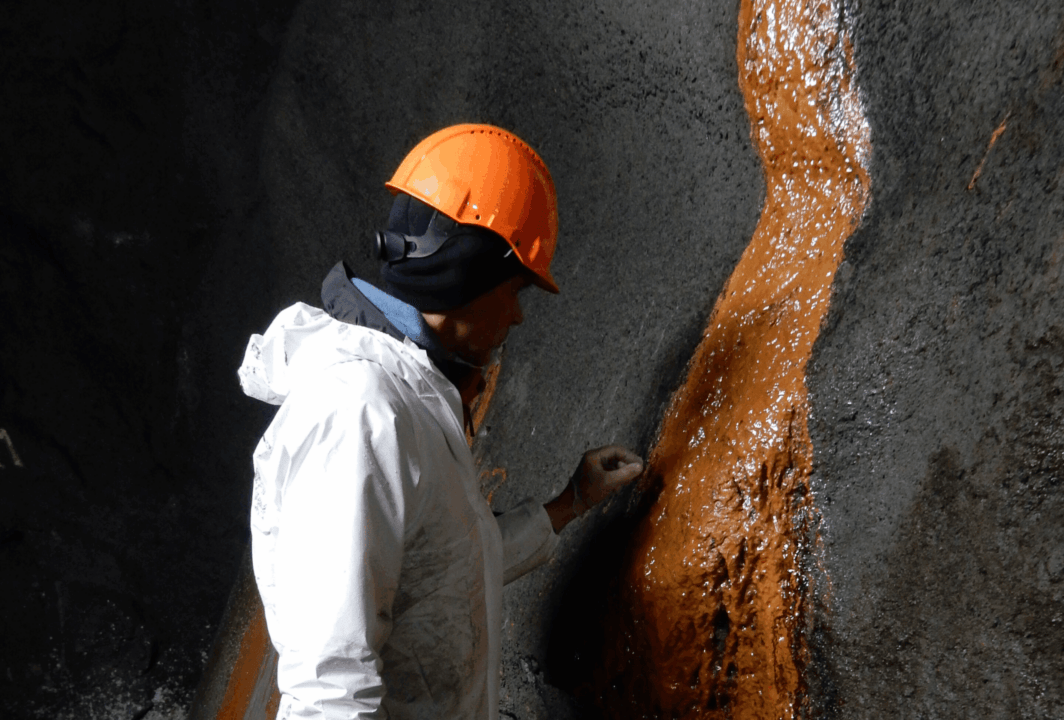

Concrete, considered one of the most resistant materials in engineering, is showing signs of premature wear in highway tunnels. The discovery worries authorities and engineers, who are seeking solutions to avoid safety risks and elevated maintenance costs.
A new study conducted by researchers at Chalmers University of Technology in Sweden raises alarms about the early degradation of concrete in highway tunnels.
The research analyzed the structures of the Oslofjord Tunnel in Norway and revealed an unexpected phenomenon: bacteria present in seawater form biofilms that corrode concrete at an accelerated rate.
The Role of Salty Water and Biofilms
Highway tunnels built in rock receive a spray of concrete on the walls and ceilings.
-
James Webb Telescope Uncovers Unexpected Clues on Mysterious Moon, Potentially Redefining Planetary Origins

-
$1.5 Billion Sleipnir Vessel Transforms Ocean into Floating Construction Site with 12 Hybrid Engines and Capacity to Lift 20,000 Tons

-
23 Years After Tragedy, Brazil’s Alcântara Space Center to Launch New Suborbital Rocket in 2026 with South Korean SEBIT Project Targeting Near-Space Tests
-
Entrepreneur Turns Neighbor’s Coffee Grounds Waste into Eco-Friendly Pellets, Earning Up to $40,000 Monthly in Brazil


This creates a uniform surface that is safe from rock falls. However, in areas close to the sea, such as the Oslo Fjord, this concrete is subject to what is called “saltwater intrusion“.
Seawater transports bacteria to the concrete, where they settle and form colonies known as biofilms.
These bacteria feed on compounds present in the concrete and, over time, cause significant damage.
According to Professor Frank Persson from Chalmers, degradation can reach up to one centimeter per year in affected areas.
Deeper and Faster Corrosion
Analyses conducted since 2014 have shown that degradation is progressive and more accelerated than previously thought.
The biofilm makes the surface of the concrete porous and damaged. Additionally, the bacteria consume elements like iron, manganese, sulfur, and nitrogen, further accelerating the corrosion process of the internal reinforcement of the concrete.
In extreme situations, researchers observed that concrete can be corroded by up to 10 centimeters over a period of five years.
This rapid advancement raises concerns about the durability of roadway structures built in marine environments.
Global Phenomenon and Still Little Studied
Shotcrete has been widely used since the 1990s. Despite this, few studies have focused on biocorrosion in underwater tunnels.
Professor Britt-Marie Wilén, also from Chalmers, explains that while the focus of the study was the Norwegian tunnel, similar situations may occur in other parts of the world.
She warns that new concrete, due to its high pH, is initially resistant to microbial activity. However, over time, the natural pH of the structure decreases, making it easier for bacteria to colonize.
Monitoring is Essential
The main recommendation from researchers is to maintain constant vigilance over these structures. Measuring the pH of the concrete and observing groundwater flow are fundamental measures to predict and contain the advancement of biofilms.
The study showed that slower groundwater flows tend to have a lower pH, which further favors the degradation of the concrete.
In areas with higher flow, the acid generated by the biofilm can be more easily neutralized, reducing the risk.
Another important measure suggested by scientists is to visually monitor the concrete. When there are signs of loose or deteriorated material, it may be necessary to apply a new layer of concrete to the damaged areas.
Impact of the Marine Environment and Climate Change
The marine environment, according to the authors, presents ideal conditions for the development of bacteria. The presence of salt not only promotes microbial growth but also intensifies the corrosion of the metallic reinforcement present in the concrete.
Climate change also emerges as a concerning factor. With rising ocean temperatures, the pH of the water tends to drop, creating an environment even more conducive to corrosion.
This relationship between temperature, salinity, and bacterial activity may intensify the wear of structures in the future.
New Techniques Reveal Unknown Microorganisms
During the research in the Oslofjord Tunnel, scientists utilized new DNA sequencing and data processing techniques.
This allowed them to identify previously unknown microorganisms and better understand how they interact with concrete.
These discoveries pave the way for new approaches in monitoring and maintaining underwater tunnels.
According to the authors, the study expands knowledge about biocorrosion and provides valuable information for engineers and authorities responsible for infrastructure.
Prevention and Safety Remain a Priority
Despite the seriousness of the phenomenon, experts assure that highway tunnels continue to be safe structures.
Monitoring done by Norwegian authorities ensures that any damage is detected before it poses a threat to motorists.
The research highlights, however, that ignoring the signs of biofilms can lead to high maintenance costs and expose users to unnecessary risks. Therefore, researchers advocate for a rigorous policy of inspection, prevention, and constant repair.
International Participation in the Study
The article published in the Scientific Reports involved the participation of Sabina Karačić, Carolina Suarez, Per Hagelia, Frank Persson, Oskar Modin, Paula Dalcin Martins, and Britt-Marie Wilén. The work underscores the importance of international collaboration in understanding the challenges faced by modern infrastructures in adverse environments.
Finally, scientists remind us that similar structures, even in contact with freshwater, may also be subject to degradation, albeit at a slower pace.
This reinforces the importance of expanding monitoring to other regions and adapting maintenance strategies to local conditions.


