






 Portuguese
  Spanish



ValeCard Survey Shows Stronger Ethanol Growth by the End of 2025, with Relevant Regional Variations and Direct Impact on Fuel Costs Nationwide
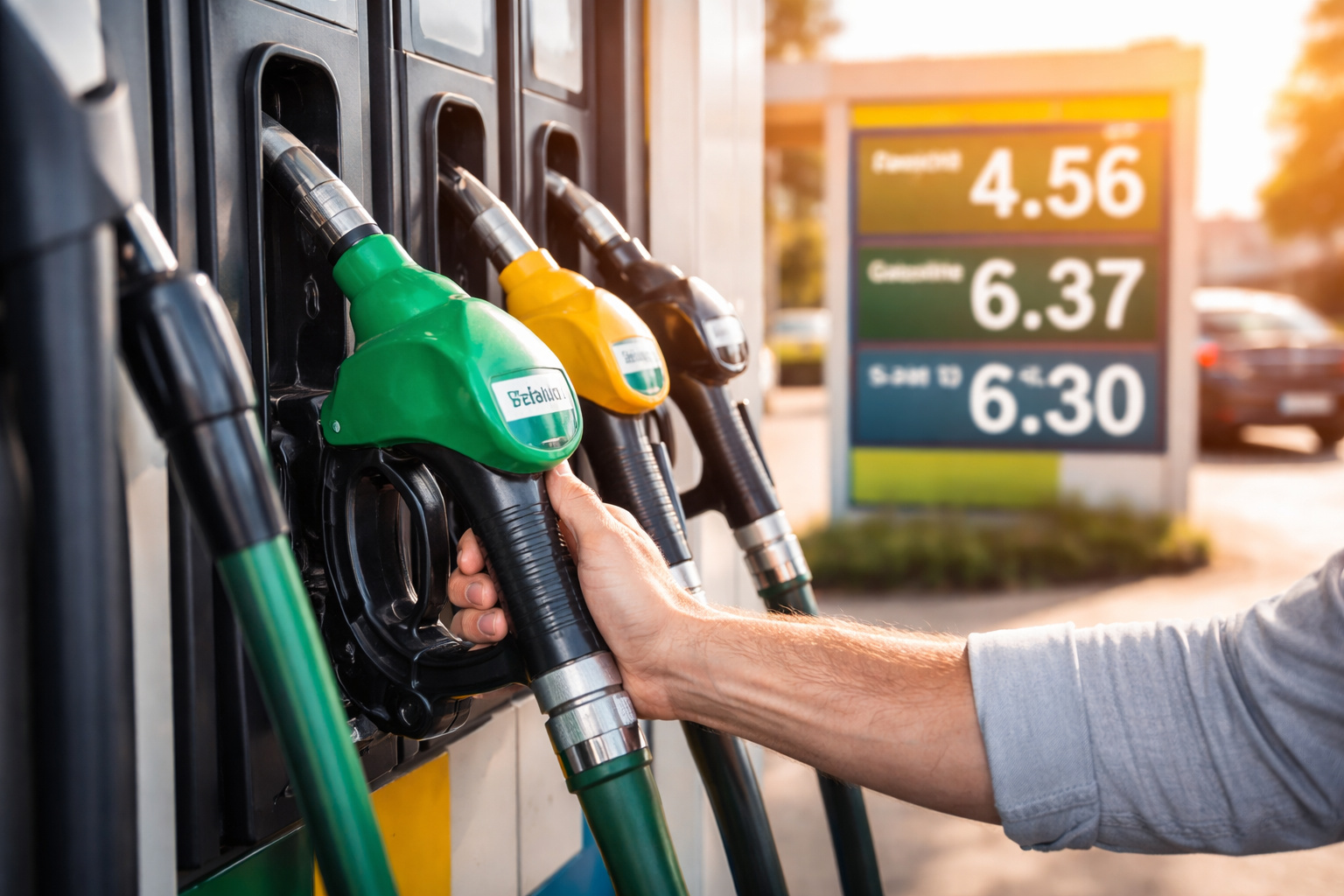
Ethanol was the fuel with the highest increase in December 2025, according to data compiled by ValeCard, a company specialized in payment methods, mobility, and corporate benefits. According to the survey conducted between December 1 and 28, 2025, based on transactions from over 25,000 accredited gas stations, the biofuel recorded an annual increase close to 7%, while gasoline and diesel showed more moderate movements.
In general, the national average price of common gasoline reached R$ 6.379, which represents a monthly increase of 0.13%. Still, compared to December 2024, the increase was limited to 1.08%, highlighting relative stability throughout 2025. Diesel S-10, on the other hand, also rose by 0.13% in December, reaching R$ 6.301, although it ended the year with a cumulative drop of 0.88%, partially easing logistical costs.
Ethanol Concentrates Highest Price Pressure at Year-End
On the other hand, ethanol showed the highest monthly percentage increase, with a rise of 2.04% in December, reaching R$ 4.560 in the national average. Furthermore, in annual comparison, the renewable fuel accumulated an elevation of 6.82%, marking the highest average level of the entire year of 2025. This movement occurred mainly due to seasonal factors in the sugar-energy sector, according to an analysis by ValeCard released in December 2025.
-
Drivers are falling for these scams without realizing: operation reveals closed gas stations, adulterated fuel, and hidden losses when refueling.

-
New Fiat EV, priced at R$ 77,000, will bring a reinterpretation of the 147 and a consumption equivalent to 70 km/l.

-
Petrobras surprises the market by cutting diesel by R$ 0.35 per liter, and the decision may ease the tax impact for drivers and transport companies.
-
Gasoline at R$ 4.99 makes drivers wait more than an hour at Havan gas stations in Santa Catarina, during a “zero tax” promotion with a limit of 15 liters per car and 25,000 liters available across five units of the network.





According to Marcelo Braga, Director of Mobility and Operations at the company, the end of the sugarcane harvest and the entry into the off-season reduced the ethanol supply just at a time of high demand, driven by school holidays and year-end travel. Thus, this combination put pressure on prices at the pumps more intensely than on fossil fuels.
Regional Variations Reinforce Distinct Behaviors
Meanwhile, gasoline showed uneven behavior across the states. In the North, there were significant declines, with Roraima (-2.25%), despite still having the highest average price in the country at R$ 7.332. In contrast, the Northeast and Southeast recorded more concentrated increases, particularly in Piauí (+0.71%), Pernambuco (+0.57%), and São Paulo (+0.39%), which remained among the cheapest states.
In the case of ethanol, price increases were widely distributed, affecting 22 states, notably Rondônia (+6.14%), Amazonas (+3.76%), and the Federal District (+3.12%). Nevertheless, São Paulo maintained one of the lowest average prices at R$ 4.332, enhancing its competitiveness in the consumption of the biofuel.
Where Ethanol Remains Most Advantageous in December 2025
According to ValeCard’s methodology, ethanol is financially worthwhile when its price is equal to or less than 70% of the gasoline price. Based on the data from December 2025, it was more advantageous to fill up with ethanol in Amapá, Mato Grosso, Mato Grosso do Sul, Paraná, Roraima, and São Paulo, considering only the average price relationship.
Diesel S-10 Maintains Stability Scenario for the Year
Finally, Diesel S-10 showed moderate variations, with increases in 18 states and decreases in nine. Santa Catarina led the monthly increases (+1.50%), while Rio Grande do Sul maintained the cheapest diesel in the country, even after a slight increase. Still, in the accumulated results for 2025, the fuel ended in decline after peaking in the first quarter, according to consolidated data at the end of the year.
Given this scenario, the behavior of fuels in 2025 reinforces a lower volatility environment, although ethanol remains pressured by seasonal factors, which requires increased attention from consumers when choosing the most advantageous fuel for filling up.








