Portuguese
  Spanish


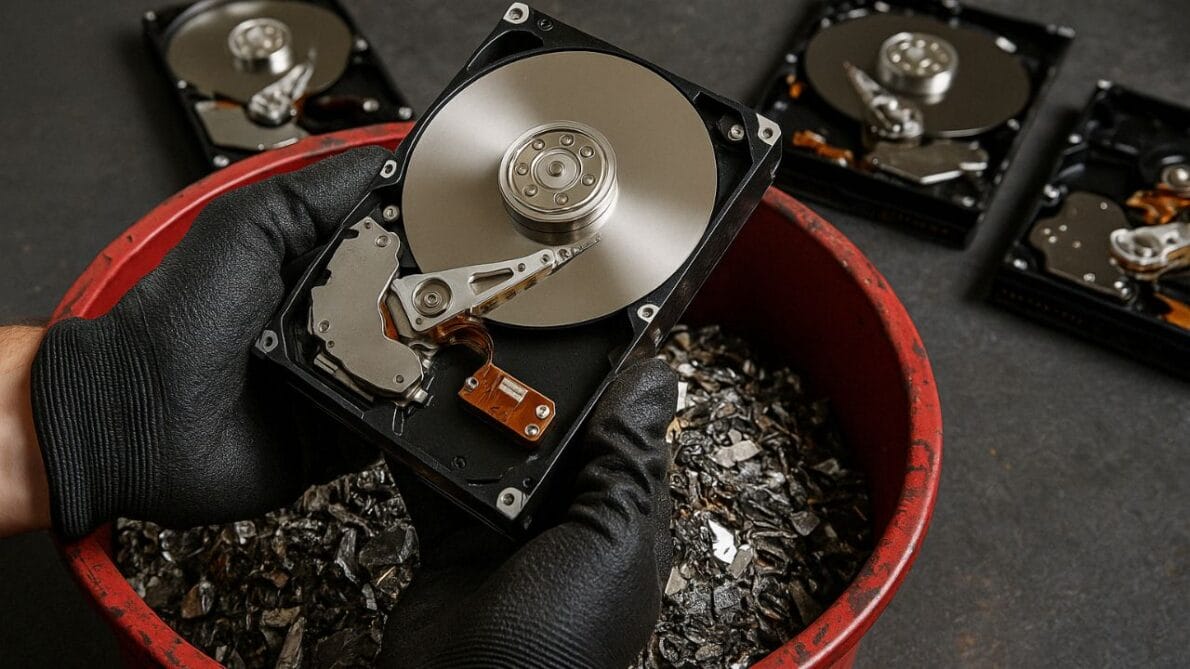

New Technique Allows Rare Earth Extraction With Less Environmental Impact And Strengthens Clean Supply Chains
American companies are recovering valuable metals from old hard drives, including rare earth elements, with an innovative and low-impact technology. The method can strengthen supply chains for electric vehicles and wind turbines, with significant gains for the transition to a sustainable energy matrix.
Pilot Project Converts Electronic Waste Into Sustainable Energy
Western Digital, Microsoft, Critical Materials Recycling (CMR), and PedalPoint Recycling are leading an initiative to repurpose about 50,000 pounds of hard drives and old server equipment. The proposal includes the extraction of elements such as neodymium, praseodymium, and dysprosium, essential in the production of electric motors and turbines, as well as metals like gold, copper, aluminum, and steel. These recycled resources are being reintegrated into supply chains that feed clean technology sectors such as wind energy, electric mobility, and high-efficiency electronics.
Clean Technology And Efficiency In Material Reuse
The highlight of the process is the acid-free dissolution recycling technology (ADR), developed by the Critical Materials Innovation Hub. Unlike conventional methods, this technique allows for a recovery of 90% of rare earths and base metals, with an overall reuse rate of 80% by mass. According to Interesting Engineering, the methodology also reduces greenhouse gas emissions by up to 95%, making it a promising solution for advancing sustainable energy policies and a circular economy.
-
Green Hydrogen Projects in Northeastern Brazil Stalled for 18 Months Awaiting Government Decree, Delaying Billions in Investments

-
Brazil Concludes Largest Energy Auction in History, Secures 18.97 GW and Mobilizes $12.8 Billion to Ensure Supply Until 2031
-
How Norway Produces More Energy Than It Consumes with Nearly 1,800 Hydropower Plants and Over 1,100 Reservoirs

-
Axia Energia Invests $280 Million in Q1, Increases Investments by 36%, and Turns Loss into $740 Million Profit


Direct Contribution To Energy Security And Advancement Of Sustainable Energy
By processing materials entirely on U.S. soil, the project also reinforces the security of strategic supplies, reducing dependence on imports. Microsoft provided obsolete equipment from its data centers for testing, demonstrating the scalable potential of the technology. For Jacky Jung, an executive at Western Digital, the model can set a new standard for electronic waste management, with direct benefits for the environment and the sustainable energy sector.
Next Steps And Expansion Of The Technology
With the pilot results deemed successful, the goal of the involved companies is to scale up the operation and incorporate more electronic components into the process. The intention is to encourage a more sustainable approach to the end-of-life of devices, creating a closed-loop resource reuse cycle. The initiative contributes to building a cleaner industrial ecosystem, connected to global demands for sustainable energy solutions and conscious use of materials.