Portuguese
  Spanish


Thermal energy storage in depleted oil reservoirs is being tested in California to store heat underground, generate electricity, and expand the debate on solar energy and mature fields. The demonstration anticipates 100 kW and more than 12 hours of storage, but it is still in the development phase before any commercial operation.
A depleted oil reservoir can take on a new role in California: storing heat underground to generate electricity later. The project plans a thermal energy storage demonstration unit, with a capacity of 100 kW and expected to provide electricity for more than 12 hours.
On July 25, 2024, the U.S. Department of Energy, the federal agency responsible for energy policies, published the selection of the 2023 program focused on solar thermal fuels and energy storage by concentrated solar heat. The official list includes the company Premier Resource Management, responsible for a demonstration planned for Bakersfield, California.
The program page identifies a 100-kilowatt electric demonstration plant, expected to store heat underground for more than 12 hours in depleted oil reservoirs. The record also classifies the initiative as a project in development, without indicating completed commercial operation.
-
French Port Harnesses Industrial Waste Heat to Power Up to 30,000 Homes

-
Belgian Port to Install Shore Power for Cruise Ships by 2027, Cutting Dock Emissions by Up to 5% and Meeting EU Regulations
-
Canadian Project Converts Hot Water from Mature Oil Fields into Electricity, Repurposing Existing Wells and Infrastructure
-
Finnish City to Store 90 GWh of Heat in Underground Caves by 2030 to Reduce Winter Reliance on Batteries and Immediate Energy



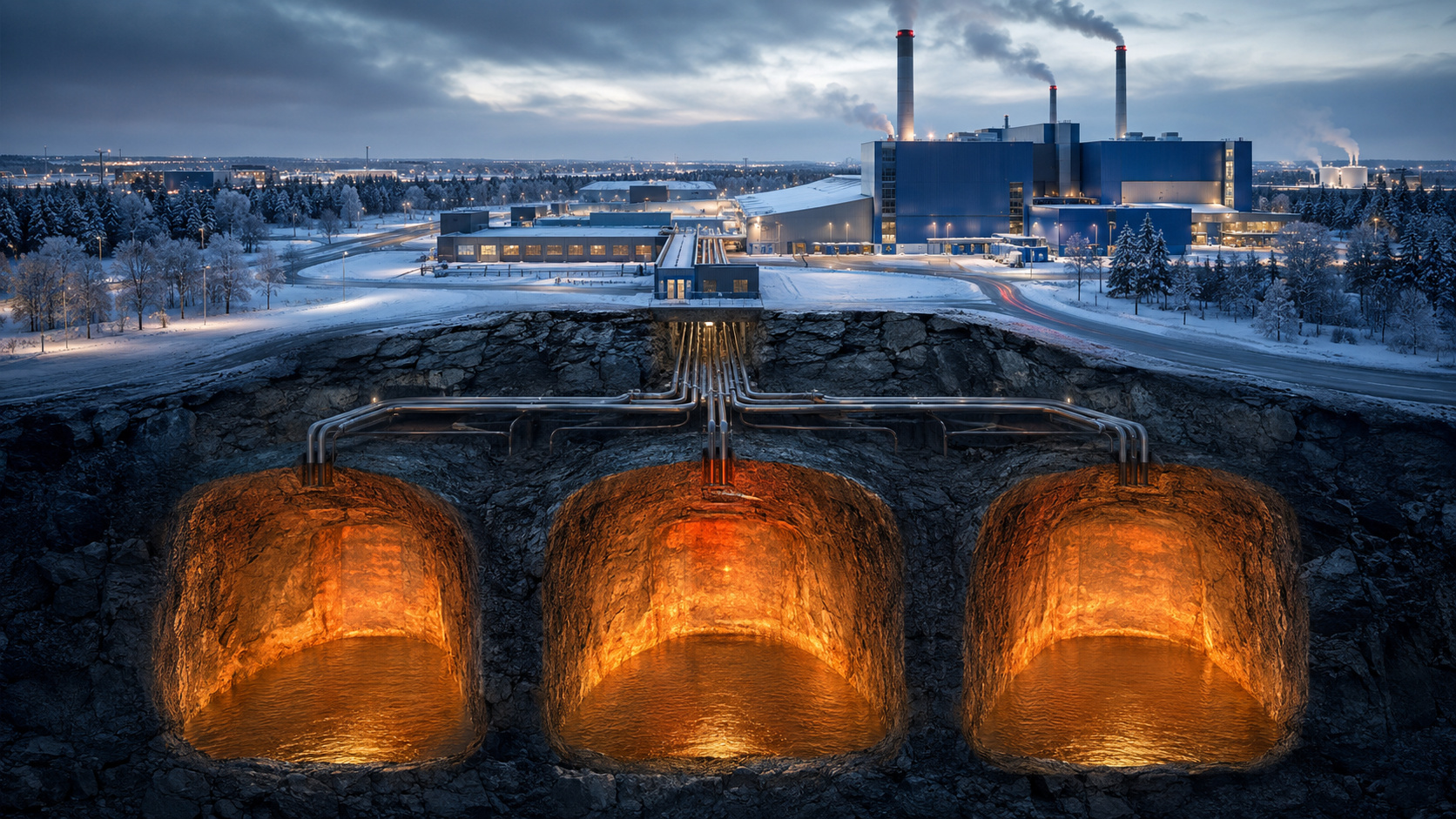
The system does not use batteries inside the wells. The technology intends to heat water with solar energy, take this heat to an underground formation, and recover it later to generate electricity at another time.
California project is still a demonstration in development
The planned unit is not a ready commercial plant. It is part of a line of research focused on the use of concentrated solar thermal energy, a system that uses the Sun’s heat to heat fluids and store energy.
The project involves engineering studies, risk analysis, cost evaluation, construction planning, and licensing stages. Complete construction, well drilling, solar equipment installation, and operational testing appear as later phases of the technical schedule.
This point avoids a misinterpretation: California has not gained a new energy source ready to supply the power grid. What exists is a pilot plant, created to demonstrate if the system can store and recover heat in a controlled manner.
Water heated by the Sun should carry heat to the reservoir
The planned operation is simple to understand. Solar equipment should heat water, which will be sent to an underground formation through an injection well. The hot water will be stored in the reservoir until it is needed.
Later, this water can return to the surface for industrial processes or for electricity generation. The reservoir is no longer seen only as a structure related to oil and is being tested as an underground heat reserve.
In practice, heat is the stored energy. Water functions as a means of transport, while the underground can help keep this energy available for longer. This is the basis of the thermal energy storage studied in the project.
Goal of 100 kW and more than 12 hours shows the real size of the test
The goal of 100 kW represents the expected electrical capacity for the demonstration unit. The period of more than 12 hours indicates the planned storage time before energy recovery.
These numbers do not place the project at the same level as a large power plant. The objective is to prove that heat can be stored in a depleted oil reservoir and used later, even when generation from renewable sources is lower.
The U.S. Department of Energy describes the technology as a possible way to store energy for longer periods and support the power grid when intermittent sources, like solar and wind, do not deliver enough energy for several hours.
Old wells may have a new function, but safety remains essential
Using old oil areas can reduce the need to start everything from scratch in some cases. Even so, each well, pipeline, and reservoir needs to be assessed before receiving heated water and operating in a new energy activity.
The Wells of Opportunity program, a federal initiative for well repurposing by the U.S. Department of Energy, the federal agency responsible for energy policies, explains that inactive or non-producing oil and gas wells need necessary repairs before safely operating with water. The initiative deals with geothermal energy, which harnesses the Earth’s natural heat.
After adaptation, water can be sent to the well, heated underground, and returned to the surface to generate electricity or serve heating and cooling systems. This use is not the same thermal storage project planned for Bakersfield, but it helps to show why well assessment is an essential step.
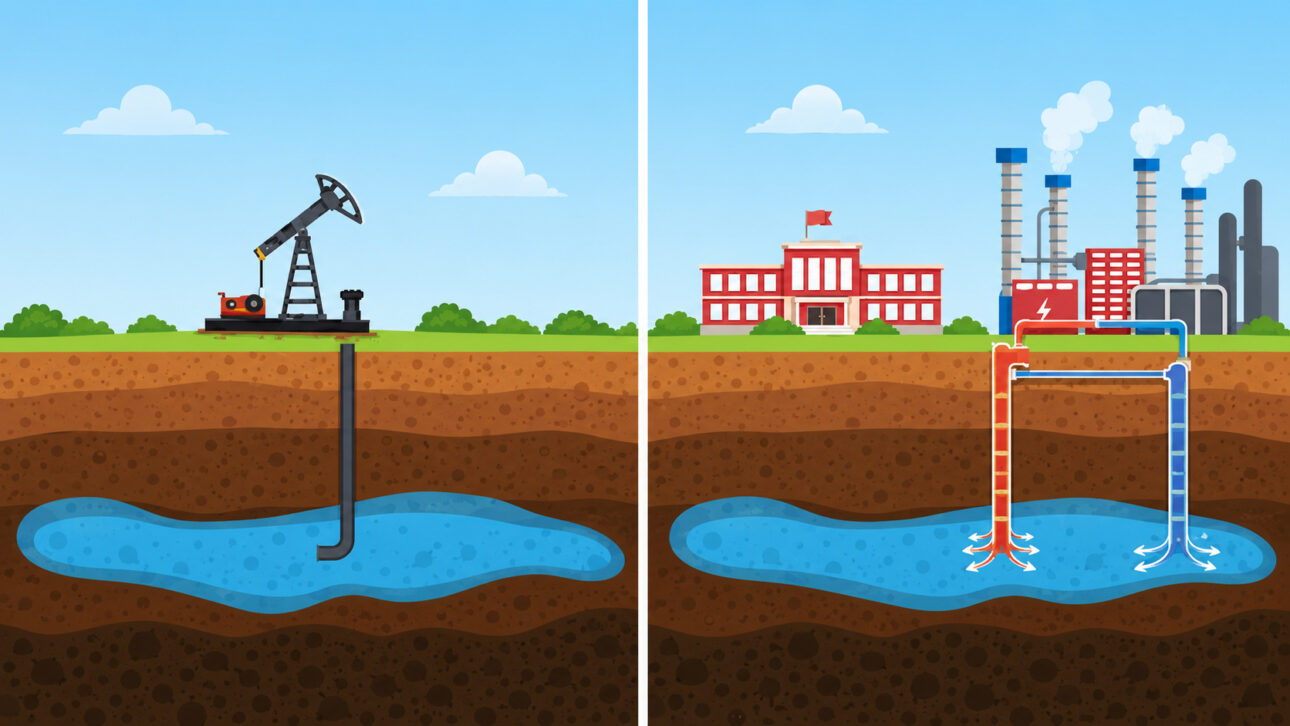
The mentioned program works with geothermal energy, which uses the natural heat from the underground. The California test follows another route, as it intends to store heat obtained from solar energy. Still, both cases show that the condition of the wells is decisive for any energy repurposing.
The California test may open discussion about mature fields in Brazil
The American case does not mean that every mature Brazilian field can become an energy reserve. Each area has its own rocks, water, pressure, wells, costs, and rules, which requires study before any decision.
The experience helps to broaden the debate on how areas that have lost oil production can receive other functions. In regions with a large presence of solar and wind energy, storing heat underground can be an alternative to using energy captured at a different time.
The biggest challenge is proving that the system maintains safety, controls heat losses, and offsets adaptation costs. The unit in California was planned precisely to address these questions before a larger application.
The Californian project shows an important shift in thinking: an exhausted oil reservoir can cease to represent just the end of an activity and start being studied as part of an energy system.
The goal of 100 kW for more than 12 hours still belongs to a demonstration but points to a possibility for the future of energy storage in areas marked by oil production.
Do you see the use of exhausted oil fields to store energy as a real opportunity or as a technology that still needs to prove safety and cost? Comment and share.