






 Portuguese
  Spanish
  5 min of reading
  0 comments


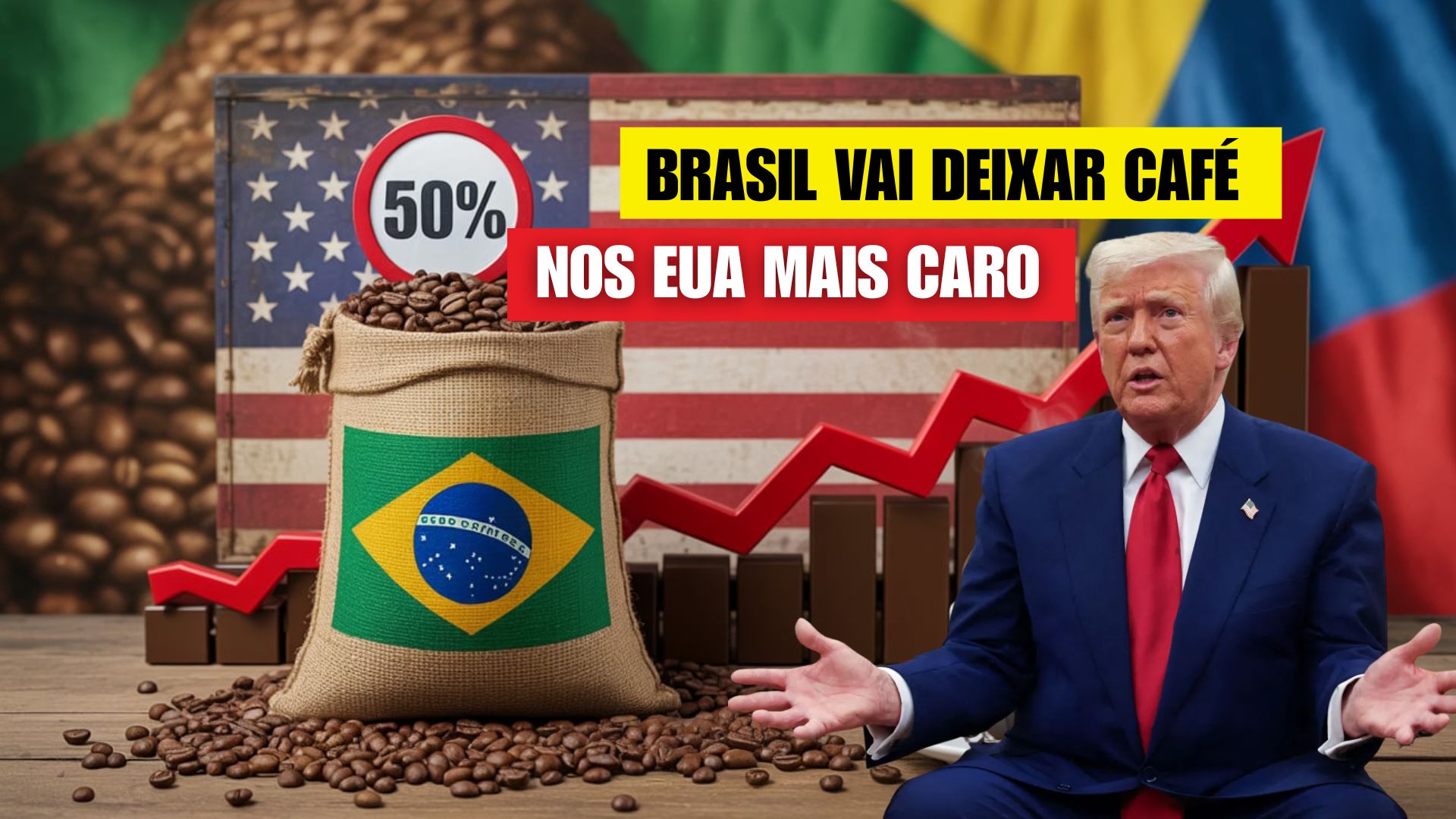
United States Maintains 50% Tariff on Brazilian Coffee While Allied Countries Are Exempted. Exports from Brazil to the U.S. Market Have Already Fallen Almost by Half and Germany May Take the Lead in Purchases of the National Grain.
The president of the Council of Exporters of Coffee from Brazil (Cecafé), Márcio Ferreira, warned that the United States could register the highest value ever paid by coffee consumers in history if they do not reverse the 50% tariff applied to Brazilian products.
The statement was made this Wednesday (10) in an interview with Record News Rural. According to Ferreira, the impacts of the measure are already appearing in exports.
In August, shipments to the North American market fell almost by half compared to the same month last year.
-
Low-Demand Brazilian Beef Offal Gains Popularity Abroad: Indonesia Purchases $19.5 Million, Boosting Revenue and Reducing Waste

-
Soy Expansion in Former Brazilian Savanna Sparks Water and Land Conflicts in Major Agricultural Frontier
-
Mexican Pest Threatens U.S. Cattle Herds at Historic Lows, Potentially Boosting Brazilian Beef Exports as Burger Prices Soar

-
Avocado Boom for European and U.S. Markets Fuels Water Crisis in Drought-Stricken Chilean Region




“There was a reduction of about 47% compared to August 2024. Even when we look at July, before the tariff, the drop was 27%,” he explained.
Germany Takes the Lead in Coffee Purchases
The official anticipated that the monthly statistical report from Cecafé, scheduled for Wednesday afternoon, should confirm Germany as the main destination for Brazilian coffee, surpassing the United States.
According to him, the European country significantly increased its acquisitions and is expected to expand its share in the global market with the national product.
Ferreira emphasized that Germany has a re-export profile, which may redirect part of this industrialized coffee to other markets.
“This shows a realignment of international trade, with Europe gaining ground while the United States loses market share,” he noted.


Coffee Prices Surge on International Markets
The executive also highlighted that the implementation of tariffs coincided with a surge in international markets.
“At the beginning of August, New York was at 286 points and, by the end of the month, it had already jumped to 386. London rose 45% in the same period,” he reported.
According to Ferreira, the increase happened even before the tariff was imposed.
He explained that, with the additional 50%, prices could reach unprecedented levels for North American consumers.
“If this rate is applied to current quotations, coffee in the U.S. could reach around 570, a price never seen before in the market,” he stated.
Sector Expects Tariff Review in the U.S.
In Washington, sector representatives participated in meetings with the State Department and public hearings at the U.S. Trade Representative’s office.
Cecafé was represented by its General Director, Marcos Matos. According to Ferreira, there were signs of openness from the U.S. government.
“President Donald Trump signed an executive order removing tariffs on other products and left open the possibility of extending this exemption to items not produced on U.S. soil, such as coffee,” he commented.
However, he noted that the decision also depends on political negotiations.
“It was worthwhile for us to go to Washington, but now we need to deepen conversations in Brazil to avoid missing this window of opportunity,” he added.
American Stocks Ensure Consumption for Up to Three Months
The official recalled that the United States still has sufficient Brazilian coffee stocks for two to three months, but the situation may worsen if no agreement is reached.
“This volatility is likely to continue because there is no excess production capable of fully meeting American demand,” he stated.
He emphasized that Europe and Asia have been placing timely orders to ensure supply amid uncertainty.
As he explained, this rush also affects the actions of speculative funds and roasters, further driving up international prices.
Consequences for Producers and Consumers
In addition to the direct impact on exports, the sector fears changes in the consumption profile in the U.S.
According to Ferreira, North Americans may reduce purchases of Brazilian arabica and turn to other suppliers or robusta coffee, whose production is expanding in countries like Vietnam and Brazil itself.
The president of Cecafé assessed that, in the medium and long term, high prices stimulate new plantings, mainly of robusta, even in states that traditionally did not cultivate the grain, such as Mato Grosso.
“An eventual surplus would be detrimental, as it would lower internal prices and further weaken Brazil’s market share in the American market,” he stated.
Brazilian Coffee Becomes More Expensive in the Domestic Market
In Brazil, the effects are already being felt. According to Ferreira, traditional roasting companies announced price increases of 10% to 15% for consumers.
He explained that the rise in international markets was immediate for producers but reaches supermarket shelves with a delay.
“Arabica rose 33% in August and conilon 50%. This movement benefits the producer, but for the consumer, price reductions, when they occur, also take time to reflect on the shelves,” he said.
The official also commented that, under normal conditions, there was an expectation of price stabilization in the last quarter of the year.
“With the tariffs and the increase already accumulated, it is impossible to talk about a drop in the short term,” he concluded.
Brazilian Government Should Intensify Negotiations
Ferreira announced that Cecafé will seek meetings in Brasília to present the results of the mission in Washington to the government and advocate for a joint effort to exempt the tariff.
“The moment requires dialogue between Brazilian and American authorities so that we can reverse this situation as soon as possible,” he stated to Record News Rural.
If the tariff does not decrease, the United States will have to choose between paying record prices or drastically reducing the consumption of Brazilian coffee.





-

1 person reacted to this.