Portuguese
  Spanish


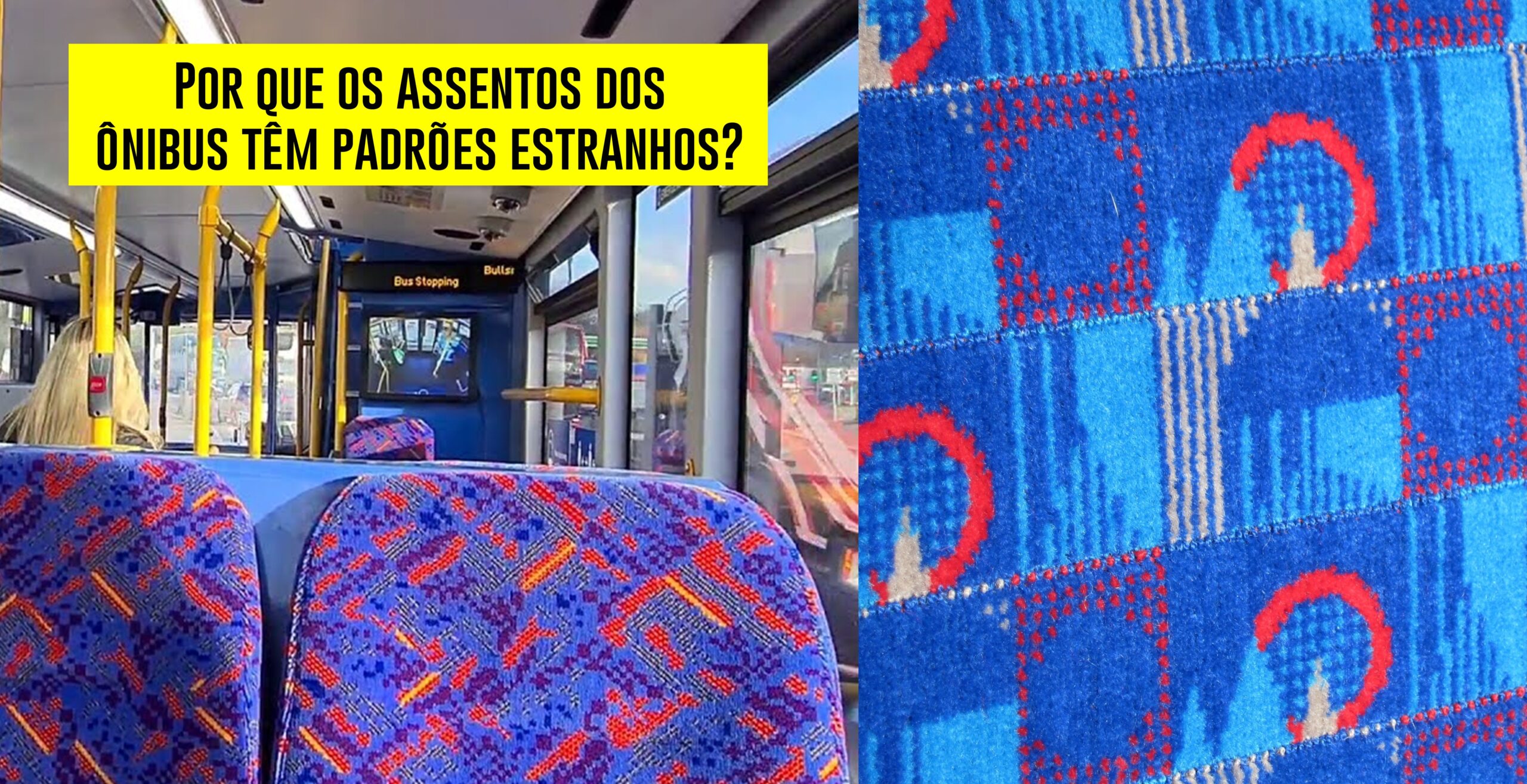


Have You Noticed That Bus Seats Have Strange Prints? There Is a Curious and Intelligent Reason for This! Find Out Now.
The design of bus seats rarely catches attention, but when it does, it’s hardly for the right reasons. Colorful, chaotic, and seemingly meaningless patterns are common in public transport.
But why do these seats have such peculiar designs? Is it an aesthetic issue or is there a practical reason behind it?
The Hidden Function of Strange Patterns on Bus Seats
Before understanding the reason for the extravagant patterns, imagine a simple experiment: hit a piece of wood against an upholstered fabric in your home.
-
Renault Kwid Outsider 2023: Affordable Used Hatchback with 1.0L Engine, 15.7 km/l Efficiency, and Ample Cargo Space for Around $11,000

-
Chevrolet SUV Offers 153 hp Engine, 620 km Range, and ADAS Features at a Lower Price Than a New Kwid

-
London buses run on biofuel made from coffee grounds, turning café waste into sustainable public transport fuel without engine modifications.

-
Major Automaker Considers Closing 4 Factories, Putting 45,000 Jobs at Risk Amid Chinese Competition in Brazil



In a few seconds, a cloud of dust would form around you. Now, think about the number of people who use the seats on a bus daily.
If there were someone to hit the public transport seats regularly, the result would be shocking.
The solution to hide dirt and wear is precisely the design. The multicolored and abstract patterns disguise stains, dust, and signs of use, keeping an appearance that is reasonably clean for longer.
Moreover, these patterns also help extend the time between deep cleanings, reducing maintenance costs for transport companies.
The Material That Makes a Difference
The fabrics used in public transport need to meet various demands beyond just hiding dirt.
They must be durable, fire-resistant, comfortable, and easy to clean. Therefore, materials like leather and vinyl have been discarded in many transport systems for not providing the best combination of comfort and safety.
One of the most common solutions adopted over the years has been the use of a fabric called moquette, which stands out for its combination of durability and functionality.
What Is Moquette?
Moquette, or automotive velvet fabric, is an upholstery fabric widely used in public transport, composed of 85% polyester and 15% nylon.
Its structure with upright fibers, known as “pile”, ensures that dirt stays hidden between the fibers, avoiding visible stains.
This fabric has several advantages:
- Durability: Resists a high volume of use and is less prone to tears and vandalism.
- Easy Maintenance: Hides dirt and stains, requiring less frequent cleanings.
- Safety: Flame-retardant, reducing risks in case of fire.
- Comfort: More breathable than leather or vinyl, avoiding thermal discomfort for passengers.
- Quick Drying: Water dissipates quickly, reducing moisture time.
- Sustainability: Some modern versions of moquette are made from recycled materials, making it a more eco-friendly option.
Because of this, moquette is an efficient material and widely used in transport networks around the world. Its choice is not random but rather the result of ongoing research to optimize passenger comfort and safety.
How Are Patterns Chosen on Buses?
The development of upholstery patterns is not random. Most designs are created by algorithms and follow strategic principles. The patterns must fulfill two main functions: camouflage dirt and reinforce the visual identity of the transport company.
To achieve this, some guidelines are followed:
- Avoid large areas of a single color, as dirt and wear would become visible quickly.
- Prefer darker tones, such as blue, brown, and beige, instead of light colors that easily show stains.
- Use various shapes, patterns, and contrasts to divert attention from any wear.
- Include elements that reinforce the visual identity of the company, such as institutional colors or logos disguised in the design.
- Consider color psychology to provide feelings of tranquility and comfort for passengers.
The Evolution of Seat Design in Public Transport
The design of seats in public transport has evolved over time as new technologies and materials emerge. While in the past wooden and hard metal benches predominated, today the trend is to use more ergonomic and sustainable materials.
Recently, research indicates that some cities have been exploring antimicrobial fabrics to reduce the spread of germs and improve hygiene in public transport. This innovation could be an important step for the future of urban mobility.
Bus seats may seem strange at first glance, but every detail has a reason. From the fabric used to the chaotic patterns, everything is designed to ensure durability, safety, and a cleaner appearance.