






 Portuguese
  Spanish


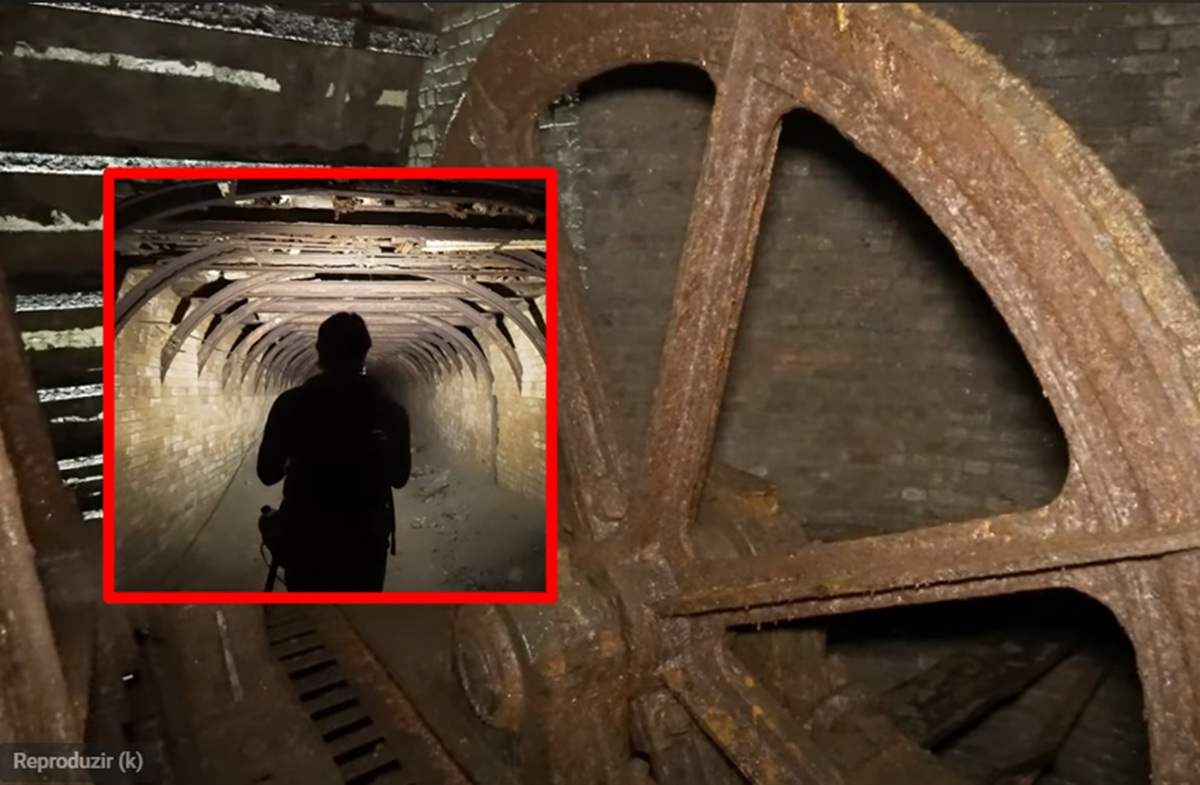


Expedition Reveals Abandoned Iron Mine in France with 2.5 km Tunnel and Intact Underground Elevator in Remarkable Condition.
In an undisclosed region of France, a group of urban explorers faced dark tunnels, dangerous collapses, and long hikes to find what remained of an old iron mine.
The mission in the iron mine required traversing over two kilometers underground, encountering challenges and surprises along the way.
The final destination: a complete lifting system still intact, with cables, tracks, pulleys, and structures virtually untouched.
-
Workers renovating a playground in northern England uncover 176 World War II bombs buried underground; training artifacts still contained explosives.

-
Brazilian Architect Transforms Waste into Sustainable Homes with Solar Power and Rainwater Systems for 40 Years

-
Security Guard Becomes Doctor at Louisiana Hospital Where He Once Worked, Studied Chemistry Between Shifts

-
Woman Rescued from Luxury Complex in Brazil Worked Without Pay for 55 Years, May Be Entitled to Over $300,000




The Long Journey to the Heart of the Mine
The mine’s entrance was marked by a narrow tunnel, reinforced by arches and with a strong airflow.
The natural ventilation surprised the explorers with its strength, creating the sensation of a true wind tunnel. The path was dark, damp, and unstable, with sliding points and partial collapses.
In several sections, the tunnels alternated between brick-reinforced structures and rough rock areas. There were clear signs of old collapses, with arched ceilings, fallen rocks, and blocked areas.
At a fork, the explorers followed the trail of the ore tracks, trusting that it would lead them to the old mining elevator.
Risks, Collapses, and Secondary Tunnels
During the journey, areas with sagging ceilings required extra caution. Some points had rusty beams supporting tons of rocks.
Flooded and slippery sections made progress difficult. At one point, the explorers encountered a total collapse blocking the passage.
But there were footprints at the site, indicating that others had climbed over the debris. With caution, they decided to follow the same path.
Further ahead, makeshift stairs, markings in French on the walls, and old cable installations appeared. A lateral tunnel revealed one of the most impressive views of the expedition: a large room with a tiled floor, signaling something special.
The Intact Underground Elevator
After nearly two hours of walking, the explorers arrived at what they described as “the highlight” of the exploration: the mine’s lifting system.
Composed of a large steel drum, gears, cables, and depth markers, everything indicated that the equipment was used to transport loads — and people — between different levels of the mine.
The operating room was equipped with panels, dials, and brake structures.
A communication tube, possibly used to talk to other areas of the mine, was still attached to the wall with its intact brass identification plate.
On the floor, double tracks led to a deep vertical shaft. Nearby, the explorers identified the structure of a freight elevator, with metal doors and a track descending into absolute darkness.
The equipment appeared balanced by a counterweight system, as two cables extended from the main drum.
Dangerous Paths and Fragile Structures
When attempting to access the other side of the elevator structure, the explorers encountered an unstable crossing, with disconnected wooden beams and loose stones.
As they stepped, one of the beams moved dangerously. They retreated and sought another path through alternative tunnels.
On the opposite side, they found an ore cart seemingly filled with orange material, possibly iron ore.
Nearby, release levers would allow alignment of the carts with the elevator. There were also signs indicating depths of 111 and 125 meters, along with control buttons labeled “Execution.”
Tests and Deep Echoes
To measure the depth of the shaft, one of the explorers dropped an object in free fall. After several seconds of silence, the sound echoed from afar, demonstrating the depth of the pit.
A second attempt confirmed the long time until impact. The conclusion: the lower levels of the mine were likely flooded or inaccessible.
Even after hours inside the mine, the explorers kept their focus on safety and documenting the structure.
They recorded every detail of the machinery, the environment, and the marks on the walls, impressed by the condition of something so remote and forgotten.
Last Look Before Leaving
With time running short and fatigue accumulating, they decided not to explore the side tunnels.
The priority was to exit safely. As they moved away from the elevator room, they noticed ancient inscriptions, arched structures, and new collapsed paths. The return took nearly an hour.
At the end of the exploration, the group confirmed that they had spent over six hours inside the mine. The elevator structure, with its complex engineering and surprising condition, was considered the highlight of the visit. They described the experience as unique, comparable only to cinematic representations of classic mines.
The presence of old components, such as communication tubes and porcelain lamps, indicates that the mine may have been operational until the mid-20th century.
Even after decades of abandonment, the systems remain recognizable, offering a rare glimpse into how a complete underground mining operation functioned, well below the surface of France.


