Portuguese
  Spanish


Traces from 14,400 years ago show how Upper Paleolithic visitors crossed an Italian cave using small branches as a light source.
An archaeological investigation in the Bàsura Cave, in Italy, revealed how humans explored deep underground environments about 14,400 years ago.
Researchers reconstructed the lighting methods used by ancient visitors of the Epigravettian period, whose footprints remain preserved inside the cave.
The site also holds marks of a canid, indicating that a dog or similar animal accompanied the group during the crossing.
-
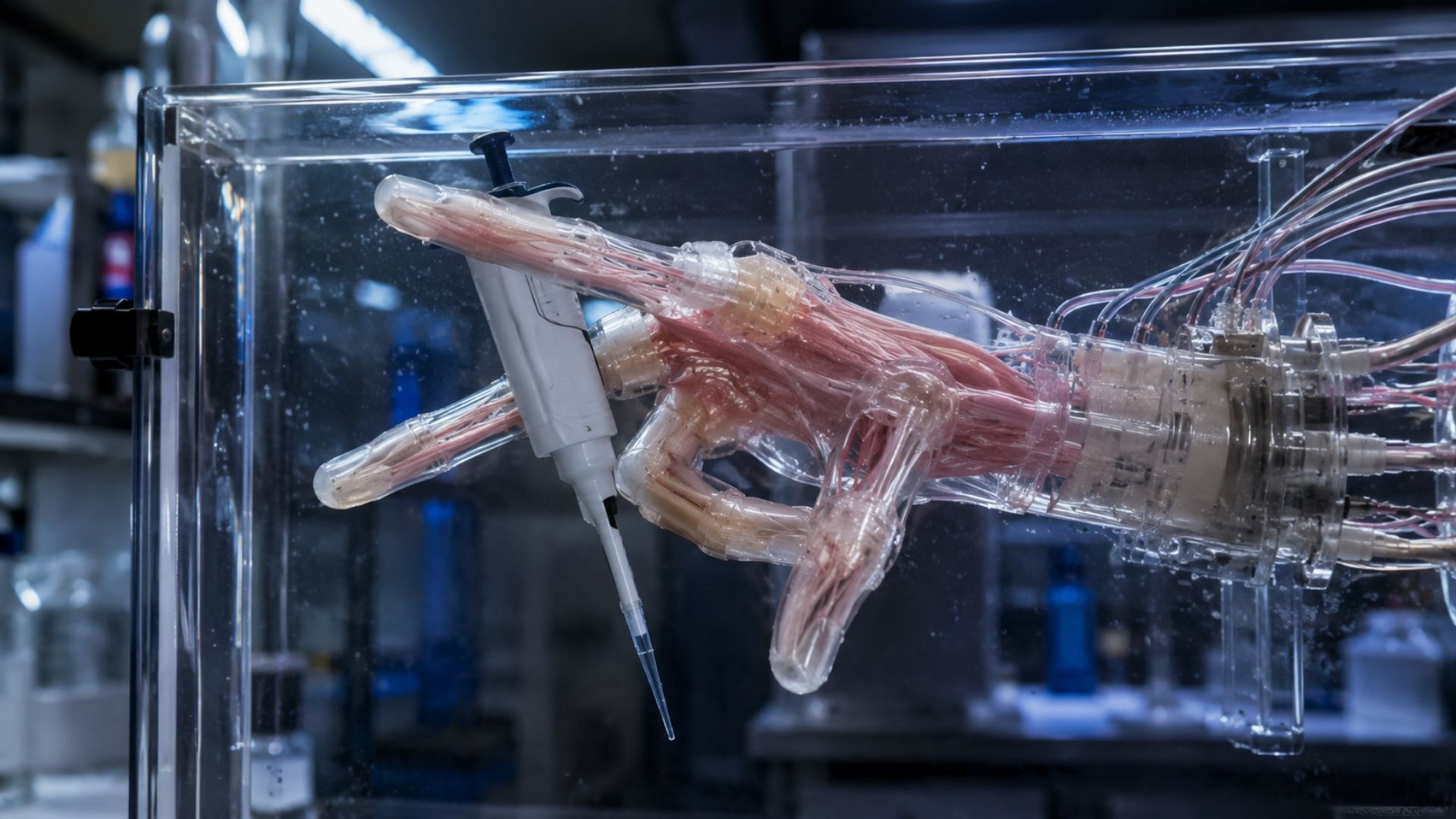
Tokyo Scientists Create First 18cm Biohybrid Hand Using Human Muscle, Capable of Scissor Gesture and Holding a Pipette

-
Brazil Faces Norway in World Cup at Stadium Linked to Jimmy Hoffa’s Mysterious Disappearance

-
Retired Woman Leaves French Public Housing Due to Fear, Lives in Van for Weeks, Prompting Response from Local Authorities and a Priest
-
9-Year-Old Fabio Isaac Wins Gold at Copernicus Math Olympiad in Singapore, Representing Peru Against Global Young Talents



Technical investigation reveals a rare underground crossing
The Bàsura Cave is located near Toirano, in the Liguria region, and is about 800 meters long.
Since the 1950s, the site has attracted attention for its collection of fossilized footprints, finger marks, charcoal residues on the walls and ceiling, as well as traces of cave bears.
Initially, some researchers associated the footprints with Neanderthals.
Decades later, radiocarbon analyses showed that the visit occurred much later, during the Epigravettian, in the last stages of the Ice Age.
In 2016, the multidisciplinary project Bàsura Revisited resumed studies with modern techniques.
The goal was to understand how a few people managed to advance through deep areas of the cave, especially in the so-called Hall of Mysteries.
Pollen and charcoal help reconstruct the ancient environment
The team analyzed pollen samples preserved in the sediments to understand the landscape of the time.
The results indicated an open steppe vegetation, with sparse pine forests.
Species adapted to cold and drought, such as Artemisia, frequently appeared in the samples.
Tree pollen appeared in smaller quantities, mainly linked to Scots pine and related species.
According to the researchers, part of this material reached the cave attached to the fur of cave bears.
Infiltrated water from the exterior also contributed to the gradual accumulation of organic material in the underground environment.
Small Branches Change Old Hypothesis About Large Torches
The main clues about human presence came from 56 charcoal fragments found in the Hall of Mysteries.
More than half of these fragments belonged to the Scots pine or very similar species.
Most came from young and thin branches, less than two or three centimeters in diameter.
This detail weakened the old hypothesis that large torches would have illuminated the exploration.
The evidence suggests that visitors carried small pine branches, taken from living trees and prepared as portable light sources.
Experiments Show How the Group Saw in the Dark
The team tested this hypothesis in a nearby cave, with environmental conditions similar to those of Bàsura.
Scots pine branches compatible with the archaeological findings were dried and burned in a controlled manner.
Five volunteers participated in the tests, a number close to that indicated by the preserved footprints.
The results showed that only two lit branches were enough to illuminate a group walking in single file.
After the eyes adapted to the darkness, visibility could reach about ten meters.
The small flames also produced little smoke and caused less glare than larger torches.
Crossing May Have Lasted About Two Hours
The most efficient configuration kept a light source at the front and another at the rear of the group.
During the tests, participants maintained physical contact by placing a hand on the shoulder of the person in front.
This strategy facilitated passage through narrow, dark, and uneven sections.
Fuel consumption also caught the researchers’ attention.
Each branch burned about four centimeters per minute during the journey.
Based on this rate, scientists estimated the need for approximately 20 branches of 30 centimeters for a round trip to the Hall of Mysteries.
The entire journey probably lasted around two hours.
Charcoal marks reinforce archaeological reconstruction
The charcoal marks produced during the experiments were very similar to those found on the walls of Bàsura Cave.
Small fragments also accumulated below these marks, repeating the pattern observed in archaeological excavations.
The conclusions indicate that the ancient visitors developed a simple, efficient solution adapted to the local environment.
The pine branches burned long enough, produced little smoke, and were available in the landscape around the cave.
Cave may have received other human visits
Researchers also found charcoal fragments trapped in limestone formations in other parts of the cave.
The datings showed that these traces belong to different periods than those recorded by the most famous footprints.
Although the origin is not yet fully clarified, the data suggest that Bàsura Cave continued to be visited by humans in later times.
The study was associated with the Bàsura Revisited project and cited by sources such as University of Pisa, Quaternary International, Archaeology Magazine, and Archaeology News.
After all, what else might be hidden in ancient caves like Bàsura: new footprints, forgotten tools, or other signs of how our ancestors faced the darkness?