Portuguese
  Spanish


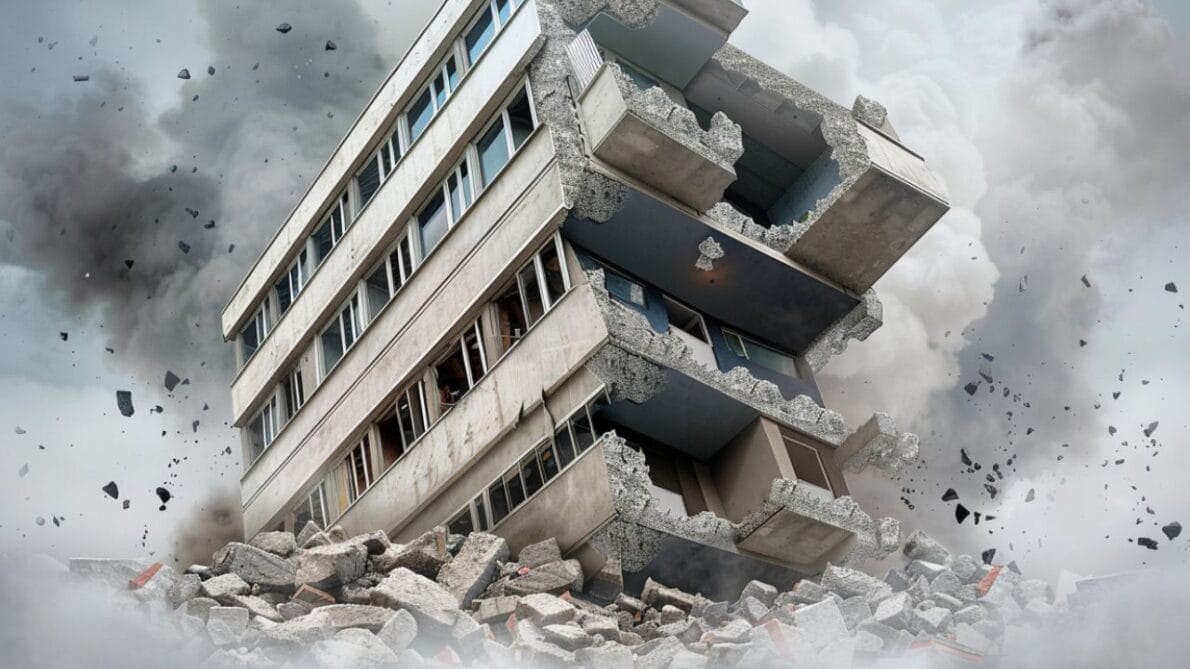

Discover How Seismic Engineering Protects Buildings Against Earthquakes Using Advanced Techniques to Absorb and Dissipate Seismic Energies. Construction Methods That Incorporate Flexibility and Strength, Employing Materials Such as High-Quality Steel and Reinforced Concrete, Along with Innovative Damping Systems Such as Isolated Foundations and Tuned Mass Dampers, Are Essential for Maintaining Structural Integrity and Safety of Occupants in High Seismic Activity Zones.
In light of the recent earthquakes in Taiwan, an intriguing question arises: how are buildings constructed to withstand such devastating forces? Seismic engineering has made significant advancements, allowing structures in seismic risk areas to endure intense shaking without collapsing.
Seismic engineering uses specialized techniques to design buildings that not only withstand terrestrial forces but also minimize damage during an earthquake. These structures are designed considering wind forces and other dynamic loads that can simulate the effects of an earthquake, as learned from the collapse of the Tacoma Narrows Bridge in 1940 due to resonance.
Engineers Apply Various Methods to Ensure Safety in Seismic Engineering, Including the Use of Materials That Combine Strength and Flexibility


Engineers apply various methods to ensure safety in seismic engineering, including the use of materials that combine strength and flexibility, which are essential for absorbing the dynamic loads generated by high-frequency and high-amplitude movements. Materials such as high-quality steel and reinforced concrete are common, as well as systems that allow some movement and controlled deformation of structures without compromising integrity.
-
28-meter, 156-ton titans traveled 20,000 km from China to the port of Santa Catarina: Portonave received 7 fully electric megacranes, part of a R$ 210 million package, to double container handling.

-
They exchanged the idea of a large house for a 35 m² warehouse, spent US$ 12,000 on the structure, and created a tiny house in Colorado with space to live and work.

-
A newly opened terminal in the middle of the Amazon has begun transporting soy and corn through Amapá, eyeing the queue of ships that is congesting the ports in the South.

-
Goodbye to old tiles: renovation technique without construction transforms bathrooms in a few hours, eliminates debris, and reduces costs with coverings using special paints, high-resistance adhesives, and modern finishes that completely renew the space.



Among the most advanced techniques is the use of damping systems that can range from isolated bases — such as springs or hydraulic cylinders beneath the foundation — to tuned mass dampers or viscous friction dampers. These systems are designed to vibrate in opposition to the building’s vibrations, absorbing energy and reducing the amplitude of movements during earthquakes, thus protecting the main structure.
Continuous Development in Seismic Engineering Is Vital to Ensure Structural Safety in Risk Zones
An emblematic example is the Taipei 101 in Taiwan, equipped with a 660-ton sphere that acts as a giant pendulum to counterbalance seismic movements. This approach not only exemplifies innovation in seismic engineering but also demonstrates how such techniques can be crucial for the safety of buildings in earthquake-prone regions.
Continuous development in seismic engineering is vital to ensure structural safety in risk zones. Understanding how earthquake-resistant buildings are designed not only saves lives but also serves as a model for future constructions worldwide. If this topic interests you, continue following for more insights and discoveries in seismic engineering, essential for the protection of global infrastructures against the forces of nature.