Portuguese
  Spanish


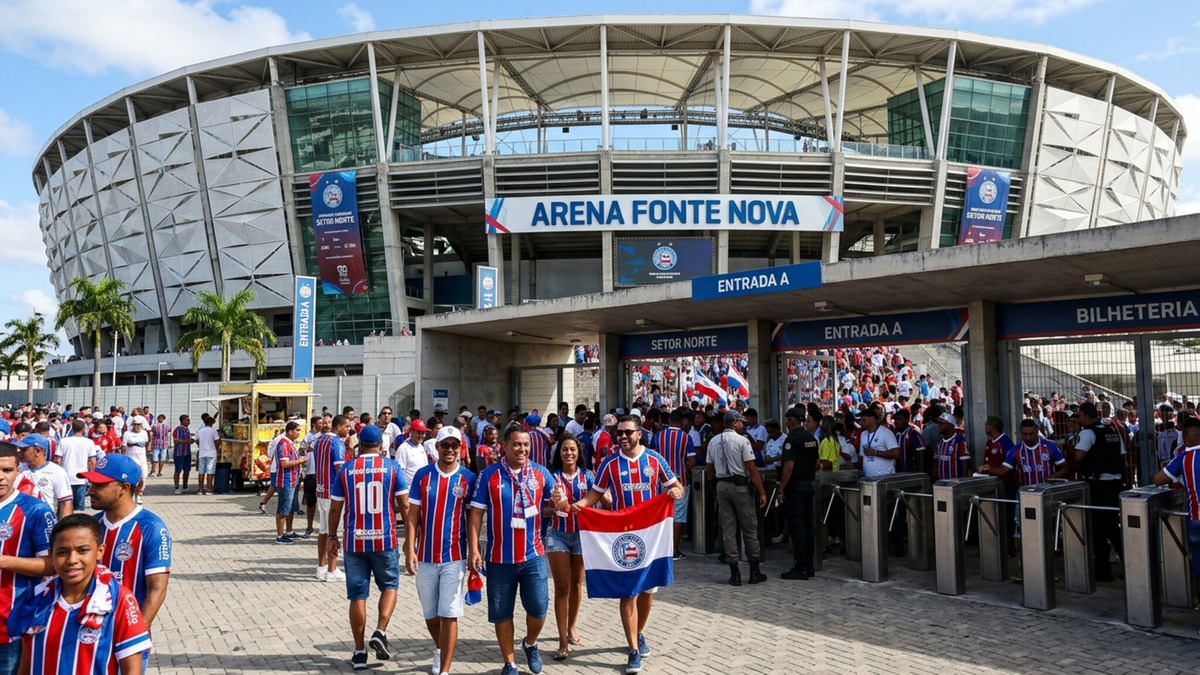
The Arena Fonte Nova, located in Salvador, is much more than a football stadium. A symbol of the Bahian sporting passion and one of the main postcards of the capital, the complex combines modern architecture, tradition, sustainability, and a unique integration with the urban landscape. Its design preserved one of the most striking elements of the old Estádio Octávio Mangabeira: the horseshoe-shaped opening facing the Dique do Tororó, creating a visual connection that made the arena one of the most beautiful in Brazil.
Inaugurated in 2013, the Arena Fonte Nova was built to host matches of the Confederations Cup and the 2014 FIFA World Cup. Since then, it has established itself as a stage for great games, international shows, cultural events, and corporate meetings, becoming one of the most important multi-use facilities in the country.
The history of Arena Fonte Nova begins long before 2013
The trajectory of the Arena Fonte Nova is directly linked to the old Estádio Octávio Mangabeira, inaugurated in 1951 and popularly known as Fonte Nova.
For decades, the stadium was the stage for historic moments of Bahian football, hosting matches of Bahia, Vitória, the Brazilian National Team, and major national and international competitions.
-
Indian School in Assam Expands Enrollment by Accepting Plastic Waste as Tuition Payment

-
Parintins Festival 2026 Celebrates Amazonian Tradition with Three Nights of Competition Between Caprichoso and Garantido, Highlighting Its Cultural Significance in Brazil

-
Brazilian Mayor Goes Undercover as a Person with Disability, Exposes Public Service Flaws
-
Brazilian Siblings Transform Invasive Algaroba into Sustainable, Cost-Effective Lobster Fishing Solution, Winning Youth Challenge




However, in 2007, part of the upper stands collapsed during a Serie C match of the Brazilian Championship, causing a serious accident that resulted in the death of seven fans. The episode led to the permanent closure of the structure and motivated the construction of a new stadium in the same location.
A modern arena that preserved tradition
When developing the new project, architects and engineers chose to preserve one of the most characteristic elements of the old Fonte Nova: the horseshoe shape.
The opening facing the Dique do Tororó was maintained as a tribute to the original stadium and also for offering functional advantages, such as natural ventilation, integration with the landscape, and greater flexibility for hosting events.
According to Arena Fonte Nova itself, this opening even facilitates the assembly of large structures for shows and performances without compromising the field.
The relationship with the Dique do Tororó
One of the greatest differentials of Arena Fonte Nova is its integration with the Dique do Tororó, the only natural reservoir in Salvador.
The view of the lagoon has become a trademark of the arena and helps create a different experience for fans and visitors.
In addition to the landscape, the Dique houses the famous orixá sculptures by artist Tatti Moreno, one of the most well-known tourist attractions in the Bahian capital.
According to information about the Dique do Tororó, the site is listed as heritage and represents an important space for leisure, culture, and environmental preservation in the city.


Architecture inspired by major international arenas
Arena Fonte Nova was designed following international standards of sports engineering.
Its translucent roof protects all seats from sun and rain, while allowing natural lighting and reducing internal heat.
Furthermore, the stands were brought closer to the field to improve spectator visibility and increase the feeling of proximity to the game.
According to information from Arena Fonte Nova itself, the project also incorporated sustainable solutions, such as water reuse and recycling of materials from the demolition of the old stadium.
Capacity and modern structure
Currently, the Arena Fonte Nova has a capacity for approximately 48,000 spectators, distributed across three levels of fully covered stands.
Additionally, the complex includes suites, restaurants, elevators, VIP areas, press rooms, parking, and spaces for corporate events.
This model allows the stadium to be used throughout the year, not just for football matches.
According to the administration of Arena Fonte Nova, the facility was designed as a multipurpose space, inspired by European arenas.
Much more than football
Although it is the home of Esporte Clube Bahia, Arena Fonte Nova also hosts matches of the Brazilian National Team, international competitions, and major cultural events.
In recent years, national and international artists have performed at the stadium, taking advantage of its infrastructure for large audiences.
Additionally, congresses, fairs, and business meetings are part of the arena’s annual schedule, enhancing its importance to Salvador’s economy.
This versatility has made the complex one of the main entertainment centers in the Brazilian Northeast.
Sustainability is part of the project
Another distinguishing feature of Arena Fonte Nova is its commitment to sustainable practices.
According to information from the stadium’s administration, the arena received LEED Silver certification, an international recognition granted to buildings that adopt solutions focused on energy efficiency, waste management, and rational use of natural resources.
Among the initiatives adopted are water reuse for lawn irrigation and use in restrooms, as well as recycling a large portion of the concrete from the old structure.
Importance for Salvador and tourism
Arena Fonte Nova also plays an important role in the tourism of the Bahian capital.
Its privileged location, close to the Historic Center, the Dique do Tororó, and other tourist spots, means that many visitors include the stadium in their itineraries.
Furthermore, the distinctive architecture has made the complex one of the most photographed scenes in Salvador.
Sporting and cultural events boost hotels, restaurants, commerce, and services, contributing to the local economy throughout the year.
A symbol of the modernization of Brazilian football
The construction of Arena Fonte Nova marked a new phase for Bahian football.
In addition to offering greater comfort and safety to fans, the stadium has placed Salvador among the Brazilian cities with infrastructure ready to host major international competitions.
At the same time, preserving the historical format of the old Fonte Nova demonstrates that modernization and respect for memory can go hand in hand.
The Arena Fonte Nova remains a national reference
More than a decade after its inauguration, the Arena Fonte Nova continues to be considered one of the most beautiful and functional sports arenas in Brazil.
Its combination of contemporary architecture, tradition, sustainability, and integration with the Dique do Tororó makes the stadium an example of how major projects can respect local history without giving up innovation.
More than just the home of Bahian football, the Arena Fonte Nova has become a space for socializing, culture, entertainment, and tourism, reinforcing its role as one of the main symbols of Salvador and one of the most emblematic arenas in the country.