Portuguese
  Spanish


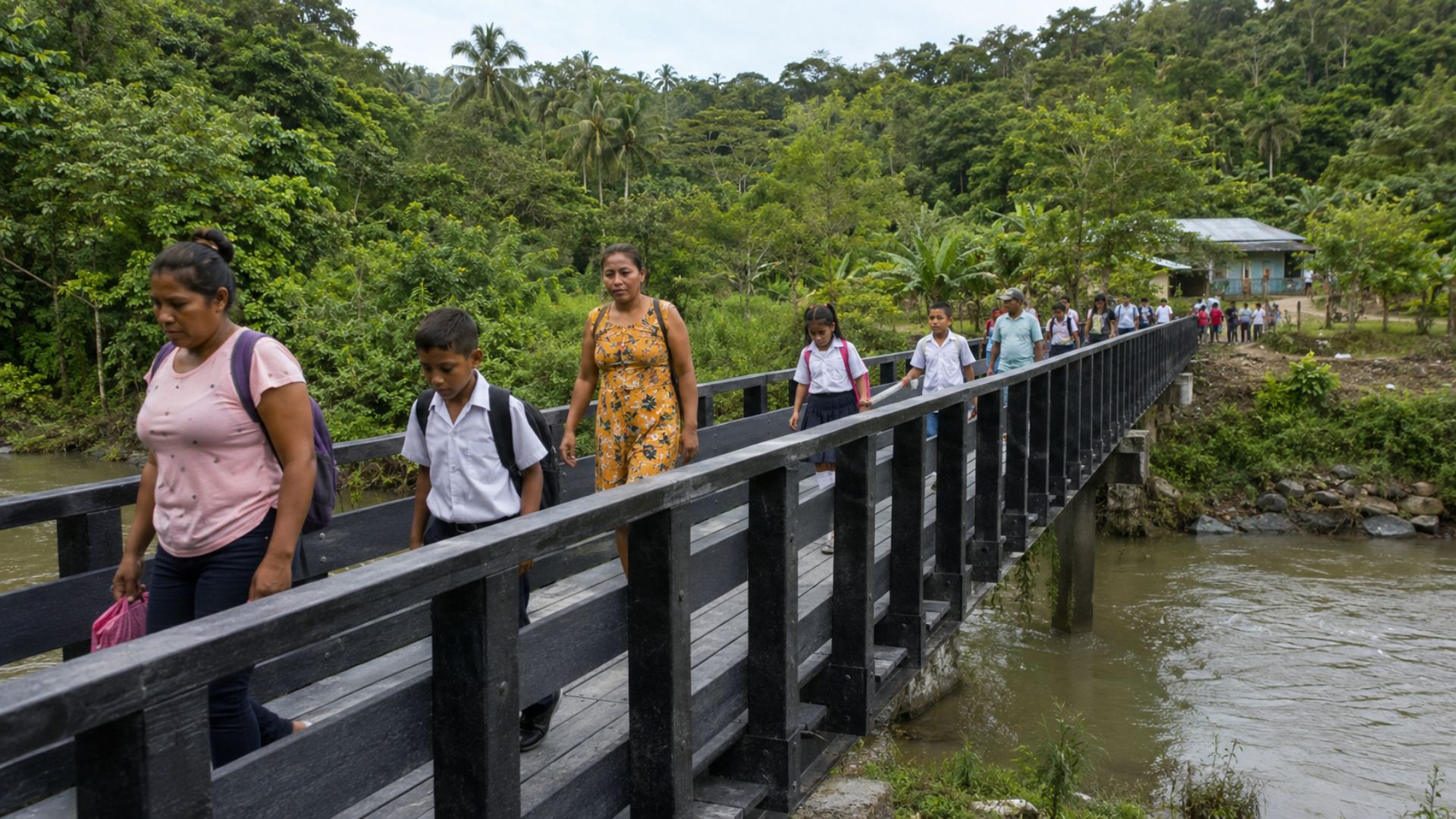

In the Panama Canal basin, an 81-meter recycled plastic bridge began connecting four isolated communities. Made with over 7 tons of plastic wood from Fundación Botellas de Amor, the structure allowed more than 300 residents to cross safely to school and work.
For years, the Boquerón River was more of an obstacle than a landscape for those living there. Crossing it to get to school or work was risky, especially during the flood season. Now, an 81-meter bridge made entirely of recycled plastic has transformed the crossing into something simple and safe.
According to Hub News, the project was inaugurated in April 2025, the result of an alliance between the Panama Canal, Bladex Bank, and Fundación Botellas de Amor. More than seven tons of plastic waste turned into the profiles that support the walkway. The bridge directly benefits residents of four communities in the Panama Canal basin.
The recycled plastic bridge that connects four isolated communities
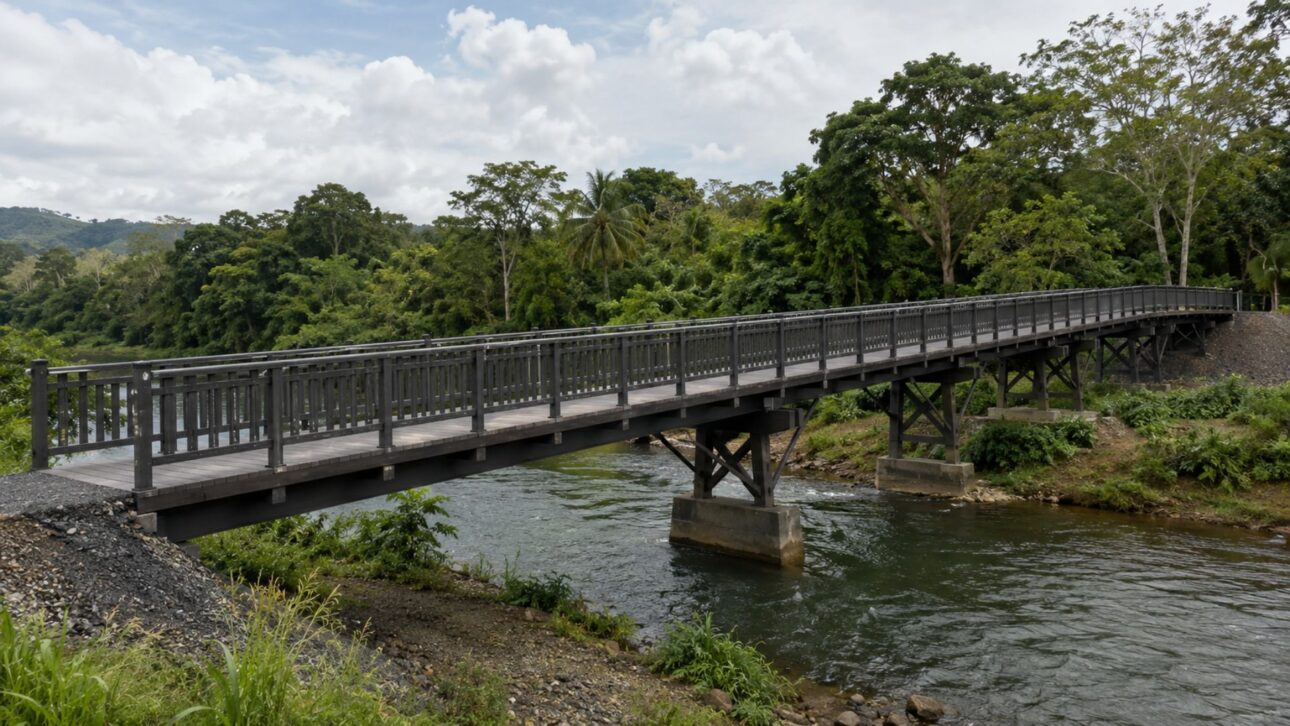
These are rural villages that depended on improvised crossings over the Boquerón River.
-
Australia’s First Two-Story 3D-Printed House Built in 18 Hours, 22% Cheaper Than Traditional Methods, Uses Concrete That Hardens in 3 Minutes

-
Architect Converts 1955 Grain Silo into 31m² Home with Full Amenities, Including Kitchen, Bathroom, Curved Living Room, and Loft Bedroom

-
Egypt Partners with China to Build 2 GW Wind Turbine Factory and 2,000 MW Wind Farm in Gulf of Suez, Aiming to Export Across Africa
-
Family of Six Leaves Georgia to Live in a $300,000 Cold War-Era Underground Bunker Since 2020: Unlikely 557 m² Home with 60 cm Concrete Walls


For those living there, the recycled plastic bridge shortened the path and removed the risk of crossing the water in the current.
More than 300 people use the structure to get to school, work, and basic services.
Without it, any trip to the city depended on the river level and luck.
Connecting four isolated communities with a single project is the kind of impact that changes the routine of an entire region.
The walkway returned something simple and valuable: the predictability of being able to leave home any day.
Where the material comes from: the plastic wood from Botellas de Amor
The secret of the work lies in the material that supports it.
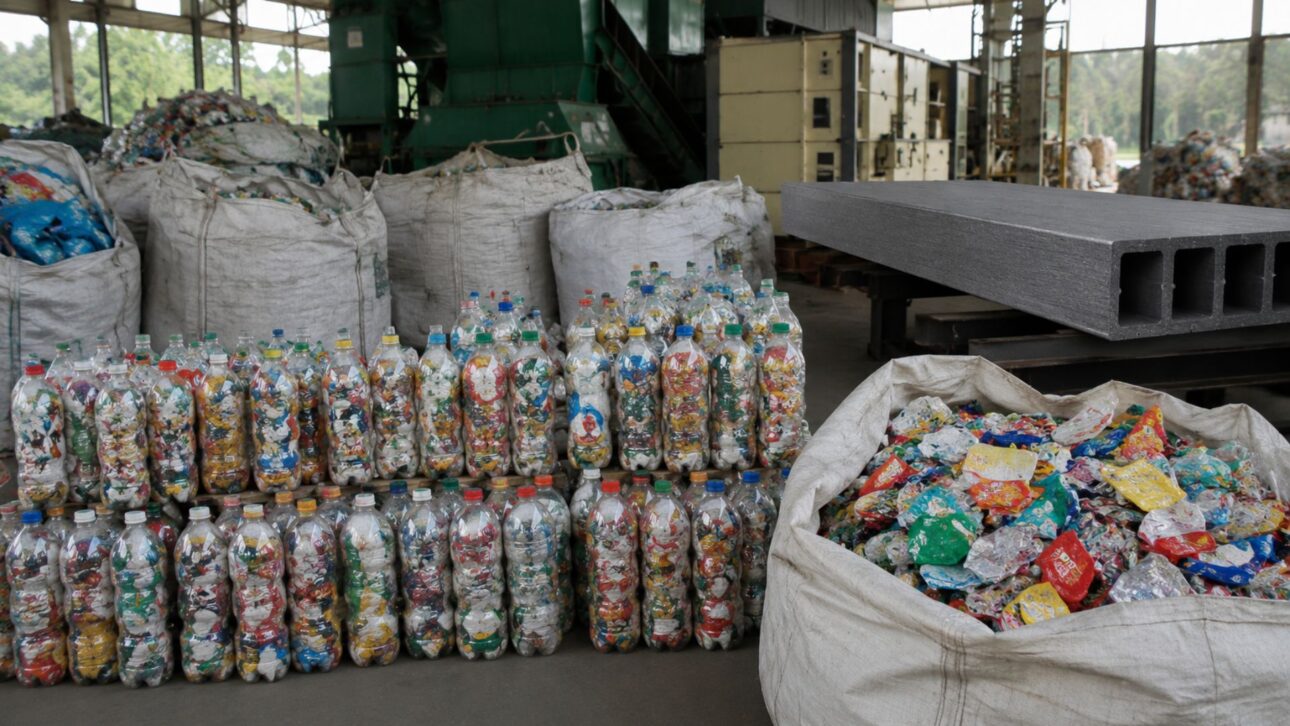
The Fundación Botellas de Amor collects discarded flexible plastic and transforms it into plastic wood.
This material is made from packaging, bags, and films that would normally end up in landfills or burned in the open air.
The foundation operates in Panama Pacifico one of the largest recycling plants of this type in Central America.
The unit is capable of processing dozens of tons of plastic per month, according to the organization itself.
Instead of becoming pollution, the waste is pressed and molded into rigid profiles, ready for construction.
It was this plastic wood that gave form to the bridge over the Boquerón River.
How plastic wood works in construction
Unlike regular wood, it does not rot, does not rust, and withstands constant contact with water well.
Termites and fungi, which destroy traditional wooden bridges, do not attack the recycled material.
This is crucial in a structure exposed to rain, sun, and humidity all year round, like a river bridge.
Plastic wood also requires no painting and heavy maintenance, which reduces costs over time.
For an isolated community, having a bridge that requires little maintenance is almost as important as having it.
The material transforms an environmental problem into a durable engineering input.
Who built it: Panama Canal, Bladex, and Botellas de Amor
The work did not come from a single hand.
The project united the Panama Canal, the foreign trade bank Bladex, and the Fundación Botellas de Amor.
Each partner contributed a piece: resources, logistics, and the technology to transform plastic into construction material.
The initiative included awareness campaigns and plastic collection drives in the communities.
Employees from the Panama Canal and Bladex participated as volunteers in collecting the material.
More than building a bridge, the partnership showed how circular economy and infrastructure can go hand in hand.
The Panama Canal treated the project as part of its social commitment to the basin communities.
Why this matters for isolated communities
The effect of the bridge goes far beyond concrete, or rather, plastic.
In rural areas, a safe crossing determines whether a child gets to school every day.
For workers, the bridge means being able to rely on the route without depending on the river’s tide.
Isolated communities often lose income and opportunities precisely due to the lack of physical access.
A mobility project like this reduces isolation and connects villages to the rest of the economy.
In the end, ensuring that more than 300 people cross safely is a gain in health, education, and income at the same time.
It is proof that simple, well-placed infrastructure changes the lives of isolated communities.
The circular economy behind the project
The bridge is the visible tip of a larger model.
Botellas de Amor bets on giving a useful destination to plastic that no one wants to recycle, the flexible kind.
The foundation’s goal goes beyond bridges and includes urban furniture, parks, and even housing made from recycled material.
Each completed project removes tons of plastic from the environment and also generates jobs at the recycling plant.
The model fits into the logic of the circular economy, where the waste from one process becomes the raw material for another.
Turning waste into a bridge is a concrete example of how to close this cycle in practice.
If replicated, the concept can serve many other isolated communities across Latin America.
What the case of the recycled plastic bridge shows
The crossing at the Boquerón River is a powerful symbol of what recycling can build.
It shows that discarded plastic, instead of polluting for centuries, can become infrastructure that lasts decades.
It’s better to keep your feet on the ground.
For now, it’s a specific bridge, made possible by sponsorship from a bank and the Panama Canal, not a large-scale policy.
Plastic wood solves walkways and light structures but does not replace concrete in major heavy-load projects.
And the impact numbers come from those involved in the project themselves, without independent auditing here.
Even so, few examples summarize so well how uniting business, government, and recycling can serve isolated communities.
From a heap of plastic to an 81-meter bridge, the case of Panama shows that waste can have a second noble use.
And you, would you cross a recycled plastic bridge like the one over the Boquerón River without fear? Comment here if you think plastic wood should be used in public works in Brazil.