Portuguese
  Spanish


On the coast of Rio Grande do Norte, siblings Gabriel and Gabriele Melo used the wood of the algaroba, an invasive species, to create a sustainable algaroba fishing trap for lobsters. The project won the Sebrae Young League Challenge among more than 10,000 competitors and gained international recognition.
The best solution is sometimes hidden within the problem itself. This is what Gabriel Melo, 18, and his sister Gabriele Melo saw when they looked at the algaroba, the invasive plant that dominates the semi-arid region, and imagined it as the raw material for a new fishing trap. From this idea came the Sustainable Fishing Trap, a structure designed to catch lobsters without harming the sea.
According to ASN Rio Grande do Norte, the two students from Porto do Mangue won 1st place nationally in the 2025 Young League Challenge, in the High School and Technical category. The victory came in a record-breaking edition, with more than 10,000 projects submitted across the country. The work was guided by Professor Dalison Vitor, from the state school in the city.
Who are Gabriel and Gabriele Melo and where did the idea come from
Gabriel and Gabriele Melo are siblings and students at a public school in Porto do Mangue, on the coast of Rio Grande do Norte.
-
Over 1,060 Wheelchairs Created from 102 Tons of Aluminum Tabs Collected Across Brazil, Turning Waste into Mobility Nationwide

-
Explore the History, Architecture, and Unique Features of Arena Fonte Nova, One of Brazil’s Most Iconic and Modern Football Stadiums

-
Indian School in Assam Expands Enrollment by Accepting Plastic Waste as Tuition Payment
-
Parintins Festival 2026 Celebrates Amazonian Tradition with Three Nights of Competition Between Caprichoso and Garantido, Highlighting Its Cultural Significance in Brazil


The city relies on fishing, and lobster is one of the main sources of income in the region.
By observing the daily lives of fishermen and the surrounding landscape, the duo combined two problems into one solution.
On one side, the algaroba encroaching on the land; on the other, the high cost and impact of traditional fishing traps.
The guidance of Professor Dalison Vitor helped turn their perception into a structured project.
The result was a sustainable algaroba fishing trap, designed to reduce the cost of fishing and protect the environment at the same time.
More than a school project, it became a concrete response to a demand from the community itself.
The problem of the algaroba: the invasive species that suffocates the semi-arid
The algaroba is a tree brought from abroad that spread vigorously across the Brazilian Northeast.
Classified as an invasive species, it competes with the native vegetation of the caatinga and dominates entire areas.
Where the algaroba settles, local plants lose space, water, and light, creating a difficult imbalance to reverse.
Controlling an invasive species like this usually requires effort and is costly for the public authorities.
The brothers’ idea reverses the logic: instead of just fighting the plague, they transform it into a useful resource.
Cutting and utilizing the algaroba wood thus becomes a form of management with an economic purpose.
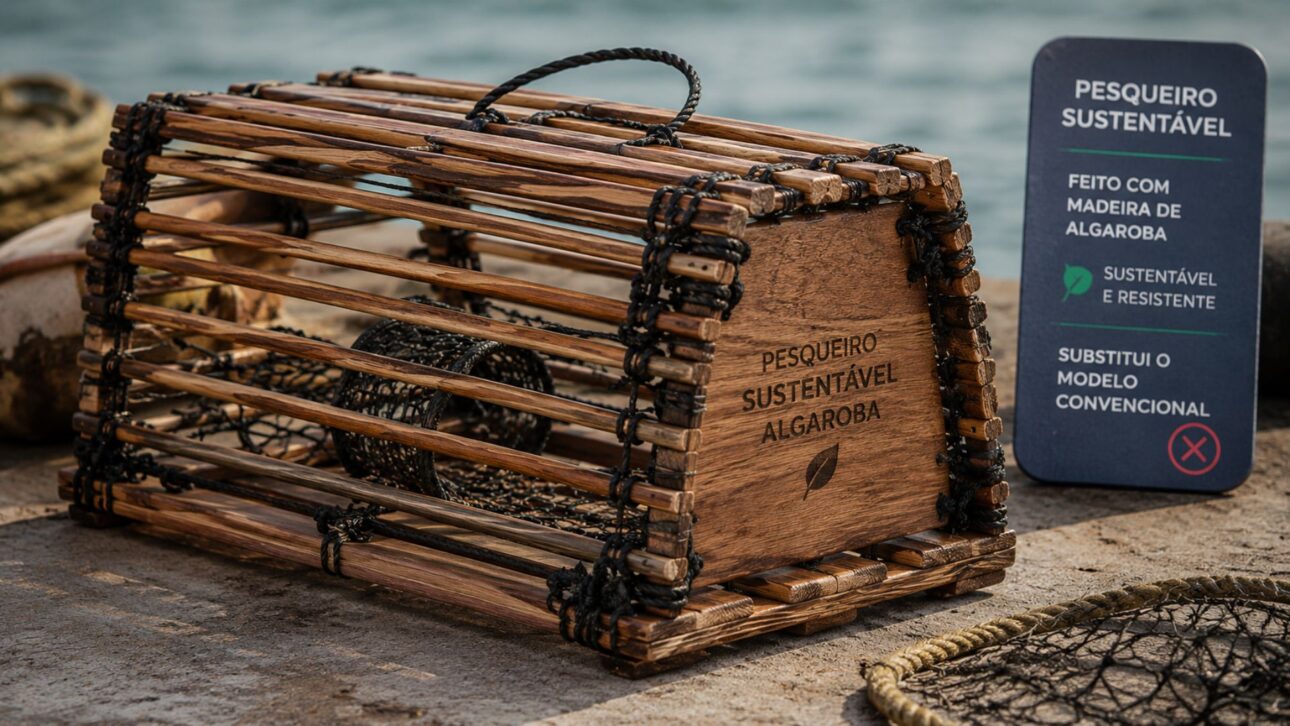
How the sustainable algaroba fishery works
The core of the project is simple to explain and ingenious in practice.
The lobster capture structure is built with the algaroba wood itself, instead of conventional materials.
The major difference is the end of its useful life: the sustainable algaroba fishery naturally degrades in the sea and becomes a substrate for marine organisms.
Traditional models can remain at the bottom of the sea for up to a year, releasing residues, according to the project.
Being organic, algaroba wood does not leave the same trail of waste when it decomposes.
Another technical gain is that the design helps avoid capturing juvenile lobsters, which need to grow before being fished.
Thus, the sustainable algaroba fishery combines three fronts: lower cost, less pollution, and species preservation.
The victory in the Young League Challenge, by Sebrae
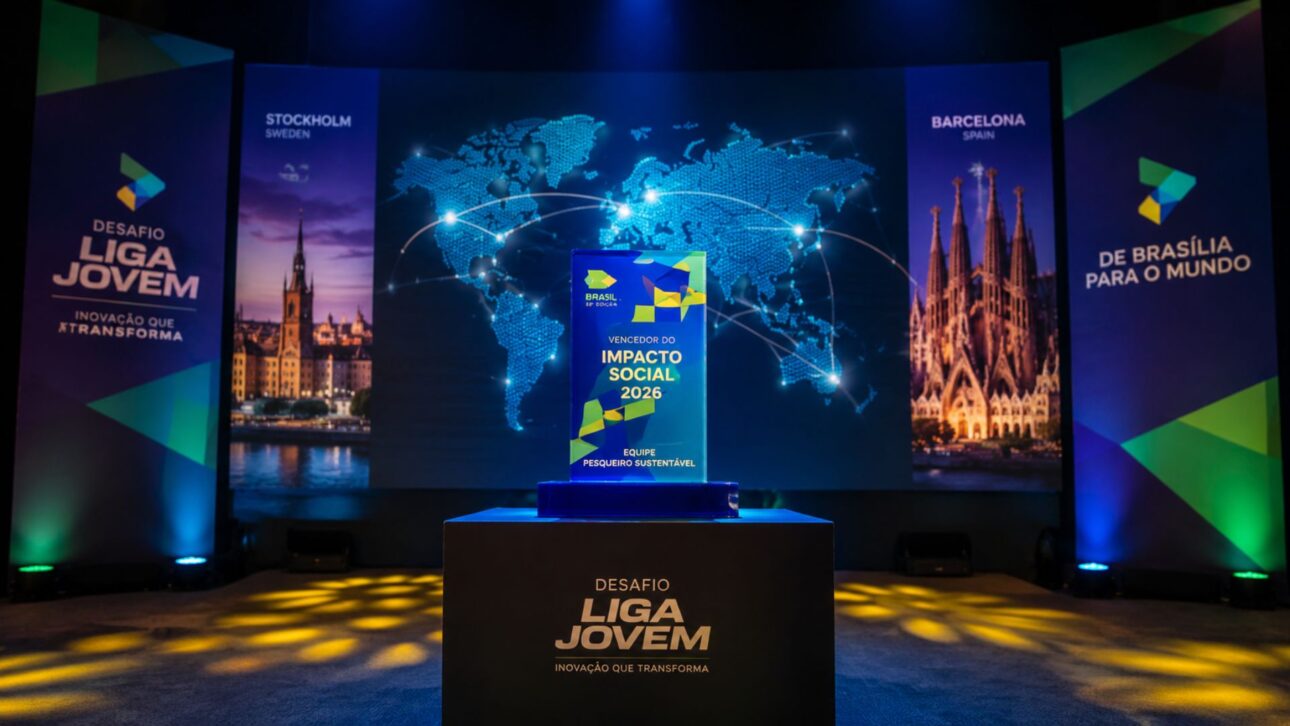
The Young League Challenge is promoted by Sebrae and challenges students to solve real problems with an entrepreneurial spirit.
The 2025 edition set a record, with 62,276 entries and over 10,000 projects presented throughout Brazil.
Among all of them, the Sustainable Fishery ranked 1st nationally in the High School and Technical category.
For Sebrae, the proposal stood out for combining environmental preservation, social appreciation, and income generation.
Winning the Young League Challenge in this universe of thousands of ideas gave the siblings a national seal of innovation.
The main prize includes an international trip of up to ten days in 2026 for immersion in innovation environments.
From the coast of RN to Stockholm and Barcelona
The impact did not stop at the borders of Rio Grande do Norte.
The Sustainable Fishery represented Brazil at the Young Water Prize in Stockholm, Sweden, an award focused on water solutions.
The project also made its mark at MWC Barcelona, the world’s largest connectivity event, held in Spain.
Taking an idea born in Porto do Mangue to global showcases is the most symbolic part of the journey.
For public school students from the interior, this type of exposure usually opens rare doors.
The journey shows how a local project can scale to international debate when it solves a universal problem.
Contact with researchers and companies abroad tends to further mature the proposal.
Why this matters for fishermen and the environment
Behind the award, there is a practical impact on the lives of those who live off the sea.
Lobster fishing is a central economic activity on the coast of Rio Grande do Norte and throughout the Northeast.
A cheaper and legal trap can reduce fishermen’s costs and deter predatory methods that harm the stock.
By avoiding the capture of young lobsters, the sustainable algaroba fishery helps maintain the species’ reproduction.
This protects the future income of communities that depend on a sea with lobsters to fish.
In the end, the project connects three rarely met points: combating an invasive species, saving for the fisherman, and protecting the ecosystem.
It is an example of how environmental innovation can also be a tool for income generation.
What the case of the sustainable mesquite fishing shows
The story of the Melo brothers is inspiring because it turns a problem into an opportunity.
It proves that a good idea has no age or ZIP code, and can be born in a public school in the countryside.
But it’s worth keeping your feet on the ground.
For now, the sustainable mesquite fishing is an award-winning project, not a product in scale in the hands of fishermen.
Moving from a winning prototype to commercial production requires durability tests, licenses, and investment.
National award and international travel open doors, but do not guarantee, by themselves, adoption by the fishing fleet.
Even so, few student projects summarize so well what the Young League Challenge seeks: solving a real problem with creativity.
From Porto do Mangue to Stockholm, Gabriel and Gabriele Melo showed that even a pest can become a solution.
And you, would you use a sustainable mesquite fishing if it made fishing cheaper and protected the sea? Comment here if you know another young idea that turned an environmental problem into a work tool.