Portuguese
  Spanish


Escalation Between Iran And Israel Targets Energy Structures And Reignites Global Alert Over Fuels And Security
Iran and Israel resumed military confrontation with renewed force on Saturday, June 14, 2025, focusing attacks on critical energy facilities.
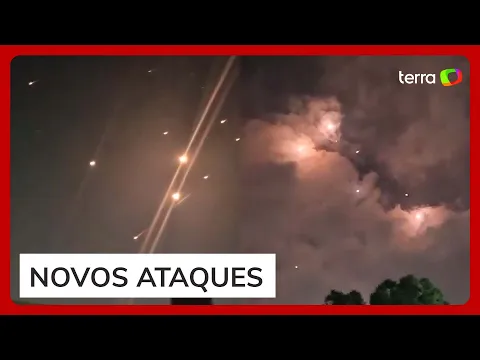
Around 11 PM local time, Tehran launched missiles at the port city of Haifa in northern Israel.
The offensive was a direct retaliation to the Israeli bombing carried out hours earlier, which destroyed strategic industrial facilities in Iranian territory.
The new bombings mark the third consecutive night of aerial confrontations, focusing on structures linked to oil and gas.
Israeli authorities confirmed that the Haifa refinery, one of the largest in the country, suffered damage following the attacks.
The plant is responsible for the annual refining of about 9.8 million tons of gas and is one of the main energy distribution centers in Israel.
According to local government officials, five people were injured in the explosion.
-
Qantas and Airbus Invest in Company Aiming to Convert Unsorted Household Trash into Jet Fuel

-
Brazil’s ANP Opens 86 New Oil Blocks in the Equatorial Margin, Expanding the Amazon River Mouth Frontier

-
OPEC+ Boosts Oil Supply by 188,000 Barrels per Day in July 2026, Leading to Price Drop from $112 to $89 per Barrel in Under Two Months

-
TotalEnergies Signs 20-Year Deal to Purchase 2 Million Tons of LNG from Alaska, Boosting Project Viability


Iranian Energy Infrastructure Also Was Targeted
Prior to the Iranian offensive, Israel directed its attacks at a gas field located near Bushehr, a port city in the Persian Gulf.
Still on the same night, another Israeli strike targeted the oil refinery in Abadan, situated more than five hours away from the first explosion.
Additionally, an oil storage facility near the capital, Tehran, was also hit, according to Iranian authorities.
Despite the impact, government representatives publicly stated that the situation is under control.
The attacks, according to them, did not affect the internal distribution of energy in the country.
Iran’s response, in turn, triggered new international alerts, as the refineries and gas fields targeted supply a significant part of the region’s energy matrix.
This raises fears that the bombings could compromise oil supply to partner and importing countries.

Victim Scenario Grows With The Escalation Of The Conflict
Since Thursday night, June 12, clashes have already resulted in 215 confirmed deaths in Iran, according to a report released by the local Ministry of Health.
Among the dead, 51 were military personnel from the defense forces.
There were also 31 soldiers reported injured, along with dozens of civilians affected by debris.
On the Israeli side, authorities confirmed at least three deaths and thirteen injuries.
Most of the medical assistance occurred in the northern region following the attack on Haifa.
The city houses not only industrial facilities but also residential zones near the port, increasing the risk of civilian casualties in future offensives.
The continuity of attacks and the use of missiles aimed at critical structures highlight a shift in the combat logic between the two countries.
The direct focus on the economy and national infrastructure amplifies the impact of the war beyond military borders.
International Market Reacts With Rising Oil Prices
The conflict in the Middle East directly impacts the global energy market. On Friday, June 13, the price of Brent crude oil, used as a worldwide benchmark, rose by more than 10%.
The abrupt increase was triggered by the perception of risk regarding oil supply, as the region accounts for about one-third of global production.
If instability persists, economic analysts warn of a potential chain supply shortage.
This could pressure inflation in several countries and lead to immediate adjustments in fuel and derivatives in the international market.
Moreover, the fear of an expanded energy crisis exacerbates the climate of insecurity among investors and commodities operators.
The rise in prices also directly affects consumers in various parts of the world, especially in countries that rely on oil imports.
With blockades and logistical risks, future supply contracts are being renegotiated at higher levels.
This is expected to reflect in the coming weeks on fuel prices at the pumps.
Risk Of Regional Spread Concerns Global Powers
Although Iran and Israel are the protagonists of the current conflict, the possibility of involvement from other countries in the region worries international leaders.
The Middle East is home to major oil producers like Saudi Arabia, United Arab Emirates, Iraq, and Kuwait.
Any large-scale disruption in export flow could have catastrophic effects on the global economy.
Additionally, the unstable political context opens the door to the indirect involvement of powers like the United States and Russia, which maintain strategic alliances in the region.
In recent statements, representatives from the United Nations (UN) emphasized the call for an immediate ceasefire, citing the risk of worsening the humanitarian crisis.
The fear is that the conflict escalates beyond isolated attacks and transforms into a regional war.
This would bring severe consequences for both the civilian population and global economic stability.