Portuguese
  Spanish


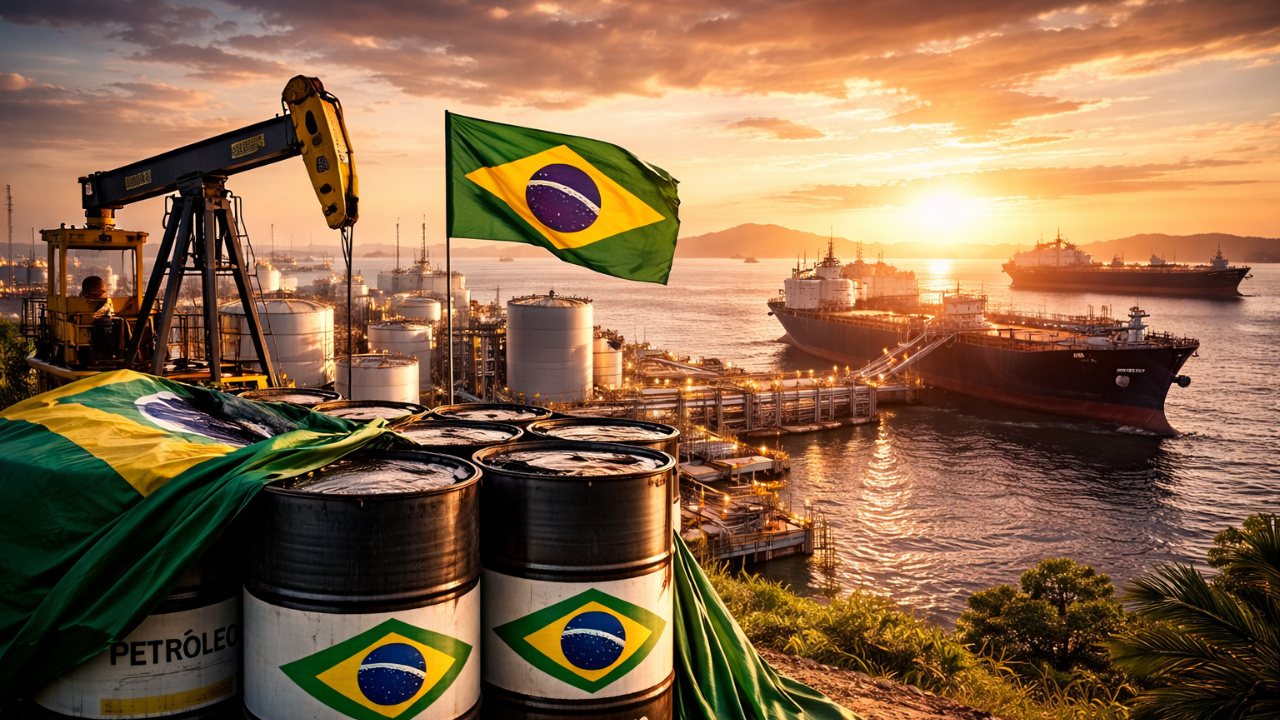

Oil Leads Brazilian Exports for the Second Consecutive Year, Totals US$ 44.6 Billion and, According to IBP, Is Expected to Sustain Growth, Jobs, and Revenue Until 2029.
Oil has once again topped the Brazilian export agenda and, once again, has outperformed historically dominant products such as soybeans. For the second consecutive year, this commodity led the country’s external sales, reaching US$ 44.6 billion in 2025, according to official trade balance data.
Although this figure represents a slight decline compared to the record set in 2024, when exports totaled US$ 44.8 billion, the performance confirms the consolidation of the oil and gas sector as one of the main drivers of the Brazilian economy. Furthermore, the result reinforces the strategic relevance of oil in an international scenario marked by uncertainties.
Even with Volatile Prices, Oil Maintains Positive Balance
The slight drop in exported value is not related to a reduction in production, but rather to the behavior of international prices. In practice, the volume of oil exported by Brazil grew by about 10%, demonstrating the expansion of national production capacity.
-
Petrobras to Double Natural Gas Supply in Northeastern Brazil with New Investment

-
Petrobras Approves $1.2 Billion Refinery in Brazil to Produce Aviation Fuel and Diesel from Plants
-
Petrobras Secures $2.2 Billion Contract to Build and Operate Four Support Vessels for Brazil’s Offshore Oil Fields
-
Oil production grows in Rio, but reserve replacement raises a warning sign





This movement directly contributed to the positive balance of the trade balance and helped maintain the country’s macroeconomic stability. According to the Federal Government, the sector was decisive for Brazil’s external performance, especially in a global environment of geopolitical tensions and energy supply risks.
According to the IBP Outlook 2025-2029, a study by the Brazilian Institute of Oil, Gas and Biofuels (IBP), the current moment represents a true turning point for the national industry.
Record Exports and Fiscal Impact Reinforce Sector Weight
In 2024, the oil and gas segment had already recorded a net surplus of US$ 36.3 billion. Additionally, revenue from royalties and special participations exceeded R$ 98 billion, reinforcing the role of oil in funding public policies and structural investments.
“Brazil set a record for exports with record sales in 2024, around 44.8 billion, and in 2025 reaching 44.6 billion, and despite this slight decline due to international prices, it still maintains its prominence. The volume of oil sent abroad increased by 10%, demonstrating productive expansion. It is clear that we have some factors that contributed to this, such as the need to enhance global energy security,” commented Renan Silva, Economics Professor at Ibmec Brasília.
Geopolitical Tension Increases the Importance of Brazilian Oil
As conflicts and instability affect large producers, the international market has begun to prioritize suppliers considered reliable. In this context, Brazil is gaining ground as a safe alternative for global supply.
Recent tensions in South America, particularly involving Venezuela, have raised concerns about the regional flow of oil. In light of this scenario, importing countries are seeking to reduce risks, which strengthens Brazil’s role in the global energy landscape.
Currently, Brazil ranks as the eighth largest oil producer in the world, with a focus on the pre-salt layer. Production in this region is recognized for having lower carbon emission intensity compared to the international average, which is an increasingly relevant factor in purchasing decisions.
Projections Indicate Expansion Cycle Until the End of the Decade
Prospects for the coming years are for continuous growth. According to the IBP, national oil production is expected to reach 4.2 million barrels per day by 2028. Meanwhile, the peak of investments in exploration and production is projected for 2026, with estimated contributions of US$ 21.3 billion.
This expansion cycle is expected to sustain around 483,000 direct and indirect jobs. Furthermore, by 2029, annual government revenue could reach US$ 42.3 billion, increasing the fiscal and social impact of the industry.
Despite the advancement of renewable sources, the IBP assesses that oil will continue to play a key role in Brazil’s energy transition. The country is already the second largest producer of biofuels in the world and is advancing in areas such as carbon capture and storage, as well as the development of offshore wind energy.
According to the institute, the competitiveness of the oil and gas sector is precisely what enables investments in decarbonization. Thus, oil remains a central element to ensure energy security, economic predictability, and revenue generation, while Brazil gradually advances in transforming its energy matrix.