






 Portuguese
  Spanish


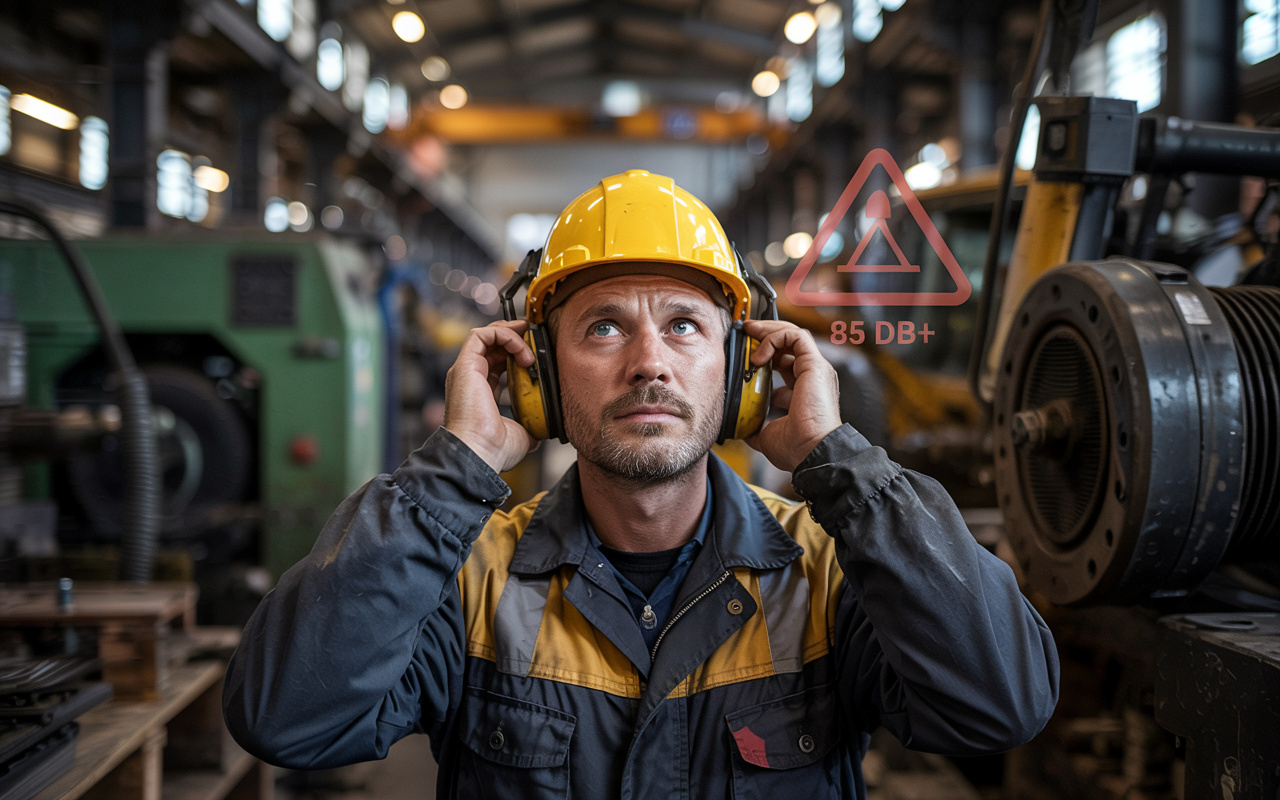


Workers Exposed to Noise Above 85 dB in Factories, Metalworking, and Construction Have Right to Special Retirement With Up to 10 Years in Advance, According to the Law.
In Brazil, the right to special retirement is a little-known reality, but it directly affects millions of workers who face harmful working conditions daily. In sectors such as factories, metalworking, and construction, exposure to continuous noise above 85 decibels (dB) is already sufficient to guarantee early retirement. This benefit, provided by law, is leading thousands of Brazilians to seek recognition of their rights amid an increasing dispute between workers, companies, and the National Social Security Institute (INSS).
What the Law Says About Retirement Due to Hazardous Conditions


The legal basis that guarantees this right is the Law No. 8.213/1991, regulated by the Decree No. 3.048/1999. The regulation establishes that activities carried out under special conditions that harm health or physical integrity allow for the granting of the so-called special retirement.
In the specific case of noise, the Regulatory Standard No. 15 (NR-15) of the Ministry of Labor determines that continuous or intermittent levels above 85 dB pose a risk to hearing health, with the potential to cause irreversible hearing loss, physical stress, and even cardiovascular problems.
-
Dismissing a retired worker or one eligible for retirement constitutes ageism and creates a duty to compensate: a unanimous decision by the TRT mandates reinstatement to employment, payment of back wages, and upholds compensation of R$ 15,000 for discrimination.

-
Work less and produce more? Nobel Prize in Economics explains why shorter workdays can increase productivity

-
Unions are growing again in Brazil after more than a decade, but they face an urgent challenge to win back digital workers and maintain relevance.
-
From the typewriter to the home office: how work has changed and why new generations think differently



Based on this, workers who prove daily exposure to this noise level can retire with less contribution time, provided they present the Professional Profile for Social Security (PPP) and the Technical Report on Working Conditions (LTCAT).
How Long Is Needed to Work to Have the Right
Unlike regular retirement, which requires a minimum age and longer contribution time, special retirement allows workers to retire with 15, 20, or 25 years of contributions, depending on the degree of exposure to risk.
In the case of noise, the rule applies to 25 years of continuous exposure. This means that a worker exposed to 85 dB or more can retire 10 years earlier than the national average, as they do not need to comply with the minimum age required for conventional retirement.
Thousands of Requests in Progress
Data from the INSS itself shows that requests for special retirement have been increasing in recent years. According to surveys by unions and trade associations, categories such as metalworkers, machine operators, steelworkers, and construction workers are among those most filing claims for the benefit.
Many turn to the courts, as the INSS often denies a considerable portion of requests, citing a lack of technical evidence.
In 2024 alone, it is estimated that more than 30,000 actions were filed in federal regional courts requesting recognition of special time due to noise exposure. The number is significant and indicates a trend: increasingly informed workers are pursuing their rights.
Practical Examples of the Impact of Noise
To give an idea, the noise from a metalworking factory in full operation can reach 90 to 100 dB, equivalent to the sound of a motorcycle at high speed.
In large construction projects, the use of jackhammers and circular saws can easily exceed 110 dB — levels considered extremely harmful by the World Health Organization (WHO). Continuous exposure to these noises not only causes irreversible hearing loss but also increases the incidence of hypertension, stress, sleep disorders, and neurological problems.
Companies and Unions in Dispute
While workers seek this right, companies argue that modernizing machines and using PPE (Personal Protective Equipment), such as ear protectors, would be sufficient to eliminate the risk.
However, the courts have understood, in many cases, that simply providing PPE does not eliminate hazardous conditions, especially when there is no proof of full effectiveness.
Unions, in turn, have pressured the government to ensure greater oversight and transparency in the reports, as many employers underreport the actual level of noise exposure.
The Role of Justice and INSS
The INSS requires robust documentation to grant special retirement, and it is precisely at this point that the greatest conflicts arise. Many workers do not have updated PPP or LTCAT, leading cases to the judicial arena.
In the courts, case law tends to favor workers when there is clear evidence of exposure, even without complete documentation. This means that judicial disputes become the primary access route to the benefit.
What Experts Say
Experts in social security law warn that this is a right guaranteed by the Constitution and by law. According to them, any worker who meets the criteria should immediately seek a specialized lawyer or a union in their category to analyze the documentation and file the request.
“Noise above 85 dB is one of the most common causes for granting special retirement, but it is still little known among workers themselves,” says a social security lawyer interviewed in São Paulo.
Economic and Social Impact
From a social perspective, special retirement serves as a way to compensate for physical wear of essential categories for the economic development of the country. From an economic perspective, experts warn of a possible increase in social security spending, as the benefit is more advantageous and does not require a minimum age.
However, for workers exposed to risks, it is a matter of social justice and health protection.
The Future of Special Retirement
With the Pension Reform of 2019, some rules were changed, but the right to special retirement was not abolished. Today, for new insured individuals, a minimum age of 60 years is required for activities of 25 years of contribution under hazardous conditions.
Still, those who had accumulated exposure time up to the date of the reform can benefit from the old rules, which creates a race against time among veteran workers.








