Portuguese
  Spanish


The pneumatic waste collection uses underground pipes, a closed central, and waste separation, potentially reducing exposed bags and truck stops.
What if the waste from a condominium was sucked through pipes instead of waiting for the truck? Pneumatic waste collection carries the waste through a closed network to a central point, where the material is compacted before the final removal.
The information was published by Smart City Sweden, a Swedish state initiative for sustainable urban solutions. The structure uses underground pipes, fans, and disposal points near buildings, markets, and other locations with concentrated waste generation.
In practice, the system can reduce the presence of bags on sidewalks, exposed containers, and trucks stopping near each entrance. The truck is still necessary but now collects the material at a central point, not at every spot in the neighborhood.
-
Amsterdam Repurposes Retired Boats and Plants to Restore Contaminated Industrial Land Instead of Removing All Polluted Soil

-
Copenhagen Builds 92 Homes Using Reclaimed Materials from Demolished Carlsberg Brewery, Highlighting Each Material’s Origin
-
Imported Goods Like Smoked Meats, Olive Oil, and Parma Ham Drive Millions in Specialized Retail Sales

-
Historic Factory in Zaragoza Closes After Over 50 Years, Leaving Dozens Unemployed and Ending an Era in Spain’s Industrial History


How waste enters the underground pipe network
The process starts at a disposal opening. Residents, employees, or merchants place the waste at the point designated for each type of waste, such as regular waste, recyclables, or organic material.
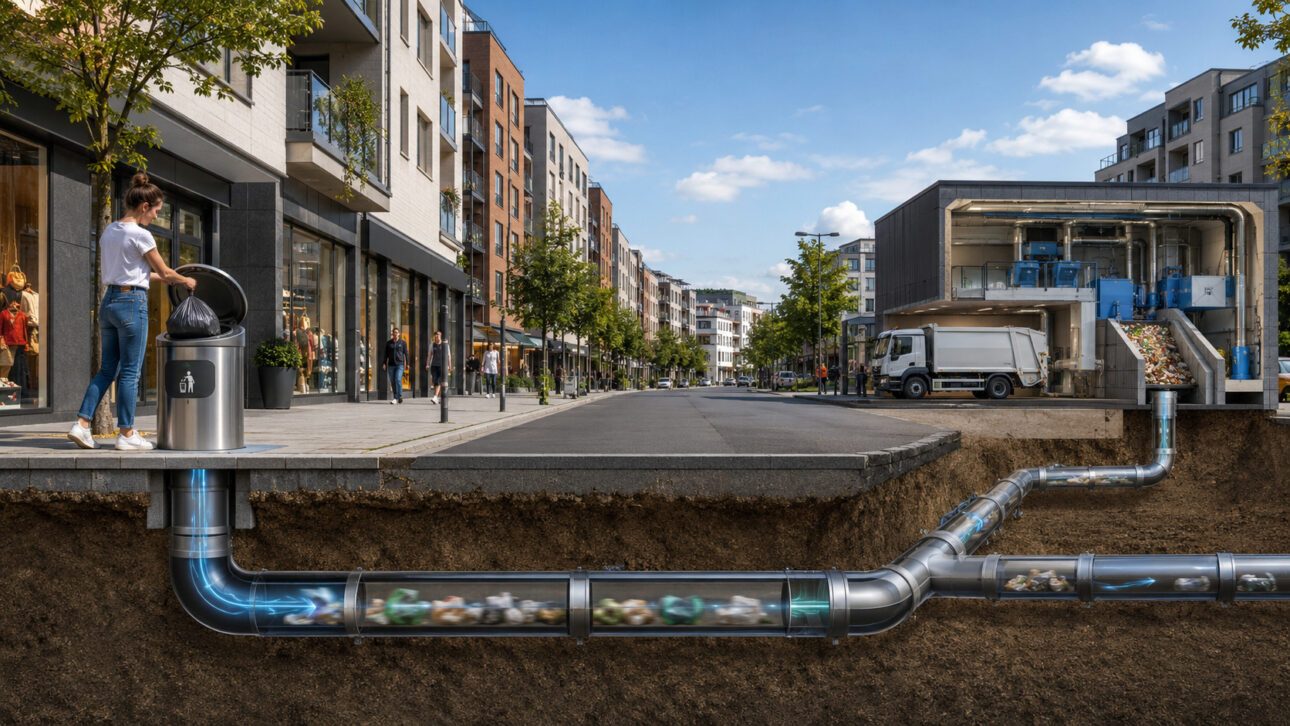
After disposal, the waste remains inside a closed network. The pneumatic waste collection reduces the need to carry bags through corridors, sidewalks, or streets to the truck.
The system can receive different materials in separate entries. Each type of waste goes to the designated container at the central point, which helps to avoid mixing waste and recyclables.
Negative pressure sucks the waste to the closed central
Fans create a force called negative pressure, which works like a large suction inside the pipes. The air enters the network and carries the waste to the collection station.
At the closed central, the material arrives in separate containers and is compacted. Compacting means pressing the waste to take up less space before the final transport.
This path reduces direct contact with bags and containers. It also concentrates the operation in a single point, instead of spreading waste across various areas of the condominium, market, or neighborhood.
Why trucks may circulate less between buildings
Common collection requires trucks to circulate near buildings, shops, and sidewalks. In very busy areas, this routine can compete for space with cars, pedestrians, deliveries, and commercial activities.
With the waste following through the tubes, the truck does not need to stop at each disposal point in the serviced area. The main change is the reduction of frequent truck stops between buildings.
This does not mean that vehicle transport ends. The accumulated material at the central unit still needs to be taken for recycling, treatment, or another destination defined by the city and the enterprise.
Östermalmshallen Market shows the technology in use
The Östermalmshallen Market in Stockholm uses a suction network to remove the large volume of waste produced by the stalls. The waste enters openings installed near the work areas and follows through tubes to a refrigerated unit underground.
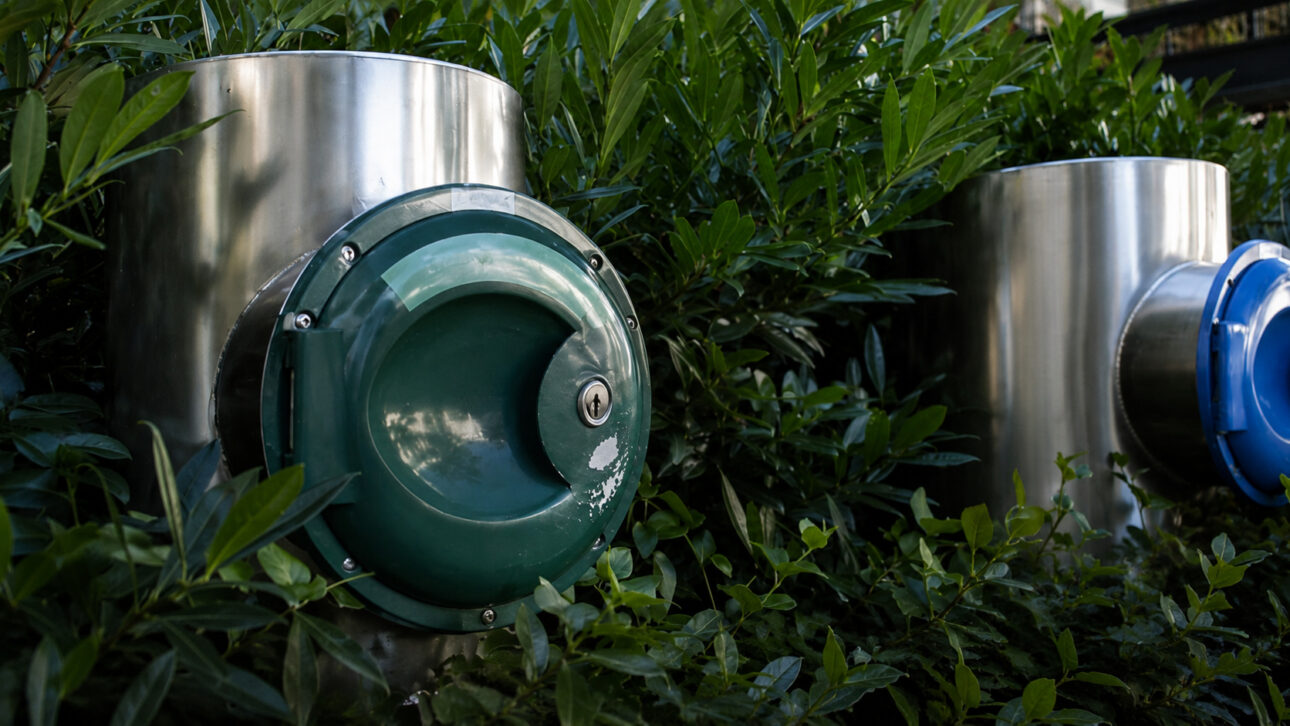
Smart City Sweden, a Swedish state initiative for sustainable urban solutions, details that the material is stored in this unit before being removed by a suction truck and transported to a biogas plant.
The closed structure helps keep waste away from the stalls and work areas. In the market, the result is seen in the cleanliness of work areas, reduced direct handling, and odor control.
Infrastructure defines where the technology can fit
Pneumatic waste collection requires a network of tubes, fans, disposal points, and a collection center. These elements need to work together for the waste to reach the closed containers at the station.
Therefore, the system needs to be included in the site’s planning. In already constructed areas, installation depends on space to connect disposal points to the central unit and an operation capable of managing the network.
Large condominiums, hospitals, municipal markets, and new neighborhoods can consider this structure when there is concentrated waste generation and space to install the network. The decision needs to consider the organization of the enterprise and the final destination of the waste.
Pneumatic waste collection shows that waste can travel a hidden path underground to a closed central station. The system reduces the need for collection at each door but requires a well-planned and maintained infrastructure.
For dense neighborhoods, the main point is to balance fewer trucks between buildings with the necessary structure to transport and store waste safely.
In which areas of your city would this network make sense before expanding the passage of trucks between buildings? Leave your opinion and share the article.