






 Portuguese
  Spanish


SIP panels appear as an industrialized alternative for prefabricated houses, with custom-made pieces, fewer wet stages, less waste generation, and better thermal insulation, provided that foundation, sealing, installations, humidity, and external finishing are addressed in the technical project from the start, before assembly on the site to avoid failures.
The prefabricated house made with SIP panels has gained attention for promising quick assembly, less mess on the construction site, and better thermal performance compared to some traditional masonry. The system uses industrialized pieces that arrive ready on site and reduce stages related to brick, cement, mortar, and long curing periods.
The assembly of the main structure can occur in a few days, but this does not mean complete delivery of the house with installations, roofing, frames, painting, flooring, and documentation. The final performance depends on the technical project, ready foundation, delivery logistics, suitable materials, and trained team to avoid failures in assembly.
How SIP panels accelerate construction
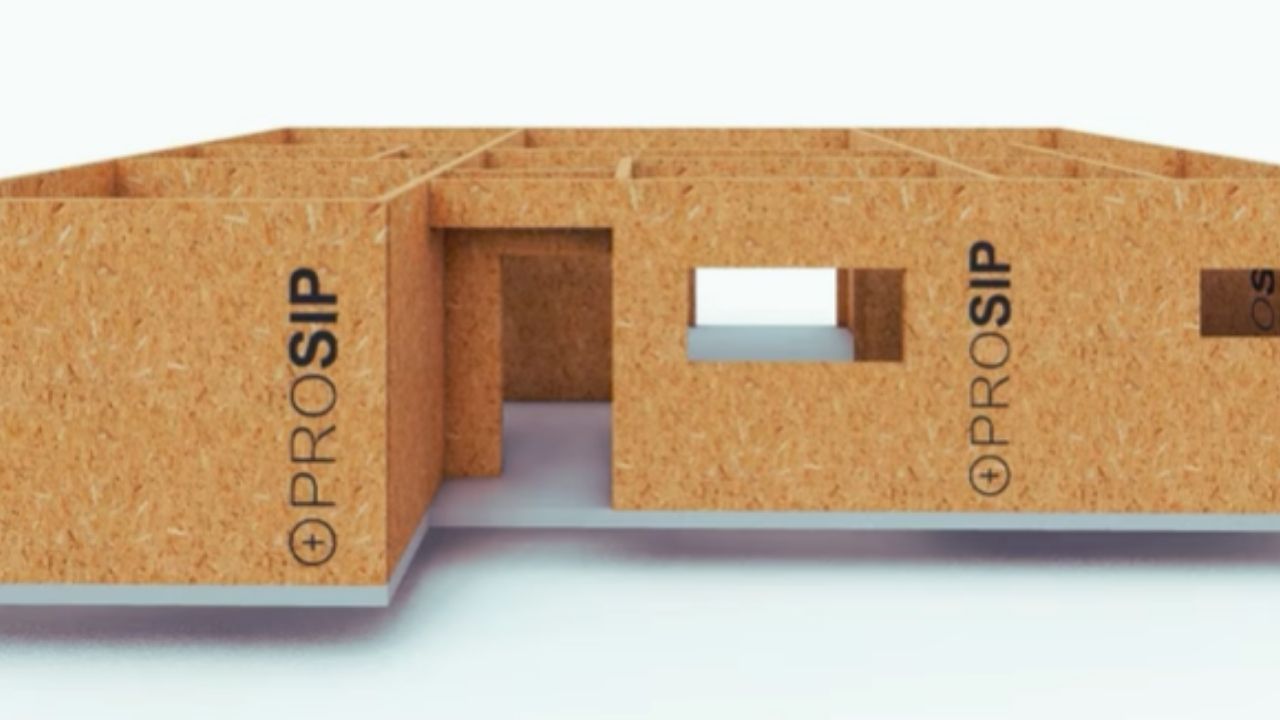
SIP panels, short for Structural Insulated Panels, combine structure, closure, and insulation in a single piece. Instead of building walls row by row, as in conventional masonry, the team positions custom-made panels, fits the pieces, and quickly advances in forming the volume of the house.
-
Single Mother Working Three Jobs Receives 111 m² 3D-Printed Home with Concrete Walls Built in 12 Hours, Featuring 3 Bedrooms, 2 Bathrooms, and a Printer for Replacement Parts

-
Simple Technique to Restore Rusty Metal Window Grilles Gains Attention for Revitalizing Old Structures Without Full Replacement

-
Couple Transforms Suffolk’s Last 1891 Windmill into Luxurious Four-Story Home with Zinc Observation Room in England
-
Father and Son Build 97 cm Thick Circular Stone House in Brazil, Inspired by Scottish Architecture, Creating a New Agrotourism Hub



This system helps explain why the prefabricated house is associated with shorter schedules. Since much of the production takes place in the factory, the site receives components already planned, with measurements, openings, and fittings defined before assembly. The speed comes less from improvisation and more from pre-planning.
The promise of a house built in a few days needs to be understood within this context. Normally, this timeframe refers to the assembly of the main structure, not the final delivery of the residence ready for use. After the structure, installations, roofing, finishing, frames, and other stages are still required.
Therefore, the real gain is in the reduction of wet and repetitive phases, such as brick laying, mortar application, plastering, and long curing times. The construction can be cleaner and more predictable, but it still depends on a well-resolved executive project.
What is inside a SIP panel
A SIP panel is usually formed by two external rigid boards, generally OSB, enclosing an insulating core. This core can be made with expanded polystyrene, polyurethane, or other materials compatible with the resistance and thermal performance specified in the project.
This composition allows a single piece to deliver rigidity, sealing, and insulation. In practice, the panel replaces several layers that, in conventional construction, would be executed separately. This integration makes assembly faster and reduces the number of interferences on the construction site.
The logic of the prefabricated house depends precisely on this industrialization. The walls do not arise from improvisation on the site, but from pre-planned pieces. Openings for doors, windows, and technical passages need to be planned before execution to avoid later cuts.
When everything is planned correctly, the fit between the panels tends to be more precise. This reduces gaps, improves sealing, and helps with thermal performance. However, when there is improvisation, the advantage of the system can be lost in assembly failures.
Less cement does not mean construction without concrete
The expression “without cement” attracts attention but needs to be read carefully. SIP panels greatly reduce the use of cement in the walls, but the construction may still require foundation, base, subfloor, sidewalks, wet areas, and complementary elements made with concrete or mortar.
The gain lies in replacing part of the masonry with a dry and industrialized system. This reduces the dependence on brick, mortar, plaster, and curing stages in much of the construction. The construction becomes less wet, but does not necessarily eliminate all concrete.
This detail is important to avoid false expectations. Those seeking a prefabricated house need to understand that the construction method changes much of the execution but does not erase all traditional elements of a residence.
The foundation, for example, remains a decisive stage. If the base is not ready, leveled, and suitable for the project, the panels may have fitting, sealing, and stability issues. The speed of assembly only works when the previous preparation was well done.
Thermal comfort depends on the entire project


One of the main attractions of SIP panels is thermal comfort. As the insulating core reduces heat exchange through the walls, the house can lose less heat in winter and gain less heat in summer. This can decrease the reliance on fans, heaters, and air conditioning.
However, the actual performance does not depend solely on the wall. Solar orientation, cross ventilation, roofing, frames, shading, and sealing also influence the outcome. A well-designed house needs to treat the entire envelope as a thermal system.
In the prefabricated house, control of measurements and industrial assembly can help reduce gaps and thermal bridges. This improves the internal sensation and makes the environment more stable throughout the day, especially when the project considers the local climate.
But changing the wall material without adjusting the rest of the house can frustrate expectations. If the roofing gets too hot, if the windows receive direct sunlight without protection, or if there are sealing failures, the benefit of the panels may be less than expected.
Humidity and infiltration are sensitive points
Precautions against humidity are among the most important points before choosing SIP panels. The edges of the panels need to receive adequate protection to prevent water entry, performance loss, and progressive damage to the construction system.
Bathrooms, kitchens, laundries, and other wet areas require specific technical treatment. The speed of assembly cannot override waterproofing, sealing, and compatibility of materials with the daily use of the house.
In a prefabricated house, humidity failures can compromise more than just appearance. Depending on the affected point, infiltrations can harm insulation, finish, resistance, and durability of the components. Therefore, the project needs to anticipate these risks.
It is also necessary to observe the external finish. Rain, sun, wind, radiation, and thermal variation require compatible coatings. The panel needs to be protected to function well over time, not just on the day of delivery.
Installations need to be planned before assembly

Another essential care involves electrical and plumbing installations. As the walls arrive ready or semi-ready, the passage of conduits, pipes, and technical points must be defined before execution.
Improvisations on site can compromise sealing, insulation, and resistance. Cuts made after assembly can create weak points, open paths for moisture, or impair the system’s performance. What seems like a simple adjustment can turn into a structural or thermal failure if not planned.
Therefore, the technical project of the prefabricated house needs to integrate architecture, structure, electrical, plumbing, and finishing from the start. Manufacturing should only occur when the main decisions have already been harmonized.
This planning also avoids delays. If the panel arrives at the site without foreseeing an important passage, the project loses part of the speed advantage. Industrialization works better when there are fewer improvised decisions during assembly.
System can gain ground in Brazil
SIP panels meet a growing demand for faster, more predictable, and cleaner constructions. In urban areas, compact houses, extensions, and constructions with tight deadlines, dry assembly can reduce delays caused by rain, rework, and lack of specialized masonry labor.
For the Brazilian market, the challenge is to adapt the system to the climate, performance standards, and house usage habits. Hot, humid regions or those with large temperature variations require specific solutions for ventilation, vapor barriers, sealing, and external finishing.
The prefabricated house can be an interesting alternative when design, manufacturing, and assembly work together. In this scenario, the system ceases to be a technological curiosity and competes with traditional methods in terms of time, cleanliness, comfort, and predictability.
On the other hand, the model should not be sold as a magic solution. Without a qualified supplier, material specifications, structural calculation, assembly guidance, and planned maintenance, speed can come at a cost later.
What to consider before choosing a prefabricated house
Before contracting a prefabricated house with SIP panels, the owner needs to request an executive project, material specifications, structural calculation, and clear assembly guidance. They should also verify how the foundation, edges, wet areas, installations, and external finishing will be handled.
The system can reduce dirt, waste, and construction time, but it only delivers good results when each stage communicates with the other. Fast construction does not dispense with engineering; in fact, it requires even more precise planning.
The main advantage lies in transforming part of the construction into an industrialized process. This can bring measurement control, less waste, better insulation, and a more streamlined schedule. The main pitfall is treating ready-made panels as if they were simple pieces to fit together without a project.
Do you think prefabricated houses with ready-made panels can replace part of the traditional masonry in Brazil, or is there still a lack of confidence in this type of construction? Leave your opinion in the comments.


