






 Portuguese
  Spanish


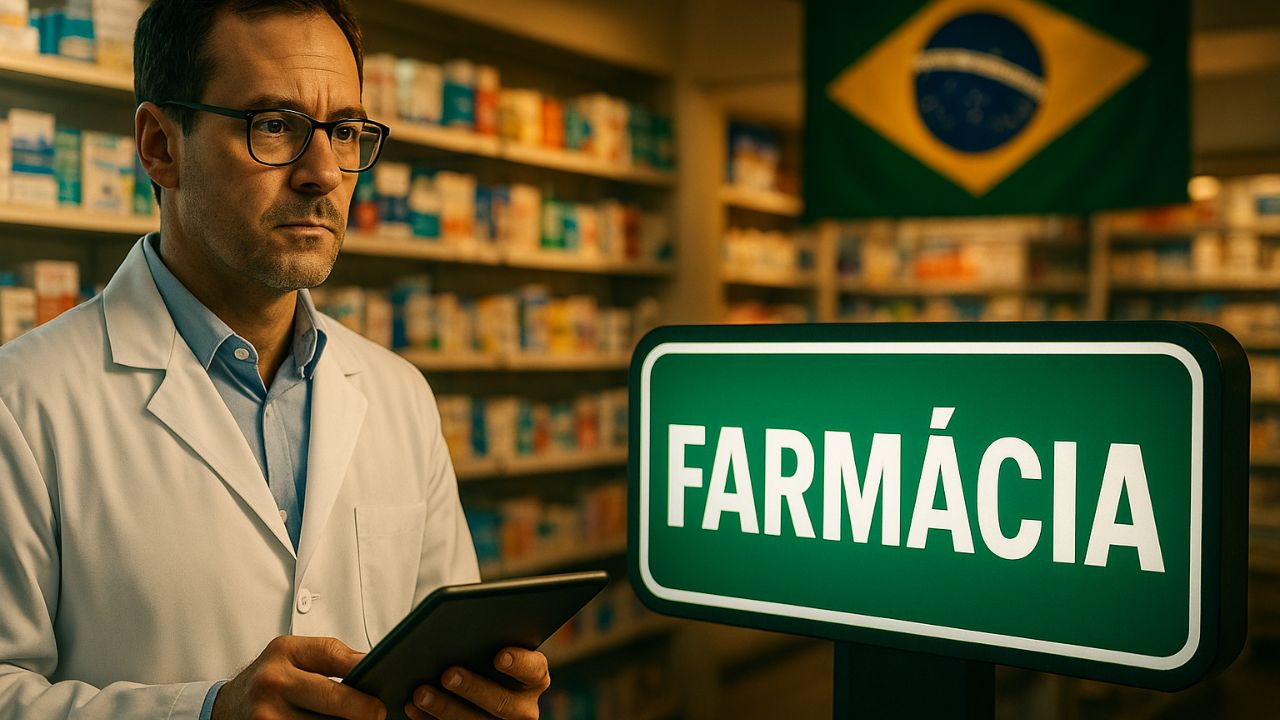


From A Highly Profitable Business Model To Data Schemes And Political Lobbying, Understand The Factors That Explain The Ubiquity Of These Establishments In The Country.
The feeling that there is a pharmacy on every corner is not just a figure of speech. According to information gathered by the portal Fatos Desconhecidos, data from 2025 reveals that there are more than 93,000 pharmacies in Brazil, which amounts to approximately one for every 2,000 inhabitants. Although the first explanation points to the classic law of supply and demand, the reality behind this massive expansion is much more complex and involves aggressive market strategies, the controversial use of personal data, and even the influence of criminal schemes and political lobbying.
The growth is undeniable: in just over 20 years, the number of pharmacies jumped 63%, consolidating Brazil as the ninth largest global pharmaceutical market. However, what sustains this ubiquity goes beyond simple medicine sales. Factors such as accessible franchise models, diversification of products that have turned pharmacies into convenience centers, and obscure practices like collecting CPF numbers for marketing purposes are key pieces of a puzzle that reveals why this sector thrives so consistently, even in times of economic crisis.
The Market Logic: Demand, Proximity, And Profitability


The foundation for understanding the phenomenon of pharmacies in Brazil starts, indeed, with consumer behavior. Brazilians have a culture of self-medication and seek quick solutions for common symptoms, creating constant demand. According to research by Fatos Desconhecidos, the pharmaceutical sector generated over R$ 150 billion annually, a number that reflects not only need but a deeply rooted consumption habit in the population. Often, the pharmacist’s word still carries a weight similar to that of a doctor in smaller communities.
-
Petrobras and Engeko’s New Investment Plan Promises Billions and Thousands of Jobs, Capturing Market Attention

-
JBS Halts Beef Production for China as Brazil Exceeds 50% of 1.106 Million-Ton Quota; Tariff May Rise from 12% to 67%, Raising Concerns Over Cattle Prices.

-
Brazil’s Social Security Alters Biometric Rules for Pensions and Benefits, Sets 30-Day Deadline, Expands Requirements, and Clarifies Who Is Exempt from Immediate Update
-
Major Brazilian Supermarkets, Including Carrefour and Assaí, May Close Earlier to Prevent Price Increases


This demand is exploited through a strategy of geographic saturation. In an interview with Brasil Journal, Flávio Correia, a representative of Drogasil, explained the reason we see competitors side by side: “five steps make the difference”. Convenience is so crucial that immediate proximity outweighs competition. This logic proves resilient: in 2016, while the Brazilian GDP shrank by 3.6%, the pharmaceutical sector grew by 18%. It is clear that, for the major players in the market, closing a store means diluting customers to all other networks, justifying the massive presence in the same location.
Franchises And Diversification: An Accessible And Versatile Business
Another pillar that supports the expansion of pharmacies in Brazil is the strength of the franchise model. In an interview with the magazine Veja in 2024, Bruno Costa, director of A Fórmula, and Gustavo Freitas, president of Poupaqui, highlighted that the business is seen as a highly profitable and accessible venture. With an average investment starting at R$ 500,000, monthly revenue can reach R$ 200,000, with a profitability of up to 20%. This attracts investors from various fields, as the law allows anyone to own a pharmacy, provided they hire a pharmacist as a technical manager.
Moreover, pharmacies have ceased to be merely points of sale for medications. As pointed out by Sérgio Mena Barreto, CEO of Abra Farma, product mix diversification has been fundamental. Today, these establishments function as real convenience centers, selling personal hygiene items, beauty products, dermocosmetics, and even food. This transformation broadens the customer base and frequency of visits, ensuring a constant cash flow that does not depend solely on the sale of medications.
The Price Of Discount: Your Personal Data Is Worth Gold
One of the most controversial strategies that, according to Fatos Desconhecidos, explains part of the financial power of the chains is the collection of data via CPF. By offering aggressive discounts, which can exceed 70%, in exchange for the CPF, pharmacies gain access to highly valuable information: your consumption habits. Journalist Amanda Ross exposed how a generic medication can have its price inflated by up to 2,800% over the cost price, within the maximum limit allowed by Anvisa, just to make the “discount” seem advantageous.
The real objective, however, is to map your profile. The pharmacy knows if you buy diapers, antidepressants, pregnancy tests, or products for chronic diseases. This data is used to create ultra-targeted marketing campaigns, but the danger may be even greater. Lawyer Ana Lusa Dalari raises the issue: it is unclear whether there is integration of this data with banks or employers. A denied loan, for example, could be based on health information obtained through your CPF at the pharmacy, a practice that, although unconfirmed, navigates a grey area of the General Data Protection Law (LGPD).
The Front For Crime: Money Laundering And Million-Dollar Frauds
The popular suspicion that some establishments serve as a front for money laundering has found support in investigations by the Federal Police. In July 2025, an operation dismantled a scheme that used pharmacies, some existing only on paper, to defraud the Farmácia Popular program. In Águas Lindas (GO), two “ghost” pharmacies reportedly received R$ 500,000 from the government. The criminals purchased inactive pharmacies already registered in the program, forged prescriptions, and used the CPFs of innocent people to simulate sales.
The scheme, detailed by Fatos Desconhecidos, moved approximately R$ 9 million in money laundering and diversions, with the funds even being used to finance drug trafficking. Federal police officer José Roberto Perez stated that the criminal organization used the social program to launder resources and invest in its illegal activities. Although this does not justify the entirety of the 93,000 pharmacies, this case proves that the high profitability and reach of the pharmaceutical sector attract criminal organizations that take advantage of its image as a legitimate business to conceal illegal operations.
Behind The Scenes Of Power: The Pharmaceutical Industry Lobby
The final layer that explains the strength of pharmacies in Brazil lies in politics. The pharmaceutical industry lobby is a powerful force in Brasília, ensuring that legislation favors its interests. A survey from 2019 revealed that the sector donated R$ 13.7 million to the campaigns of 356 candidates, forming the so-called “medication bench”. These donations, while legal, create a clear conflict of interest, questioning whether the elected politicians will represent public health or the interests of those who financed their campaigns.
There are no shortage of examples. A former director of Hypera admitted in a plea bargain to having bribed politicians to approve the sale of over-the-counter medications in supermarkets, a project that was vetoed by the presidency. In the 2018 elections, sector businessmen, with declared fortunes in the hundreds of millions, donated millions to other candidates, ensuring that their influence remained in Congress. As researcher Jorge Bermudez summarizes, “often the industry’s interest has nothing to do with health. The industry wants the most profitable product for itself”.
The multiplication of pharmacies is a reflection of a healthy and competitive market or does it reveal a system with questionable practices ranging from price manipulation to political influence? Do you think that data collection in exchange for discounts is a fair trade? Leave your opinion in the comments; we want to hear from those who experience this in practice.





Mas e quem consegue comprar algo na farmácia sem dar o CPF?
Infelizmente não existe segmento honesto, sério, baseado em bons princípios. Essa, é a realidade.
acho um pensamento muito severo , pois acredito que o mercado das farmácia tem muita gente honesta e trabalhadora !!!