Portuguese
  Spanish


Case reported by BBC News Brasil exposes the advance of extreme poverty in Afghanistan, where income-less families face hunger, lack of medical care, and low humanitarian aid, while girls remain vulnerable to child marriage agreements amid the crisis.
Afghan Saeed Ahmad stated that he agreed to give his 5-year-old daughter, Shaiqa, to a relative to afford her urgent surgery in the Ghor province, Afghanistan, according to a report by BBC News Brasil.
The girl had developed appendicitis and a liver cyst, but the family did not have the money to cover the medical treatment.
“I didn’t have the money to pay for the medical expenses. So I sold my daughter to a relative,” said Saeed, in a report published by the BBC in May of this year, 2026.
-
Brazilian Startup Develops Solar-Powered Mobile Factory, Recycles 100,000 Panels in Under a Year, Recovering Silver and Copper

-
Your Door Lock, Gate Padlock, and Hotel Key Card Likely Come from the World’s Largest Lock Manufacturer, the Swedish Group Behind Yale and Brazil’s Papaiz
-
Major Brazilian Ethanol Producer Becomes Largest Owner of Planted Forest in Mato Grosso, Aiming to Power Plants with Renewable Energy Instead of Fossil Fuels
-
In 1980, three brothers in a Chinese village collected discarded buttons, sparking the transformation of the area into the world’s button capital, producing billions annually for global fashion.


The agreement was settled for 200,000 afghanis, equivalent to about US$ 3,200 and approximately R$ 17,000.
The surgery was successfully performed, but the negotiation stipulates that Shaiqa will leave the family within five years to marry one of the sons of the relative who paid for the procedure.
The case gained attention for exposing the combination of extreme poverty, unemployment, lack of access to healthcare, and low humanitarian aid in a country where a large part of the population cannot meet basic needs.
Saeed also said that he avoided receiving the full amount at once because, if he had accepted the full sum at that moment, the relative would have taken the child immediately.
“If I had accepted the full amount at that moment, he would have taken her immediately,” declared the father, explaining the agreement made with the relative.
Urgent surgery was paid after family agreement
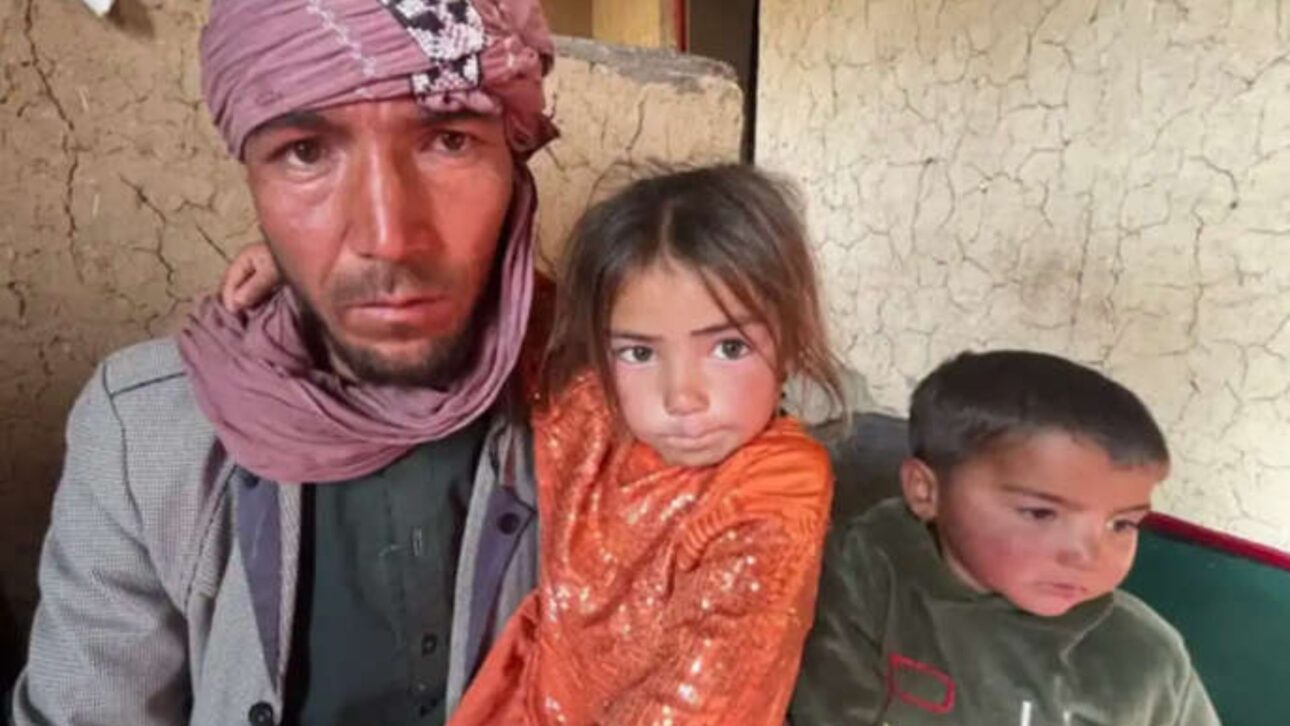
According to Saeed, the family did not have the resources to fund the operation and saw the agreement as the only alternative to ensure the girl received medical care.
The father stated that he only asked for the amount necessary for the treatment at that moment, leaving the rest of the payment for the following five years.
The intention, according to him, was to prevent his daughter from being taken from the house right after the surgery.
Even so, the commitment made maintains the expectation that Shaiqa will be handed over in the future, when she is to become the daughter-in-law of the family that financed the treatment.
“If I had money, I would never have made this decision,” said Saeed.
He then justified the choice by stating that he feared losing his daughter if he couldn’t pay for the operation.
“But then I thought: what if she died without the surgery? At least this way, she will be alive,” he stated.
The story was recorded in Ghor, an Afghan province marked by intense poverty and lack of work.
In the report, the BBC described men gathered at dawn in Chaghcharan, the provincial capital, waiting for any opportunity for daily work.
Extreme poverty in Afghanistan pressures families
Saeed’s situation does not appear as an isolated case in the scenario described by BBC News Brazil.
Another resident of Ghor, Abdul Rashid Azimi, stated he was willing to sell one of his 7-year-old twin daughters to feed the rest of the family.
The account was also associated with lack of employment, indebtedness, and difficulty in buying food.
In the same investigation, residents reported that children went to bed hungry and that families survive on minimal food.
A woman identified as Kayhan, mother of one of the families interviewed, said that at home there was only bread and hot water, “not even tea.”
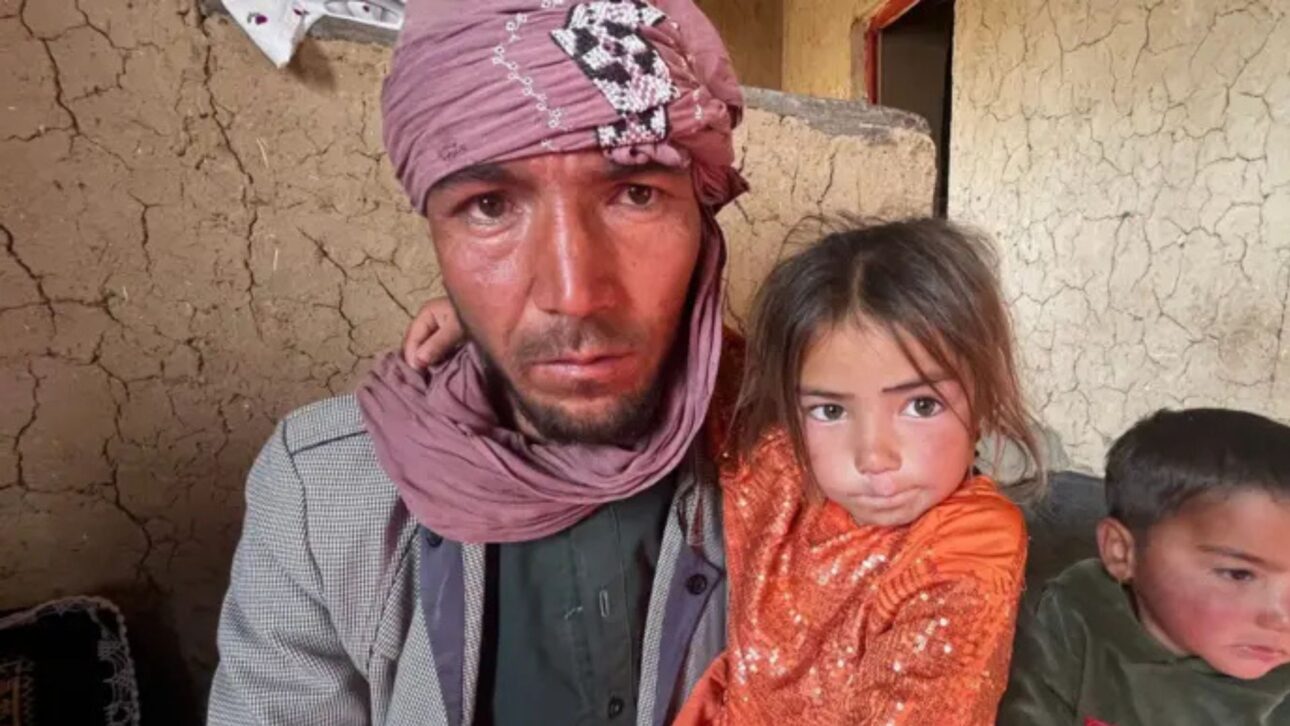
According to the UN, cited in the report, three out of four people in Afghanistan cannot meet their basic needs, such as adequate food.
The country has been facing a prolonged crisis since the Taliban regained power in August 2021, worsened by unemployment, economic isolation, social restrictions, and cuts in external funding.
Afghanistan International reported, based on the BBC’s report, that unemployment has become widespread, the healthcare system is undergoing severe deterioration, and the aid that once covered essential needs for millions of people has been drastically reduced.
Humanitarian aid has fallen
The reduction of international aid is one of the central points to understand the worsening of the Afghan crisis. The United States, which was previously Afghanistan’s main donor, cut almost all aid to the country last year.
According to the BBC, many other important donors also significantly reduced their contributions, including the United Kingdom.
Still according to the article, aid destined for Afghanistan in 2026 fell by about 70% compared to the previous year, at a time when poverty, hunger, and lack of medical care are pressuring families in various regions of the country.
The drop in funding directly affects the supply of food, health, shelter, and social protection. In more vulnerable areas, the absence of income and basic services increases dependence on informal agreements, loans, and extreme family decisions.
Humanitarian organizations and human rights entities state that the restrictions imposed by the Taliban on women and girls have also contributed to reducing the interest of international donors.
The group, on the other hand, rejects this relationship and says that humanitarian aid should not be politicized, according to a response attributed to the Taliban’s deputy spokesperson, Hamdullah Fitrat, in the report.
In addition to the drop in resources, the Afghan crisis is exacerbated by the lack of regular employment.
In Ghor, men rely on occasional work to bring bread home, and many return without any payment after hours of waiting.
Child marriage remains a risk amid hunger
The delivery of girls in family agreements appears in a context of child marriage still present in parts of Afghanistan.
In situations of extreme poverty, indebted families may resort to arrangements involving payments, marriage promises, or future delivery of children.
The practice especially affects girls, who are more exposed when there is hunger, lack of school, economic dependency, and absence of institutional protection.
The Taliban’s ban on girls’ education is also cited by outlets that republished the BBC material as a factor that exacerbates the vulnerability of female children and adolescents.
In the case of Shaiqa, the successful surgery resolved the immediate medical emergency but did not end the impact of the agreement made by Saeed.
The girl remains with her parents for now, while the commitment made keeps open the possibility of family separation in the coming years.
The father’s account summarizes the dilemma faced by families without income, without regular access to medical treatment, and without sufficient protection network.
Explaining the decision, Saeed stated that he saw in the agreement the only way to prevent his daughter from dying without care.