Portuguese
  Spanish


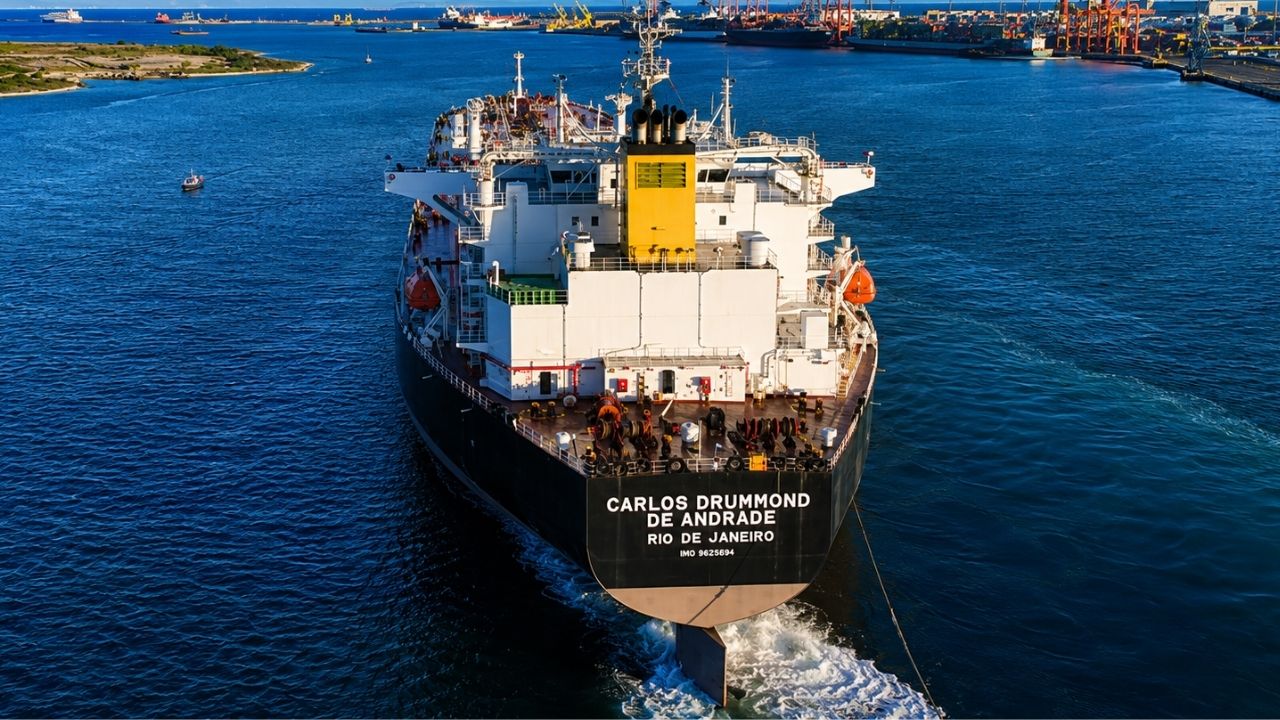

Operation reported by Transpetro on July 2 supplied the ship Olavo Bilac at the port of Rotterdam, Netherlands, with about 400 tons of B30, marine fuel with 30% renewable, after tests with B24 that reduced approximately 1.6 thousand tons of CO2 in 2025, according to the Brazilian company.
The ship Olavo Bilac, from the Transpetro fleet, received about 400 tons of B30 at the port of Rotterdam, Netherlands, on July 2, 2026. The operation was reported by the company as the first refueling of a fleet ship with marine fuel containing 30% renewable content.
Transpetro, a transportation subsidiary of Petrobras, presented the action as another step in adopting fuels with lower climate impact in maritime transport. The test is noteworthy because it does not depend on an immediate overhaul of port infrastructure, but on a renewable blend applied in a real refueling operation.
Ship Olavo Bilac received B30 at the port of Rotterdam
The operation took place in Rotterdam, one of Europe’s most strategic ports and a central point for global flows of energy, cargo, and fuels. According to Transpetro, the refueling involved approximately 400 tons of B30, marine fuel with 30% renewable content.
-
Brazilian Man Ingeniously Transforms Air Fryer into Functional Speaker with Radio and Volume Controls

-
Rows of “stone balls” emerge at low tide on California beach, with formations up to 1.5 meters aligned like a Pacific bowling alley

-
Japan Installs 800 Cameras in Tohoku Mountains Amid Rising Bear Attacks

-
Workers Installing Fiber Optics in French Town Discover 75 WWII-Era Concrete Training Bombs, Each Weighing 250 Kilograms




The chosen ship was the Olavo Bilac, part of the company’s fleet. The choice of Rotterdam reinforces the international nature of the test, as the Dutch port serves as a showcase for solutions that can gain traction on major maritime routes.
B30 marks a new stage after experience with B24
Before B30, Transpetro had already conducted operations with B24, marine fuel with 24% renewable content. In 2025, six of the company’s vessels were refueled with this type of blend, totaling about 4 thousand tons of fuel.
According to the company, this previous experience allowed for an approximate reduction of 1.6 thousand tons of CO2 emissions. The new refueling increases the renewable percentage of the blend and indicates an attempt to gradually advance, without immediately abandoning the systems already used in navigation.
Transpetro sees renewable fuel as a short-term alternative
Jones Soares, director of Maritime Transport at Transpetro, stated in a note that the company is advancing in adopting solutions to make the fleet more efficient and sustainable. He pointed out fuels with renewable content as an available short-term alternative to reduce navigation emissions.
The statement also highlights the use of existing infrastructure. This point is important because the energy transition in maritime transport often encounters obstacles in costs, fuel availability, ship adaptation, and port capacity. In the case of B30, the bet is on an intermediate solution, capable of entering operation before more profound changes.
Maritime transport faces pressure for lower emissions
International navigation is under increasing pressure to reduce greenhouse gases. According to Transpetro, its actions are in line with the goals of the International Maritime Organization, the IMO, which foresees net neutrality in greenhouse gas emissions by 2050.
This context helps explain why isolated refueling gains relevance. The ship alone does not change the maritime transport matrix, but the operation shows how companies test practical alternatives while climate regulation advances.
Rotterdam emerges as the stage for a silent transition


The port of Rotterdam has symbolic weight in this type of operation because it is connected to global energy and transport chains. By refueling in the Netherlands, Transpetro positions the test in an environment where alternative fuels and environmental goals are already part of the port agenda.
The source does not provide technical details about the exact composition of the renewable content of B30 used in Olavo Bilac. Therefore, the safest data is that it is a maritime fuel with 30% renewable content, as informed by the company. Caution is necessary to avoid turning an operational test into a larger environmental promise than the data allows.
Petrobras and Transpetro test a gradual path for the fleet
As Petrobras’ transport subsidiary, Transpetro, holds a strategic position in maritime movement linked to the oil and gas sector. Therefore, tests with renewable fuels in the fleet may indicate how traditional companies in the sector are trying to adapt operations to new environmental requirements.
The case also shows a typical contradiction of the energy transition: the progress occurs within a fleet linked to fuel transport, but with the use of blends that seek to reduce emissions from the navigation itself. It is a less visible change than replacing entire ships, but closer to the current operational reality.
Vessels can become a laboratory for new blends
The fueling of the Olavo Bilac ship does not end the debate on emissions in maritime transport. It functions as a test within a sequence: first, operations with B24 in 2025; then, the debut of B30 in 2026; and from there, evaluation of operational performance by the company.
This gradual logic matters because maritime fuels need to work on a scale, with safety, availability, and logistical compatibility. Before any solution becomes standard, it needs to go through real operations in ports, ships, and commercial routes.
What this fueling says about the future of ports
The first fueling with B30 in Transpetro’s fleet shows that the transition in maritime transport can happen in a less spectacular but still relevant way. Instead of an immediate overhaul of all ship technology, the movement begins with renewable blends, controlled tests, and the use of existing infrastructure.
The question remains whether fuels like B30 will be just an intermediate step or if they can gain scale in the world’s major ports. Do you believe that this type of solution already represents real progress in reducing ship emissions, or is it still insufficient given the size of the climate challenge? Leave your opinion in the comments.