Portuguese
  Spanish


Discovery Of Fire-Making Tools In China Reveals Surprising Advances Of Primitive Civilizations, Changing The View Of Human Technological Evolution.
Archaeologists have discovered 7,000-year-old fire-making tools in Jiangsu province, China. The excavation took place at the Caoyangang site and revealed the oldest known set of fire-making technology in the country.
The artifacts found help to understand how early humans began to produce fire artificially, rather than just preserving natural sources.
The team responsible for the discovery was led by Gan Huiyuan from the Jiangsu Provincial Institute of Cultural Relics and Archaeology. During the excavation, they found a well-preserved set of fire-making tools, consisting of a drilling stick and a fire board. According to Gan, this is the best-preserved fire drilling equipment ever found in China.
-
Strawberry Moon to Be Visible in Brazil on Monday (29th); Here’s When and How to Watch

-
Driver Crosses 100-Year-Old Railway Bridge Over Uruguay River, Encounters Rural Couple Preserving Traditional Farming Methods
-
Rural Producer Returns to Brazilian Farmland, Builds Family Agricultural Business with Children’s Support and Industry Backing
-
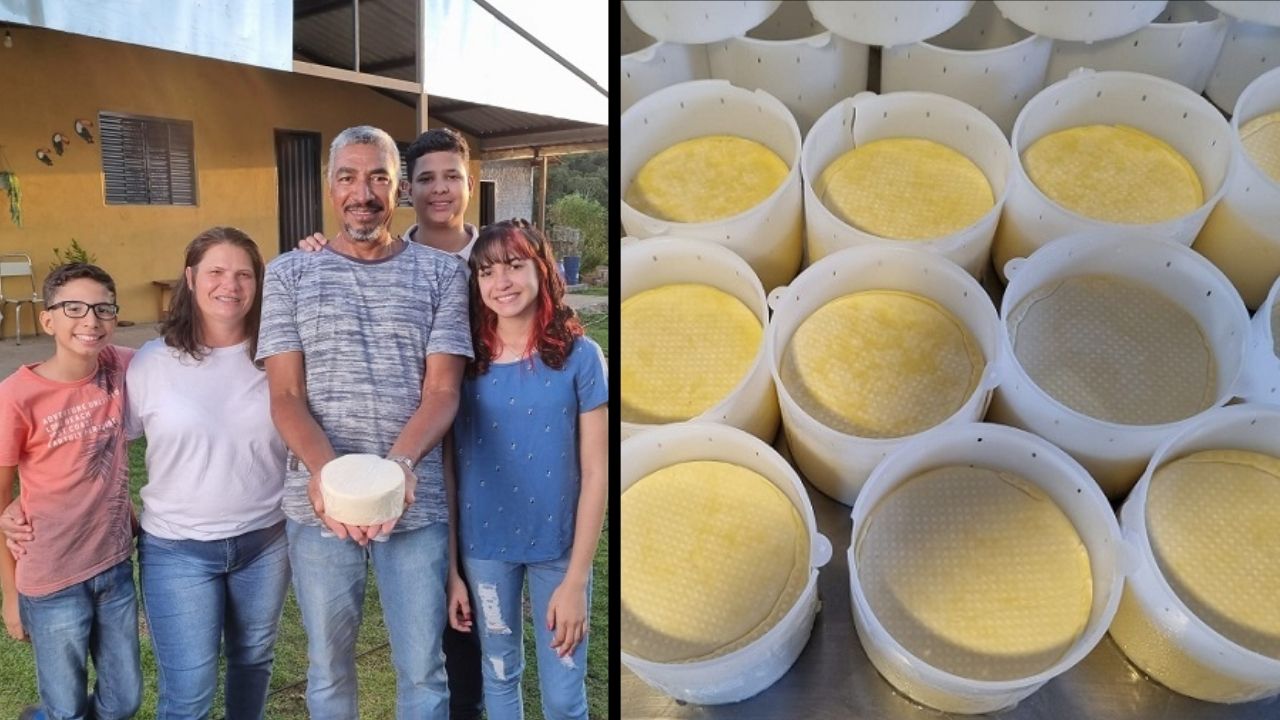
Goiás Couple Boosts Artisan Cheese Production from 25 to 70 Kilos Daily with Technical Support, Transforming Family Life in Rural Brazil



Findings Details
The drilling stick measures over 60 centimeters in length, while the fire board is over 30 centimeters. The object shows various dark circular marks, indicating repeated use for generating fire. A circular groove at one end suggests that the board could be carried or hung.
In addition to these tools, other similar pieces were found, reinforcing the idea that the region’s inhabitants mastered fire production. The preservation of wooden objects for so many centuries is considered rare, especially in a humid environment like Jiangsu.
The Caoyangang site covers more than 80,000 square meters and has been excavated by the Jiangsu Provincial Institute of Cultural Relics and Archaeology in partnership with the Nanjing Museum since 2022.
At the site, researchers also found over 3,000 artifacts, including ceramics, bone tools, wooden objects, and animal remains. Among the animal remains, there is evidence of deer, pigs, cattle, dogs, and birds. Aquatic plant remains were also found.

Historical Details
The discoveries reveal details about the life of prehistoric communities in the region and help to understand the social organization and technological advancements of the time. According to Gan Huiyuan, the archaeological site is a key piece for understanding the prehistoric cultural structure of China.
The excavation also reinforces ancient accounts from Chinese mythology. Traditional legends mention that early humans generated fire by rubbing wood to create friction. Now, there is concrete archaeological evidence confirming the existence of this technology in the region.
The importance of the discovery goes beyond confirming mythological practices. The intentional production of fire was a milestone in human evolution, allowing advancements such as cooking food, protection from predators, and adaptation to different environments. The mastery of the technique represents a significant change in the way of life of ancient peoples.
As excavations at Caoyangang progress, archaeologists hope to find more evidence that clarifies how this society functioned and developed its technologies.
The discovery of fire-making tools already adds an important chapter to the history of humanity, providing details about the lives of the first inhabitants of China and their capacity for innovation.
With information from archaeologymag.