Portuguese
  Spanish


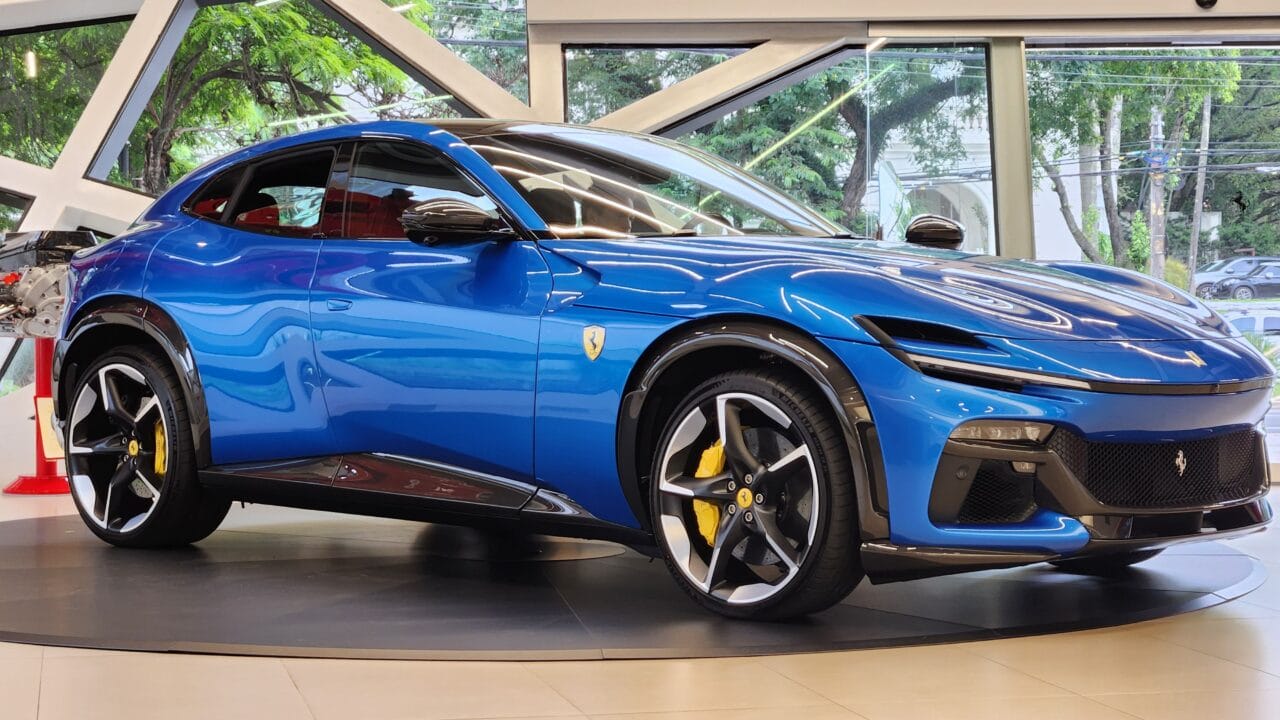

The Ferrari Purosangue, the highly anticipated crossover from the prestigious Italian brand, lands in Brazil with a luxurious V12 engine priced at R$ 7.5 million. Be sure to check out all the information and details about this exclusive launch.
The driver’s space features an excellent set of digital instruments, a steering wheel with performance adjustment controls, and a central entertainment system with Burnmester audio.
The Ferrari Purosangue can be purchased for R$ 7.5 million (or R$ 7.6 million, depending on the configuration). According to Ferrari, the global waiting time is two years.
This price and waiting list may vary depending on the vehicle’s configuration.
-
1983 Chevrolet Runs Over 100,000 km Without Gasoline, Powered by Wood Chips, Reaches 125 km/h in Airport Test

-
Workshop Converts Giant Tractor Tire Tricycle into a Three-Wheel Drive Hybrid with 36,000-Watt Electric Motor Capable of Climbing Hills

-
Sales of Brazil’s Cheapest Electric Car Halted Before First Deliveries: E-Motors Suspends Emova Easy Due to Import Tax Increase and Rising Freight Costs

-
Nissan Discontinues Qashqai SUV Amid Cost-Cutting, Chinese Competition, and Product Line Review




Inside, the Ferrari Purosangue is certainly one of the most luxurious and advanced models ever produced by the brand. There are no rigid plastic components, and suede has even been used on the center console. The vehicle is designed to accommodate four seats, all with electronically reclining capability and a sporty design, providing a cockpit feel even for passengers.
However, the highlight is the level of comfort offered, something that will certainly attract Ferrari’s target audience to the Purosangue. The car has air conditioning for both front and rear zones, as well as a multimedia system dedicated to the front passenger, in a format similar to that found in the Mercedes-AMG EQS.
New SUV from Ferrari: Purosangue
The Ferrari Purosangue shares similarities with various cars in the lineup, such as the front end which closely resembles that of the Ferrari SF90 Spider, which is also displayed in the brand’s showroom. However, what truly stands out is the air intake on the A-pillar, one of the car’s main attractions that makes it unique compared to other models, and plays an important role in the vehicle’s aerodynamics.
Additionally, in terms of aerodynamics, the rear of the Ferrari Purosangue features a more coupe-like shape, and despite the higher waistline, the direction is angled upwards, a solution similar to that adopted by the Lamborghini Urus, which is the main competitor in the super sports SUV market.
The new structure also provides a new way to interact with the Ferrari, which managed to offer convenience and even more refinement, without compromising on sportiness and the brand’s heritage. The relatively low weight was achieved thanks to various parts made of carbon fiber. By the way, the ‘Brazil package‘ requires the inclusion of these carbon fiber parts in the Purosangue configuration.
During this first encounter, which took place at an event at the Ferrari dealership in São Paulo, it was possible to perceive the manufacturer’s effort to make its first crossover harmonious in terms of design, while still being unique.
The latest addition to the Ferrari lineup, the crossover Purosangue, is finally available in Brazil. The luxury vehicle from the iconic Italian brand has a starting price of R$ 7.5 million and already has a waiting list of about two years, challenging the expectations of the brand’s most traditional fans.
To achieve this success, the manufacturer has invested in strategies to attract both loyal customers and new ones. Unlike other hybrid models from Ferrari, such as the 296 GTB, the Purosangue is equipped with a naturally aspirated V12 engine of 6.5 liters, capable of producing an impressive 725 hp and 73 kgf/m of torque. This combination allows this 2,033 kg vehicle to accelerate from 0 to 100 km/h in just 3.3 seconds.
Source: Canal Tech