Portuguese
  Spanish


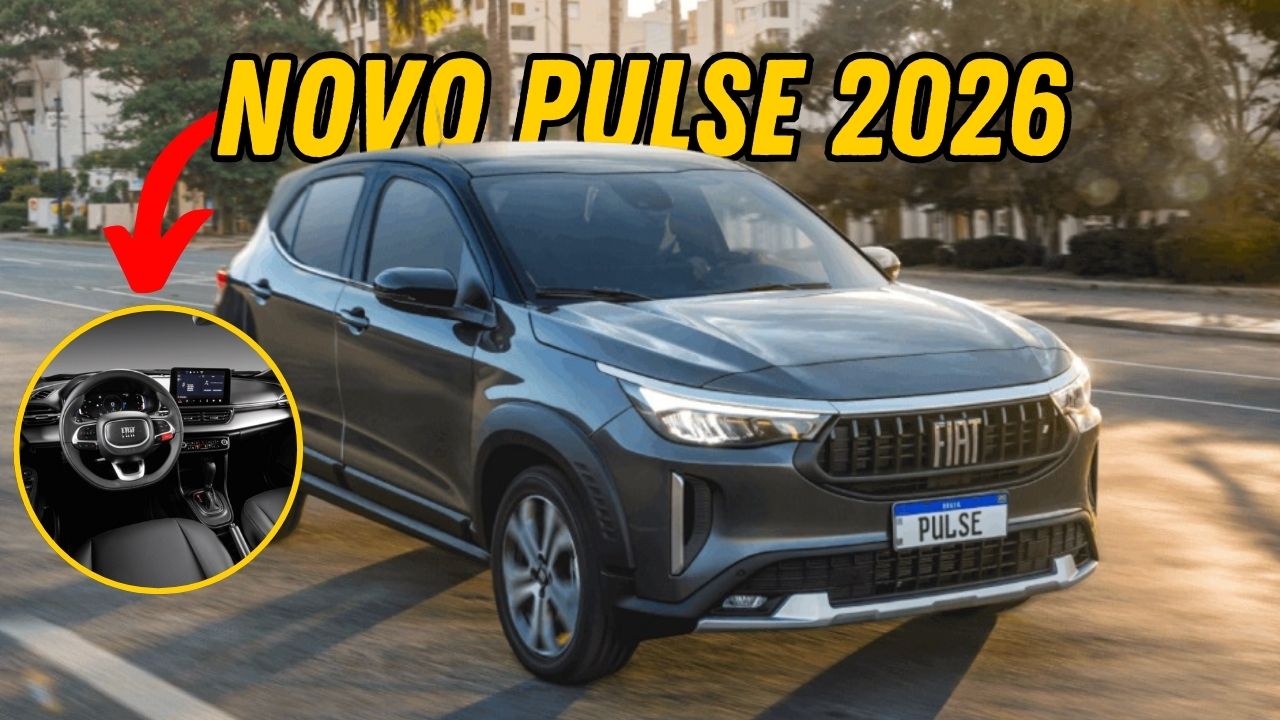


Fiat Pulse 2026 Debuts Mild Hybrid System With 1.0 Turbo Engine Of Up To 130 Hp, Achieves Up To 10% Efficiency And Challenges Polo TSI And Onix Turbo In The Segment. Understand What Changes.
The Fiat Pulse 2026 marks a strategic shift for the automaker in the most competitive segment in the country: that of compact turbo SUVs. For the first time, the model receives a mild hybrid system (MHEV) integrated with the well-known 1.0 Turbo T200 engine, enhancing efficiency, reducing consumption, and refining urban driving. With the arrival of this technology, the Pulse now competes with established models like Polo TSI, Nivus, and Onix Turbo, but with a distinct proposal: to deliver the performance of a turbo engine with improved economy, without the complexity of traditional hybrids.
The result is simple yet powerful: up to 10% improvement in real consumption, smoother operation, quicker responses, and a driving experience that approaches that of larger hybrids, but with maintenance and operating costs equivalent to conventional flex cars. Fiat is repositioning the Pulse not only as a popular SUV but as one of the most efficient models in its category.
Turbo Engine + Mild Hybrid System: The Union That Changes The Behavior Of The Pulse
The heart of the Pulse remains the 1.0 Turbo T200 engine, which delivers:
-
Chevrolet’s Parent Company to Invest Billions in Brazil to Modernize Factories, Update Cars, and Accelerate Hybrid Launch by 2028

-
Practical Driving Tests in Brazil Surge by 23.5%, Exceeding 2.2 Million by 2026, as New Rules Make the Process Cheaper and Simpler
-
Brazil’s Lula Government Allocates $463 Million Quota for Electric Car Parts, Waives Import Tax Until December, Sparking Competition Among BYD, Automakers, and Unions as Consumers Question Impact on Prices and Local Industry

-
Thinking of Installing LED Headlights? Why Replacing Halogen Bulbs is Still Banned, the Glare Risks Authorities Worry About, and How a New Proposal Could Allow Certified, Safe Installations


- 130 hp with ethanol
- 125 hp with gasoline
- 20.4 kgfm of torque


The big difference lies in the new MHEV 12V powertrain, composed of:
- integrated motor-generator
- additional battery specific to the hybrid system
- electronic power management
- faster and more efficient start-stop
This system does not move the car like a full hybrid, but assists the internal combustion engine in critical moments, such as:
- traffic light starts
- quick accelerations
- progressive accelerations
- speed stabilization in light traffic
In practice, the Pulse exerts less effort to achieve the same speed. This reduces consumption, emissions, noise, and vibration.
Lower Consumption And Improved Efficiency
The Pulse 2026 lineup has brought a tangible evolution in consumption with the mild hybrid system. The certified figures for the MHEV versions show:
- 13.4 km/l in the city (gasoline)
- 15.3 km/l on the highway (gasoline)
This efficiency places the Pulse Hybrid among the most economical turbo flex SUVs in Brazil, surpassing many direct competitors, especially in urban segments, where the MHEV operates with greater intensity.
The system also improves:
- turbo response time
- smoothing of acceleration
- stability of rotation at medium speeds
- consumption in light traffic, with segments where the engine operates “lightly”
The final result is a more docile, economical SUV that is comfortable to drive — without losing the energetic behavior of the T200 engine.
Refined Dynamic Behavior And More Comfort In The City
In the Pulse Hybrid, the CVT transmission works better because the electric system compensates for small variations in torque, allowing the engine to operate at lower and more stable RPM. This brings a greater sense of:
- smoothing
- internal silence
- progressive force delivery
The reduction in “turbo lag” is noticeable, especially during quick starts or turning maneuvers. The Pulse not only becomes more economical: it becomes more refined behind the wheel.
Updated Interior And More Modern Equipment
The 2026 lineup has introduced improvements in finishing, faster multimedia central, and new internal controls. The hybrid versions bring:
- digital dashboard
- 10.1-inch multimedia screen
- induction charger
- automatic air conditioning
- keyless entry
- electronic stability and traction controls
- hill start assist
In the higher versions, there are also:
- automatic emergency braking
- lane departure warning
- high-resolution rearview camera
For a mild hybrid SUV, the package is competitive and well-suited to the model’s proposal.

Price And Market Positioning
The Pulse Hybrid 2026 arrives with launch prices:
- R$ 131,990 – Audace Hybrid version
- R$ 146,990 – Impetus Hybrid version
The model does not compete with full hybrids such as Corolla Cross or HR-V and:HEV. Its real competition is with traditional turbo flex SUVs — and that’s precisely where it tries to flip the script: offering more economy without raising the price to the levels of traditional hybrids. The Pulse Hybrid positions itself as the alternative for those:
- drive a lot in the city
- want to spend less on fuel
- want a modern SUV
- do not want to deal with the complexity of plug-in hybrids or full hybrids
Why The Pulse Hybrid 2026 Matters?
Because it delivers something rare:
a turbo SUV that has become more efficient, smoother, and more enjoyable to drive, without changing the proposal and without increasing maintenance costs.
The strategy is clear:
- keep the Pulse competitive in Brazil’s most contested segment
- offer something that rivals do not have
- bring Fiat closer to the electrification market
And it’s working.