Portuguese
  Spanish


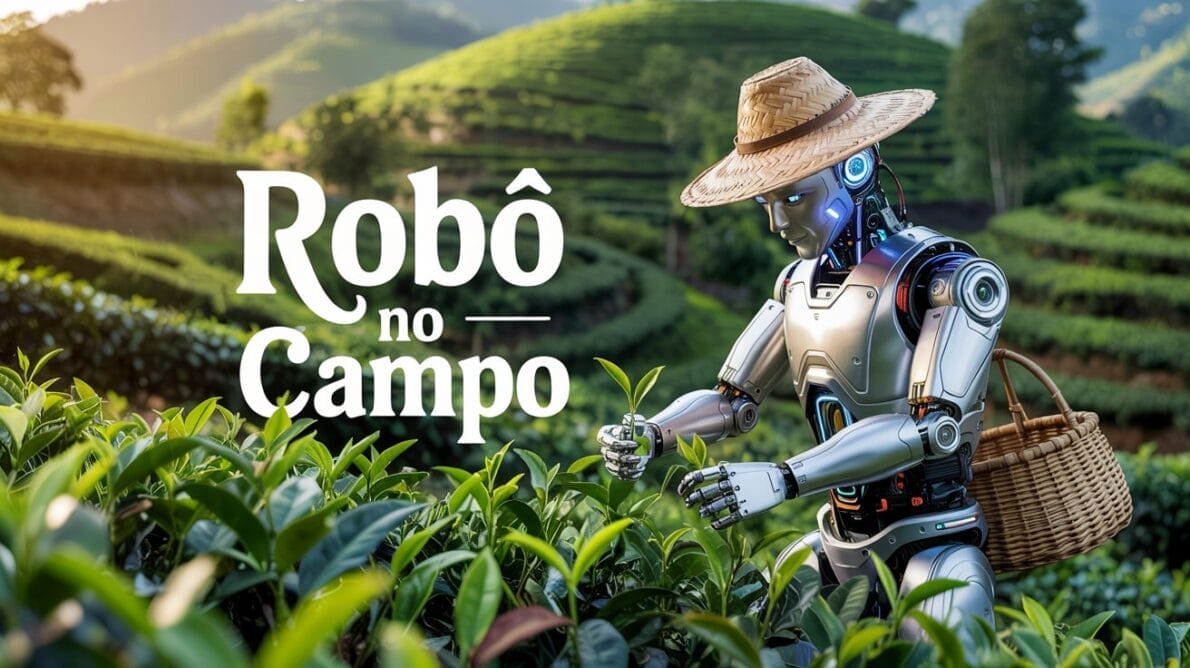

Humanoid Robot Technology Is About to Revolutionize Agriculture, Promising a Deep Transformation in the Field. Machines Can Replace Essential Human Functions in Crops.
Chinese agriculture is about to enter a new era with the introduction of the humanoid robot Xunxiao, developed to operate directly in the fields.
Presented by the state media of China, the robot was seen in action harvesting tea in the southern part of the country, demonstrating skills that go beyond simple automation: it moves like a human, interacts with the environment, and performs agricultural tasks with surprising precision.
Equipped with a complete anthropomorphic appearance — with a head, arms, legs, and even articulated fingers — Xunxiao represents a technological leap for the agribusiness sector.
-
Crab Trapped in Plastic Bottle for 62 Days Near Okinawa Highlights Little-Known Impact of Marine Pollution on Small Animals

-
James Webb Telescope Uncovers Unexpected Clues on Mysterious Moon, Potentially Redefining Planetary Origins

-
$1.5 Billion Sleipnir Vessel Transforms Ocean into Floating Construction Site with 12 Hybrid Engines and Capacity to Lift 20,000 Tons

-
23 Years After Tragedy, Brazil’s Alcântara Space Center to Launch New Suborbital Rocket in 2026 with South Korean SEBIT Project Targeting Near-Space Tests


The robot was spotted wearing a straw hat and carrying a bamboo basket while picking fresh tea sprouts alongside human farmers.
Artificial Intelligence in the Field
The project is the result of a partnership between the Chinese startup Youibot and Xi’an Jiaotong University, recognized for its excellence in engineering and innovation.
Xunxiao uses advanced artificial intelligence to identify, select, and harvest only the most suitable tea sprouts for consumption, a task that requires delicacy and attention.
To achieve this, the robot is equipped with highly sensitive sensors in its hands, capable of interpreting textures, shapes, and the resistance of plants with almost human precision.
This technology allows it not only to replicate human movements but also to make real-time decisions based on complex sensory data.
According to the engineers responsible for the development, Xunxiao’s great differential lies in its navigation system.
It is capable of generating three-dimensional maps of the environment it is in, enabling it to move safely over uneven terrain, stairs, and even through large groups of people.
The Impact of Automation on the Agricultural Market
Labor shortages in the Chinese agricultural sector are a growing problem, driven by the aging population and the migration of young people to urban centers.
In this scenario, robots like Xunxiao emerge as a technological and strategic response to maintain productivity in the field.
This trend is not exclusive to China.
In countries like Japan and South Korea, smart agriculture — which combines robotics, AI, and data analysis — is already a reality and is being improved year after year.
The introduction of humanoid robots, however, is a bolder innovation that stands apart from traditional automated agricultural machines.
Experts point out that if the technology is scalable and financially viable, it could revolutionize the way food is produced, increasing efficiency, reducing waste, and primarily alleviating the dependence on human labor for repetitive tasks.
Robots with Body and Brain
Unlike smart tractors or spraying drones, Xunxiao was designed to be an extension of the human body in the field.
Its humanoid appearance is not merely aesthetic but functional: it allows the robot to perform tasks that require delicate movements and interaction with tools designed for human hands.
The decision to humanize the robot’s form also has social and cultural implications.
In China, respect for agricultural tradition is deep, and the presence of a machine that mimics the behavior of a rural worker may be more readily accepted than cold, impersonal technologies.
Furthermore, the humanization of technology facilitates integration with human workers, reducing resistance and promoting a more harmonious coexistence between man and machine.
The Future of Agriculture with Humanoid Robots
The launch of Xunxiao is still experimental, but the images released indicate that China is determined to become a reference in the application of cutting-edge robotics to agribusiness.
Although there are still challenges, such as production costs and adaptation to different types of crops and climates, the progress is considered promising.
According to the state newspaper Global Times, Xunxiao is expected to continue being improved to handle a wider variety of agricultural tasks, such as planting, pruning, and even pest monitoring.
The expectation is that, in the coming years, this type of robot will be present in various regions of the country, helping to ensure food security for a population that exceeds 1.4 billion people.
Moreover, the project could inspire other countries to invest in similar solutions, especially in regions facing labor shortages in the field, such as Brazil and the United States.
Global Trend: Smart Agricultural Automation
According to the report from consulting firm MarketsandMarkets, the global agricultural robotics market is expected to exceed US$ 20 billion by 2028.
The demand for solutions that reduce human dependency and increase precision in crop management grows year after year.
Among the most promising segments are autonomous harvesters, smart irrigation systems, and now humanoid robots like Xunxiao.
China, by leading this movement, may not only solve its own agricultural challenges but also pave the way for the export of technology and influence in this new branch of global agriculture.
Despite the enthusiasm, researchers warn that the transition to robotic agriculture must be done with planning.
Issues such as maintenance, safety, ethics, and the impact on rural employment must be considered to avoid inequalities and social disruptions.
Do you think humanoid robots can completely replace rural workers or should they be merely a complementary help in the fields? Share your opinion in the comments and join the conversation!