






 Portuguese
  Spanish


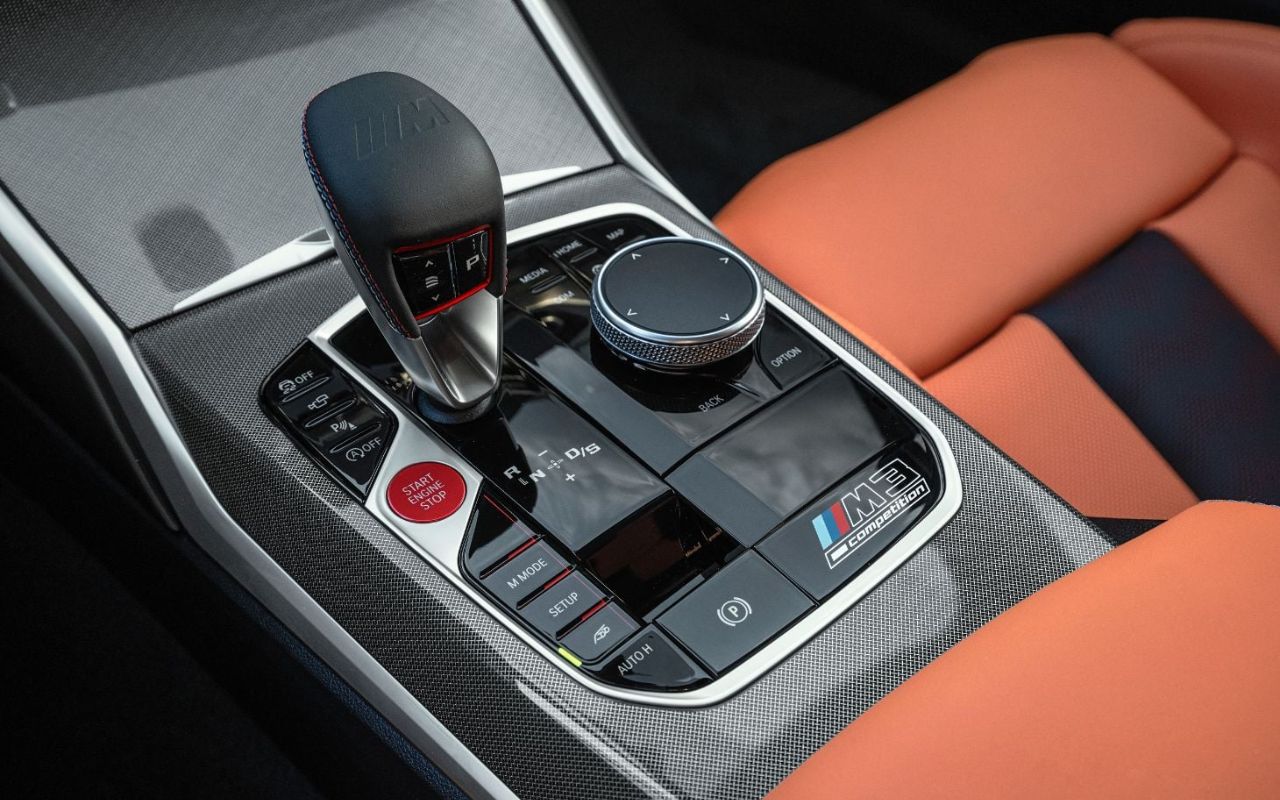


Frank van Meel Explains How High Torque, Environmental Efficiency, and Lack of Scale Make Manual Transmission Unviable in BMW Sports Cars.
The persistence of manual transmission in high-performance sports cars has become an increasingly difficult equation. According to Frank van Meel, head of the BMW M division, the discussion has shifted beyond just the preferences of enthusiasts.
Today, engineering factors, regulations, and the supply chain weigh decisively.
Comfort and Standard of Refinement Come into Play
Even with robust manual transmissions available in the North American market, BMW sees limitations beyond mechanical resistance.
-
Brazilian Factory Restores Truck Engines and Parts, Reducing Raw Material Use by Up to 85% After 80 Years in Business

-
British Marines Set Record by Changing Ford Escort Engine in 42 Seconds, Unbroken for 40 Years

-
BYD Owners in Brazil Raise Concerns Over Warranty After 87,000 km, Two Repairs in Three Days, and Over $500 in Costs

-
Classic Volkswagen Beetles of Brazilian Presidents to Swap Museums in Historic Partnership


Many of these gearboxes can handle high torque, but feature rougher shifts, associated with the typical behavior of muscle cars.
For the Bavarian brand, this profile would compromise the balance between comfort and performance—a central characteristic of the M models.
Thus, adopting available solutions would not always meet the level of refinement expected by its customers.
Manual Transmission in BMW: Environmental Pressure Favors Automatic Transmissions
The European regulatory landscape also contributes to the change. Increasingly strict emissions standards enhance the advantage of modern automatic transmissions.
These systems manage the engine operation more efficiently, reducing consumption and pollutants. In this context, the manual transmission loses technical competitiveness, even while maintaining strong emotional appeal among purists.
Torque Limit Imposes Technical Barrier
The most direct obstacle, however, lies in load capacity. The current manual transmission used by BMW supports up to 56.0 kgfm of torque.
This number becomes insufficient in light of recent models. The new BMW M5, for example, delivers 102.0 kgfm—a value practically incompatible with the limit of the manual gearbox.
CS versions of the M2, M3, and M4 reinforce this mismatch between mechanical evolution and the viability of traditional transmission.
Lack of Scale Discourages Suppliers
Meanwhile, the global supply chain has shifted direction. Companies like ZF and Getrag prioritize automatic transmissions and technologies related to electrification.
With rivals like Audi and Mercedes-Benz focused almost entirely on automatic configurations, demand for manual gearboxes has shrunk.
Consequently, developing a new manual transmission capable of handling high torques would require significant investments without guaranteed returns.
Without cost-sharing among automakers, the project becomes financially unattractive.
Manual Transmission Is Moving Toward Exclusive Niches
Given this combination of factors, the manual transmission is likely to migrate toward ultra-exclusive segments.
Hypercars from manufacturers like Pagani still preserve the analogue experience as part of the product identity.
Outside this niche, efficiency, automation, and electrification dictate the pace. The trend, therefore, points to an increasingly rare presence of manual transmission in high-performance vehicles.
BMW Still Offers Options, but the Future Is Uncertain
Although current models like the M2, M3, and M4 continue to offer a clutch pedal, the continuation of this configuration is not guaranteed in the next decade.
The advancement of hybrid and electric systems, combined with technical and environmental demands, reinforces the transition. Thus, the potential disappearance of the manual transmission reflects less the loss of fans and more the convergence of engineering, market, and regulation.
With information from AutoPapo


