Portuguese
  Spanish


Free Master’s Degree from Fiocruz in Cultural Heritage Accepts Remote Registrations for the 2026 Class, with Reserved Spots in Quotas and Institutional Scholarships Available. Course Will Have In-Person Classes in Rio de Janeiro and 100% Online Selection.
Fiocruz opens spots in a free master’s program focused on the cultural heritage of science and health; see how to apply for the remote selection.
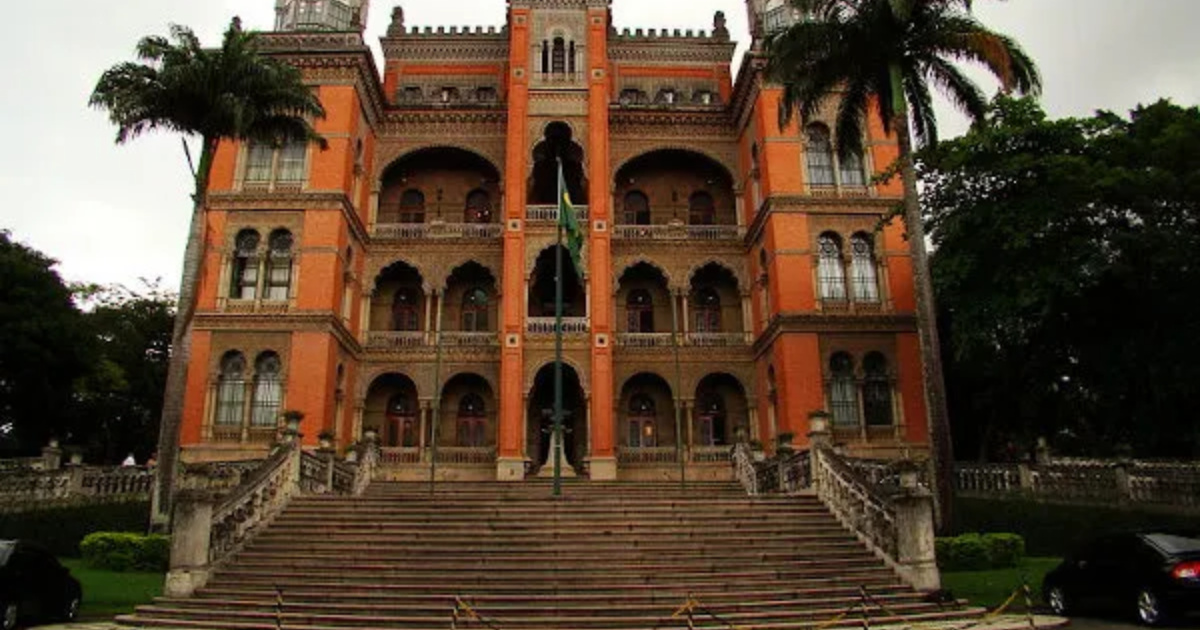
The Casa de Oswaldo Cruz (COC/Fiocruz) has opened the selection process for the 2026 class of the Professional Master’s Degree in Preservation and Management of the Cultural Heritage of Science and Health.
Applications are free, the selection will be 100% remote and the course offers institutional scholarships.
-
Surprising opportunity in the railway sector: MRS offers a free course for assistant train driver and shunter in Juiz de Fora with a R$ 1,600 scholarship, specialized training, and the chance to join one of the largest railway operators in Brazil.

-
It’s official: IFMS opens spots in free courses on artificial intelligence, drones, and app creation, expanding technological education in 2026 and preparing students for areas with high professional demand and accelerated digital transformation.
-
Senai launches an unprecedented program with Petrobras and opens 2,000 spots in free courses with recognized certification, a monthly allowance of R$ 600, and training for industrial professions that continue hiring across the country.

-
Petrobras and SENAI open 480 spots in free technical courses with a scholarship of up to R$ 858, meal allowance, and training in Mechanics, Welding, Metallurgy, and Industrial Automation to meet the growing demand of the industry and the oil and gas sector.


The application period runs from September 22 to October 31, 2025, with the final result expected on December 11, 2025.
Who Can Apply for the Fiocruz Master’s Degree
Those with a bachelor’s degree can apply.
Candidates still attending undergraduate studies are also accepted in the process; if approved, they must present proof of completion at the time of enrollment.
Foreign candidates residing outside Brazil must contact the academic secretary in advance for specific instructions regarding the application.
How the Remote Selection Works
The selection process takes place entirely remotely, mediated by technology, and has three mandatory stages.
First, the committee verifies the submitted documentation and validates the applications that are complete. Next, the evaluation of the letter of intent, the pre-project, and the Lattes CV occurs.
At this stage, a partial score of 7.0 or higher must be achieved to advance.
The final stage is a contextualized interview, also remote, based on the pre-project and the bibliography indicated in the notice.
In it, the committee evaluates conceptual mastery, clarity of presentation, and adherence to the program. The minimum score is 7.0.
At the end, the final score consolidates the results and determines the ranking.
In case of a tie, the performance in the second stage, the interview, and the candidate’s age are considered successively, with preference given to the older candidate.
Spots, Quotas, and Scholarships in the Master’s Degree
For the 2026 class, the program offers 18 spots.
The notice provides for affirmative actions with the following distribution: 7% for people with disabilities, 20% for self-declared black candidates (black and brown), 3% for self-declared indigenous candidates, and 10% for residents of the Maré or Manguinhos territories.
The heteroidentification committee conducts remote interviews to confirm self-declarations of black and indigenous candidates, without prejudice to simultaneous competition for open competition.
The course has four institutional scholarships, with amounts aligned to those practiced by Capes for master’s programs and a duration of up to 24 months.
The selection of scholarship holders takes place at the end of the process, considering the ranking, availability for the course, and institutional criteria.
It is necessary to express interest in the letter of intent to compete for the scholarships.
The maintenance of the benefit depends on meeting academic deadlines and counter obligations provided in the regulation.
Academic Structure and Research Lines
The program is organized into two lines.
In “Cultural Heritage: History, Memory & Society”, the focus is on the processes of recognition and appreciation of objects and records, as well as the interfaces between memory and heritage, with emphasis on the material and immaterial culture of science and health.
In “Cultural Heritage: Preservation and Management”, the attention is directed towards operations and procedures for collection management and safeguarding, including institutional and personal collections related to health and science practices.
The duration of the program is a minimum of 12 months and a maximum of 24 months, with a total of 96 credits, being 56 academic and 40 related to the preparation and defense of the final work.
Classes will generally be held at the Fiocruz campus in Manguinhos (RJ), on Tuesdays and Thursdays, from 9 AM to 5 PM, without prejudice to complementary activities outside of this schedule or the headquarters, according to academic planning.
How to Apply for the Fiocruz Master’s Degree
Applications must be made exclusively online through the Fiocruz Integrated Teaching System (SIEF).
There is no fee charged at any stage.
After creating an account, the candidate must fill out the online form, attach the required documentation, and monitor the evaluation progress through the system.
The schedule concentrates all phases between September and December 2025.
What research proposal do you intend to develop in this field and how can it engage with the current challenges of preservation?