






 Portuguese
  Spanish




The Armed Forces Hired 12,681 Retired Military Personnel for Administrative and Advisory Roles, Moving Around R$ 800 Million Per Year. The Model, Which Guarantees a 30% Salary Increase, Is the Subject of Debate About Its Transparency and Impact on Public Coffers.
According to a survey conducted by Folha, the hiring of the Armed Forces represents 7% of the total number of inactive military personnel in Brazil, prioritizing officers such as captains and colonels. These professionals are hired under the Fixed-Term Task Provision (PTTC) regime, a model created in the 1990s and widely used from the 2000s onwards.
How the PTTC Model Works
The hired retired military personnel receive an additional 30% in their salaries and perform functions in the areas of education, health, and advisory services. The contract, initially valid for up to 24 months, can be renewed for up to 10 years. With the additional pay, the average salary of a PTTC reaches R$ 22,694, but, in the case of general officers, it can exceed R$ 47,000.
The Armed Forces justify the model as a way to fill personnel shortages with experienced professionals, reducing costs compared to hiring active military personnel. “The hiring ensures the presence of professionals with extensive technical and administrative experience,” highlighted the Navy in a statement.
-
China Unveils Laser Weapon Capable of Instantly Neutralizing Military Drones, Marking a Significant Advancement in Air Defense Technology

-
U.S. Navy’s Ticonderoga-class Cruiser Becomes a 9,800-Ton Missile Fortress with Advanced Aegis System Capable of Tracking Hundreds of Targets

-
France’s Charles de Gaulle: The Sole Nuclear-Powered Aircraft Carrier Outside the US, Weighing 42,500 Tons and Equipped with Two Atomic Reactors

-
The military spaceplane that almost took the Cold War into orbit: Boeing X-20 Dyna-Soar was designed to re-enter above Mach 20, fly for up to 40 hours, land like a plane, and transform Titan rockets into a gateway to a new era of orbital warfare.




Impact and Numbers
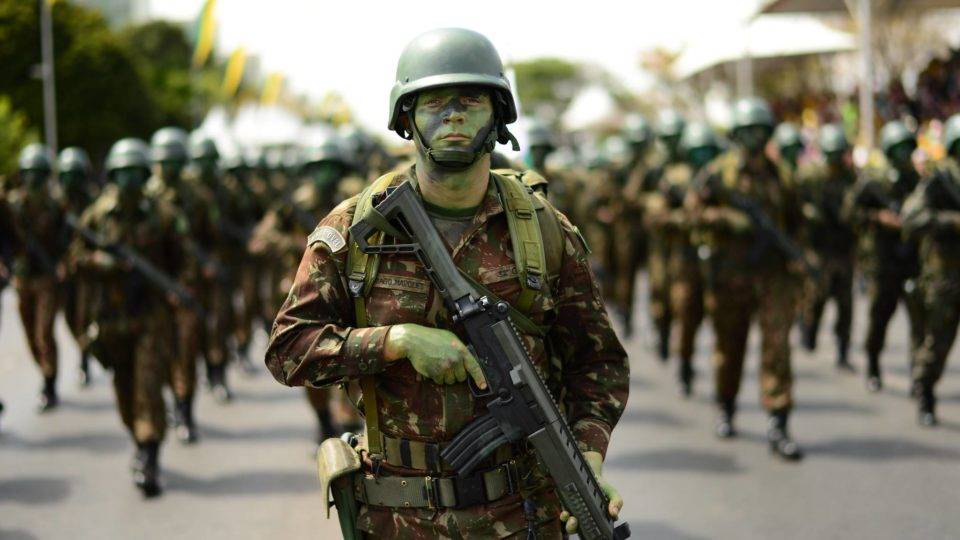
The Army leads in the number of contracts, with 6,190 retired military personnel. The Navy and the Air Force follow, with 3,598 and 2,893 professionals, respectively. In addition to serving in their respective forces, the inactive personnel are also allocated to the Ministry of Defense, the GSI (Institutional Security Cabinet), and the STM (Superior Military Court).
However, comprehensive data on the activities of these contracted individuals have not been disclosed. According to the Armed Forces, providing detailed information could jeopardize state security, a claim supported by the CGU (Office of the Comptroller General).
Transparency Under Scrutiny in the Armed Forces
The survey also indicates failures in transparency. Salaries with the additional 30% are not disclosed on the Transparency Portal, complicating the estimation of total personnel expenditure. Furthermore, the hiring is done without selection processes, being determined directly by military leadership.
Controversies and Reforms
Under the Lula government, reforms to the retirement rules of the Armed Forces are being discussed, but the hiring of PTTCs has not been included. The changes focus on establishing a minimum retirement age (55 years) and ending controversial benefits, such as pensions for families of expelled military personnel.
Despite claims that the model reduces costs and ensures efficiency, the hiring of retired military personnel remains a sensitive issue, especially in times of fiscal austerity and the need for greater transparency in the use of public resources.





Um juiz fake enganou toda uma instituição por 30 anos e com salários mensais de R$ 166 mil mensais. Apenas um juiz, R$ 166 mil. Mas o que “quebra” o país é a merreca do salário dos militares, que principalmente nas graduações de Capitão abaixo está uma vergonha. Façamos o “éle”! O desGoverno do amor venceu!
A Petrobrás contrata funcionários que são aposentados e paga 100%, dobrando o salário.
Mas, só querem mirar as forças armadas.
Sim.
O que há de errado nisso?