






 Portuguese
  Spanish


Chevrolet repositions the Onix with versions powered only by ethanol, turbo engine, and automatic transmission, in a strategy that combines tax incentives, competitive pricing, and the return of a formula abandoned since the expansion of flex cars in the Brazilian market.
Chevrolet confirmed the arrival of the Onix Eco and Onix Plus Eco, versions of the 2027 line powered exclusively by ethanol, with a 1.0 turbo engine and six-speed automatic transmission, in an attempt to reposition the compact in the Brazilian market.
With this change, the brand reintroduces to dealerships a type of car that had practically disappeared from national factories since the popularization of flex engines, a technology that came to dominate the country by allowing the alternation between gasoline and ethanol.
The strategy combines tax incentives, lower prices, and a focus on energy efficiency, three factors that help explain why the manufacturer decided to revive a formula that had lost ground nearly 20 years ago.
-
Nissan Kicks S Direct 2018: Affordable Used SUV with Over 13 km/l Fuel Efficiency, 432-Liter Trunk, and CVT Automatic Transmission

-
Iconic Orange Double-Decker Bus, a Dutch Fan Favorite for Over 20 Years, Arrives in Texas for the World Cup After Touring Brazil, England, Qatar, and More
-
$100 Million Hypercar Collection, Including Ferrari LaFerrari and McLaren Speedtail, Found Abandoned at Los Angeles Airport
-
Hyundai ix35 2019: A Forgotten SUV with 2.0 Engine and 650 km Range Costs Less Than a New Kwid in Brazil



In the hatch, the Onix Eco appears with a list price of R$ 103,990, but Chevrolet announced a promotional launch price of R$ 99,990, positioning the version below many automatic compacts currently sold in Brazil.
Meanwhile, the sedan Onix Plus Eco costs R$ 106,990, with an initial promotion of R$ 103,990, reinforcing the automaker’s attempt to attract consumers seeking automatic transmission, larger trunk, and more competitive purchase costs.
Ethanol car returns to the Brazilian market
The launch represents a significant change in a market dominated for more than two decades by flex vehicles, which became standard in Brazil by offering drivers the freedom to choose fuel according to price and availability.

This technology spread from 2003 because it allowed refueling with gasoline or ethanol in the same tank, a feature especially important in a country where the price of vegetable fuel varies greatly depending on the region, harvest, and logistics.
With the consolidation of flex-fuel engines, projects powered only by ethanol lost priority within automakers, as consumers began to associate flex with the convenience and security of not relying on a single option.
Instead of competing solely for the freedom of choice in fueling, Chevrolet now tries to turn tax benefits, lower fossil emissions in use, and more adjusted industrial costs into arguments to reduce the final price of automatic versions.
Programa Mover strengthens bet on ethanol
Behind the return of the ethanol-only engine is the new design of incentives for more efficient vehicles less dependent on fossil fuels, especially within the rules aimed at mobility with lower environmental impact.
Created to stimulate innovation, decarbonization, and efficiency in the automotive industry, the Programa Mover opened space for models that meet specific environmental criteria and can receive more favorable tax treatment within Brazilian industrial policy.
In the case of the Onix Eco, Chevrolet states that the version was developed to run on plant-based fuel and benefit from the tax incentives provided for this type of technology, without resorting to the traditional flex system.
The automaker also highlights that the model appears in Inmetro’s vehicle labeling with zero fossil CO2 emissions during use, a point used to reinforce the classification of the novelty in an energy efficiency proposal.
This classification helped the manufacturer position the hatch and sedan in a competitive price range, especially because the two models combine turbo engine and automatic transmission, a set generally associated with more expensive versions.
Onix Eco has 1.0 turbo engine and automatic transmission
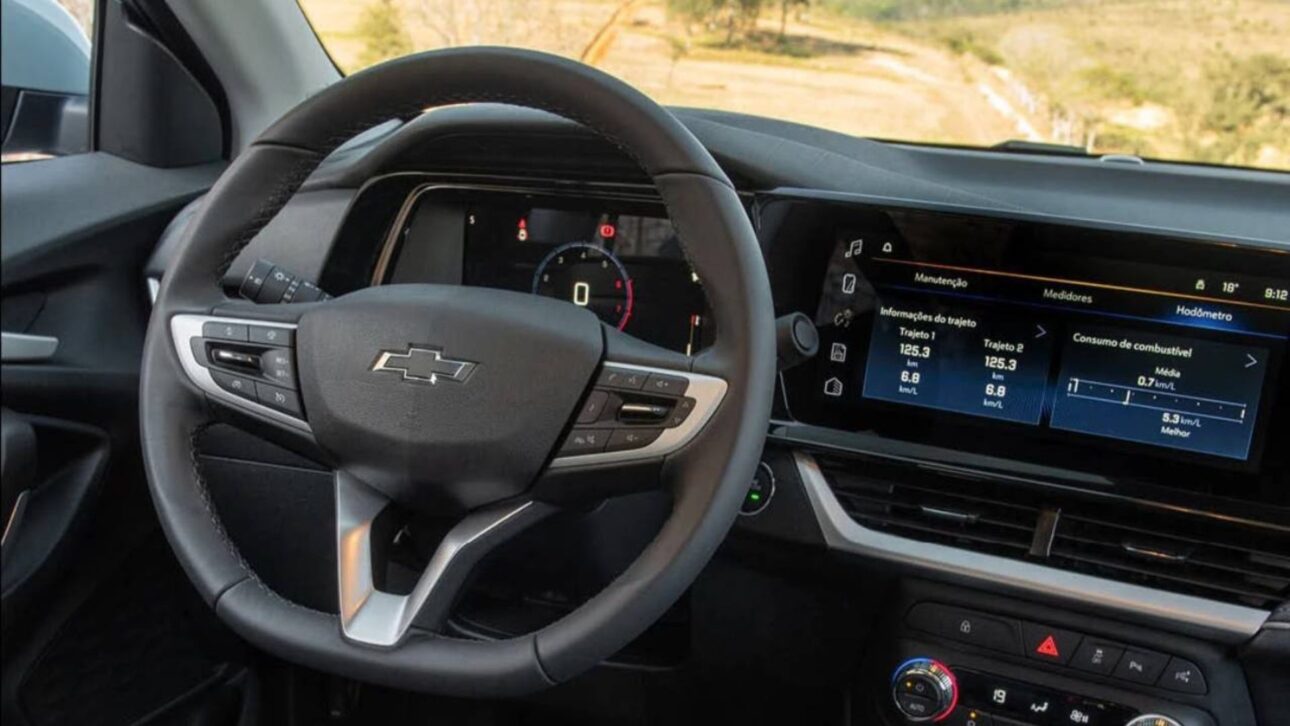
Under the hood, the Onix Eco uses a 1.0 turbo three-cylinder engine, powered only by ethanol, associated with a six-speed automatic transmission, a set that maintains the urban performance proposal with a focus on acquisition cost.
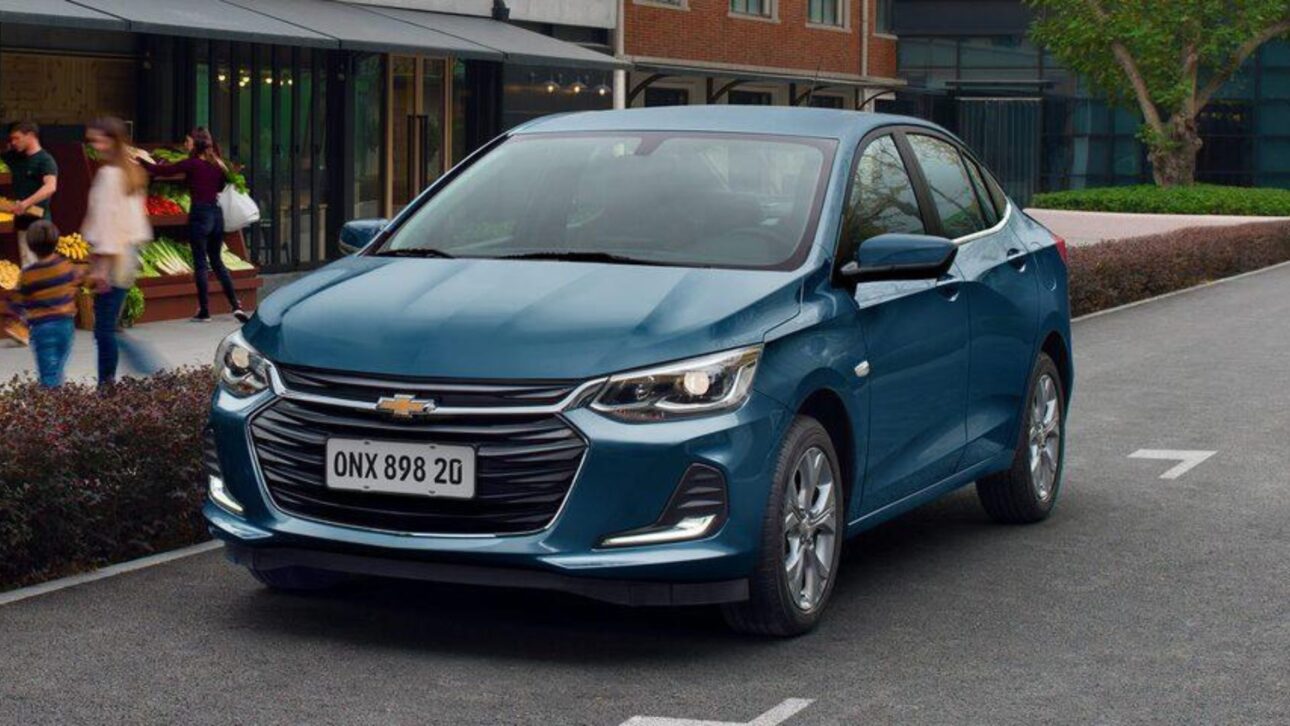
The version preserves the already known mechanical architecture of the Onix family, including the oil-bathed timing belt, a feature present in turbo configurations that requires special attention to the maintenance plan indicated by the manufacturer.
According to information released at the launch of the 2027 line, the set delivers 115 hp and 16.8 kgfm of torque, numbers aimed at everyday driving, without transforming the version into a sporty appeal option.
In practice, the proposal is to offer adequate performance for urban and highway use at a lower price than equivalent automatic flex versions, a strategy that may influence the decision of consumers more attentive to the total cost.
The presence of the oil-bathed belt, however, remains a point of attention for buyers who intend to drive a lot, as the system depends on the correct oil and strict adherence to maintenance intervals.
When the specified lubrication is not followed, the set may have compromised durability, which is why the initial savings need to go hand in hand with timely revisions and the use of products compatible with the engine.
Onix Eco Price Targets Professional Drivers
With a promotional price below many compact automatics, the Onix Eco hatch tends to attract the attention of consumers looking for a new car with automatic transmission, turbo engine, and more accessible entry price.
In the case of the Onix Plus Eco, the appeal falls on the compact sedan segment, traditionally sought after by those who drive a lot, need a larger trunk, and evaluate the car as a work tool or source of income.
This configuration directly speaks to taxi drivers, app drivers, and fleet operators, audiences for whom the acquisition cost weighs similarly to consumption, the assistance network, and the predictable maintenance cost.
In May 2026, the federal government also announced a line of credit for taxi drivers and app drivers to finance new cars up to R$ 150,000, provided the models meet sustainability criteria.
Among the eligible vehicles are flex, hybrid flex, electric, and exclusively ethanol models from manufacturers qualified in Mover, which increases commercial interest in versions capable of fitting into this package.
Ethanol Price Still Varies by Region
Despite the lower initial price, the competitiveness of ethanol does not behave the same way throughout the country, as it depends on factors such as regional production, transportation costs, state taxes, and supply fluctuations throughout the year.
In general terms, plant-based fuel tends to be worthwhile when it costs up to about 70% of the price of gasoline, although this ratio may vary depending on the car’s actual consumption, the type of route, and engine efficiency.
Within Brazil, regional differences play a decisive role in the consumer’s final bill, especially because sugarcane-producing states, such as São Paulo, usually manage to offer ethanol under more favorable conditions.
In regions further from the production centers, on the other hand, logistical costs can reduce or eliminate the economic advantage of plant-based fuel, making the absence of the flex option a point of doubt for some buyers.
This variation helps explain why Chevrolet’s bet may perform differently depending on the market, with greater acceptance potential where ethanol maintains a competitive price for much of the year.
For drivers who circulate in areas favorable to plant-based fuel, the savings may make sense; in places where ethanol is too close to gasoline, the limitation of refueling tends to weigh more in the decision.
Manufacturers observe Chevrolet’s new strategy
By launching ethanol-only versions, Chevrolet puts pressure on other manufacturers installed in Brazil, who may also evaluate the available tax incentives but need to consider industrial costs, engineering, and consumer acceptance.
Although the benefit exists for vehicles that meet efficiency and renewable fuel use rules, not all brands have the same technical or commercial conditions to quickly launch configurations exclusively powered by ethanol.
Some manufacturers may still conclude that the market prefers the freedom of flex engines, as the possibility of alternating fuels remains valued in a country with such different regional prices.
Even with an attractive initial value, a car fueled only with ethanol requires the consumer to accept a limitation that seemed overcome since the consolidation of bi-fuel technology in Brazilian compacts.
Still, the arrival of the Onix Eco indicates that the industry is testing intermediate alternatives between the traditional flex car, hybrids, and electric vehicles, especially in a market pressured by price.


In a country with a consolidated ethanol chain, a wide network of stations, and significant agricultural production, the solution may gain ground if the price difference compensates for the loss of refueling flexibility.
Onix 2027 line gains new Eco versions
In addition to the Eco versions, the Onix 2027 lineup arrived with content changes and new configurations, in an update that repositions equipment and enhances connectivity, safety, and convenience features in the hatch and sedan.
Chevrolet has kept the Onix and Onix Plus among its core products in Brazil, but has started to explore more intensively the combination of energy efficiency, competitive pricing, and technologies already known in the family.
The creation of the Onix Eco also responds to a market pressured by high prices, where automatic compacts have become more expensive and versions below R$ 110,000 have become less frequent.
In recent years, this increase in cost has become even more noticeable when the model includes a turbo engine, automatic transmission, and a more complete equipment package, a combination that usually raises the final price at dealerships.
In this scenario, Chevrolet tries to turn the tax benefit into a direct commercial argument, repositioning the ethanol-exclusive car as a purchase alternative for those who prioritize price, efficiency, and automatic transmission.
The return of the plant-based fuel, therefore, does not occur out of nostalgia, but due to a combination of tax rules, industrial cost, energy efficiency, and the need to offer more affordable automatic versions in the Brazilian market.
The success of the strategy will depend on factors beyond the technical specifications, such as the price of ethanol, consumer acceptance, proper maintenance of the turbo engine, and potential reactions from competitors in upcoming product cycles.


