Portuguese
  Spanish


In Capitão Poço, in Pará, the farmer Manoel Geraldo de Carvalho, known as Seu Duquinha, planted around 30,000 seedlings and restored 56 hectares of forest over three decades. The forest recovery made a dry spring flow again, and the area received the first climate monitoring tower in the Amazon capoeira.
A story of forest recovery in the interior of Pará became a case of science. In Capitão Poço, in the northeast of the state, the farmer Manoel Geraldo de Carvalho, known as Seu Duquinha, restored 56 hectares of forest over a little more than 30 years, planting around 30,000 native tree seedlings. The result was so impressive that his forest received, in 2026, the first climate monitoring tower installed in a capoeira, as the forests that are reborn in the Amazon are called. The report is from Amazônia Vox.
More than trees, water returned. A spring that was drying up on the property began to flow again after the forest was restored, a sign that the forest recovery altered the water cycle in the region. Seu Duquinha himself summarizes the achievement with pride: “The pleasure I have is that, at 93 years old, I am showing you what I did,” he told Amazônia Vox. The focus of the story, after all, is not the age but what that forest has become.
The farmer who replanted 56 hectares of forest
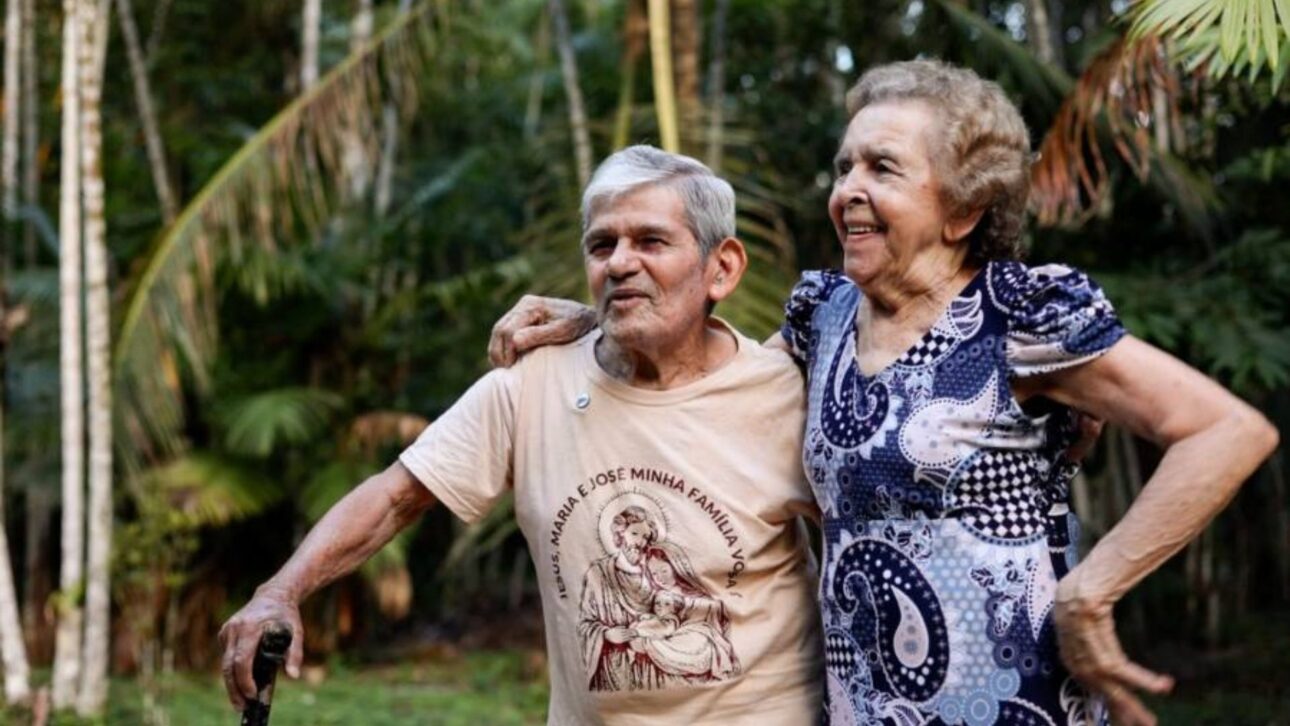
The work of a lifetime stands tall, in the form of a forest. On his property, named São Geraldo Magela Ecological Reserve, the farmer Manoel Geraldo de Carvalho led the forest recovery of 56 hectares for more than three decades, an area comparable to a large urban park.
-
Brazilian Cheesemaker Wins European Award for Ant-Infused Cheese with Nutty Flavor Inspired by Indigenous Tradition

-
Brazilian Family’s Cheese, Started with One Cow in 1984, Named Best in the World, Beating 2,700 Competitors from 30 Countries

-
Brazilian Ranchers Use Satellites to Optimize Pasture Management and Prevent Feed Loss in Cattle Farms
-
Russia Follows China in Recognizing Brazil as Free from Foot-and-Mouth Disease Without Vaccination, Boosting Meat Exports and Agribusiness Potential



About 30,000 seedlings of native species were planted, such as Brazil nut, jatobá, piquiá, and bacurizeiro.
The choice was not by chance. Instead of betting on a single crop, Seu Duquinha mixed trees that bring life back to the soil and the forest, in a model that combines regeneration and purpose.
Forest recovery models like this have been encouraged in the region precisely because they combine reforestation with valuable species, such as cocoa, açaí, and banana, which can generate income for rural families.
Behind the work, there is also a large family. Married for 66 years to Mrs. Luiza Bezerra, with whom he had 12 children, Mr. Duquinha has more than 200 descendants, and it was thinking of them that he decided to protect the land instead of deforesting it.
What was once a farm turned, over time, into a green heritage with a name and surname.
The dry spring that started flowing again
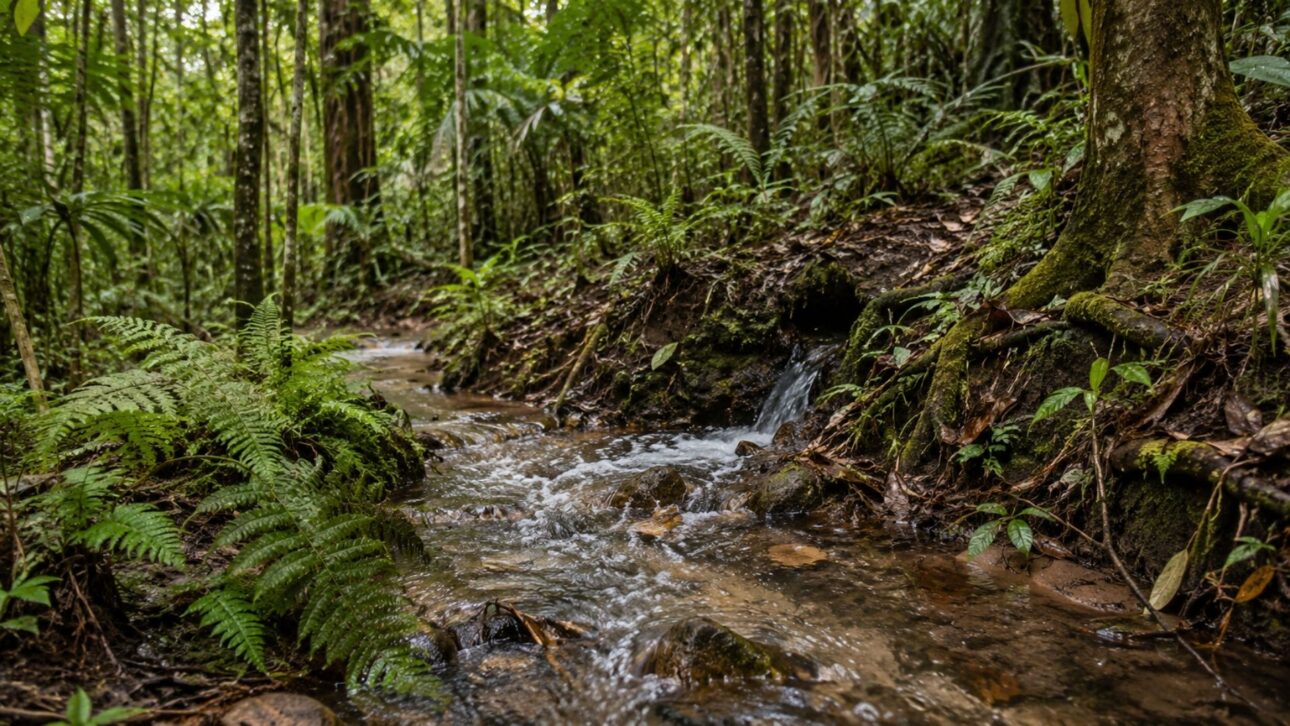
The clearest sign that the forest has returned came from the water. On the property, there was a spring that could not sustain itself and frequently dried up, leaving the small watercourse without strength.
As the forest was restored, the soil began to retain moisture, and the spring started to flow again.
This detail says a lot about the power of forest recovery. Trees function like a living sponge: the roots hold rainwater, feed the groundwater, and regulate the flow of springs throughout the year.
Where there was once exposed and dry land, the restored forest began to return water consistently.
That’s why the recovered spring became a symbol of the project. It shows, in practice and visibly, that restoring the forest not only brings back trees but also reestablishes essential services like the water cycle.
For a region marked by deforestation, seeing a spring flow again is proof that forest recovery works.
The 1st climate monitoring tower in a secondary forest of the Amazon
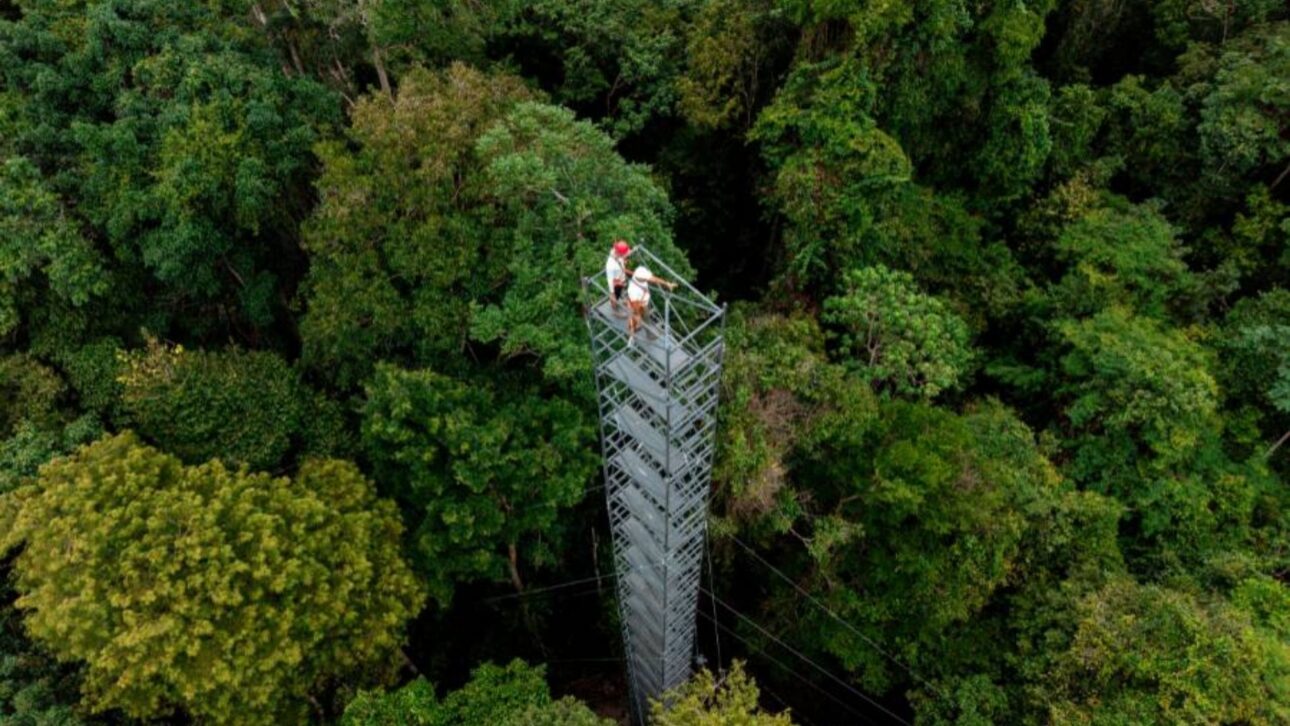
It was this restored forest that attracted science. Mr. Duquinha’s area received, in 2026, the first climate monitoring tower installed in a secondary forest, the forest that grows after deforestation, in the entire Amazon.
Until then, this type of structure only existed in mature and intact forests.
The novelty is not small. Researcher Fernando Elias summarized the uniqueness by pointing out that towers in mature forests already exist in the region, “but for the secondary forest, this is the first one.”
The structure installed on the property is about 20 meters high, and there is also a larger tower, 40 meters high, set up in a fragment of primary forest for comparison.
What these towers do is measure the climate inside the forest. Sensors spread at different heights record air, surface, and soil temperature, as well as humidity, radiation, and water loss by plants.
This climate monitoring allows us to see, in real-time, how a reborn forest behaves in the face of heat and drought.
What science wants to discover in Seu Duquinha’s forest
The study’s objective is significant. The research is coordinated by Embrapa, with funding from CNPq, and brings together over 180 researchers from 33 institutions, including universities, public agencies, NGOs, and local collectives, in the so-called Centro Capoeira.
Seu Duquinha’s forest has become a living laboratory within the Amazon.
According to Embrapa, the climate monitoring seeks to understand how different forest recovery strategies help restore the so-called ecosystem services.
In other words, scientists want to know how long it takes for a secondary forest to start storing carbon again, regulating temperature, and producing water vapor like a primary forest does.
The data will also have practical use. They will help measure the capacity of secondary forests to store carbon during extreme heat and calibrate satellite models that estimate the climate of the entire Amazon.
Comparing the 20-meter secondary forest with the 40-meter primary forest is what will provide the measure of this recovery.
Why secondary forests have become a key piece of the climate
The choice to study secondary forests has a strategic reason. Large areas already deforested in the Amazon can, if protected, regenerate and start providing environmental services again, and understanding this process is vital for combating climate change.
Secondary forests have stopped being seen as scrub and have started to be treated as climate allies.
The potential is enormous precisely because of the scale. Recovering low-cost forests, taking advantage of the natural regeneration capacity of the forest, can be one of the cheapest ways to store carbon and protect springs on a large scale.
Forest recovery stops being just a local gesture and becomes part of a larger climate strategy.
This is where the example of Capitão Poço gains national weight. What a farmer did in 56 hectares, science now wants to understand to replicate in millions.
If the secondary forests of the Amazon can regulate the climate and return water like Mr. Duquinha’s forest, they could become one of Brazil’s greatest green tools.
From the farm to science: the legacy that became research
The story has a chapter that connects generations. One of Mr. Duquinha’s daughters, the biologist Laína Carvalho, is part of the team studying forest regeneration and analyzing secondary forests of different ages, from 15 to 60 years, until reaching the intact primary forest. What the father planted with his hands, the daughter now investigates with science.
The recognition also comes from within the family. Mrs. Luiza, the farmer’s wife, summarized the value of the place to Amazônia Vox: “I feel very happy because nowadays finding a place like this is rare.” The phrase translates what researchers from 33 institutions went to confirm with sensors and data.
In the end, Mr. Duquinha’s legacy is twofold. On one side, 56 hectares of living forest and a spring that started flowing again.
On the other, a set of unprecedented data that can guide the forest recovery of the entire Amazon. Few legacies unite so well the practice of those who plant and the knowledge of those who research.
And you, do you think this can be replicated across Brazil?
Mr. Duquinha’s forest shows that forest recovery can return forest, water, and even become a science laboratory.
In Capitão Poço, Pará, 56 hectares restored by a 93-year-old farmer now host the first climate monitoring tower installed in a secondary forest of the Amazon, with Embrapa and over 180 researchers watching the results.
And you, do you believe that forest recovery projects like this, which bring springs back and help the climate, should be encouraged on a large scale in Brazil? Share in the comments if there is any degraded area near you that could be reborn like Mr. Duquinha’s forest.