Portuguese
  Spanish


Created in 2013, the Lacre do Bem project has already delivered 1,060 wheelchairs throughout Brazil from more than 102 tons of aluminum tabs. The mechanics are simple: the recycling of the material collected at 2,550 points turns into money, and the money turns into mobility for those in need.
It seems too small to change a life: that little metal ring we pull to open the can. Gathered by the millions, however, this tab turns into a wheelchair and gives someone back the freedom to move. This is the bet of Lacre do Bem, which transformed a banal gesture into a network of solidarity spread across the country.
According to TJMG, a partner of the initiative, the NGO has already collected more than 102 tons of recycled aluminum tabs and more than 2,550 official collection points. This collective effort has already resulted in 1,060 wheelchairs donated throughout Brazil. All from a material that most people throw away without thinking.
How Lacre do Bem turns tabs into wheelchairs
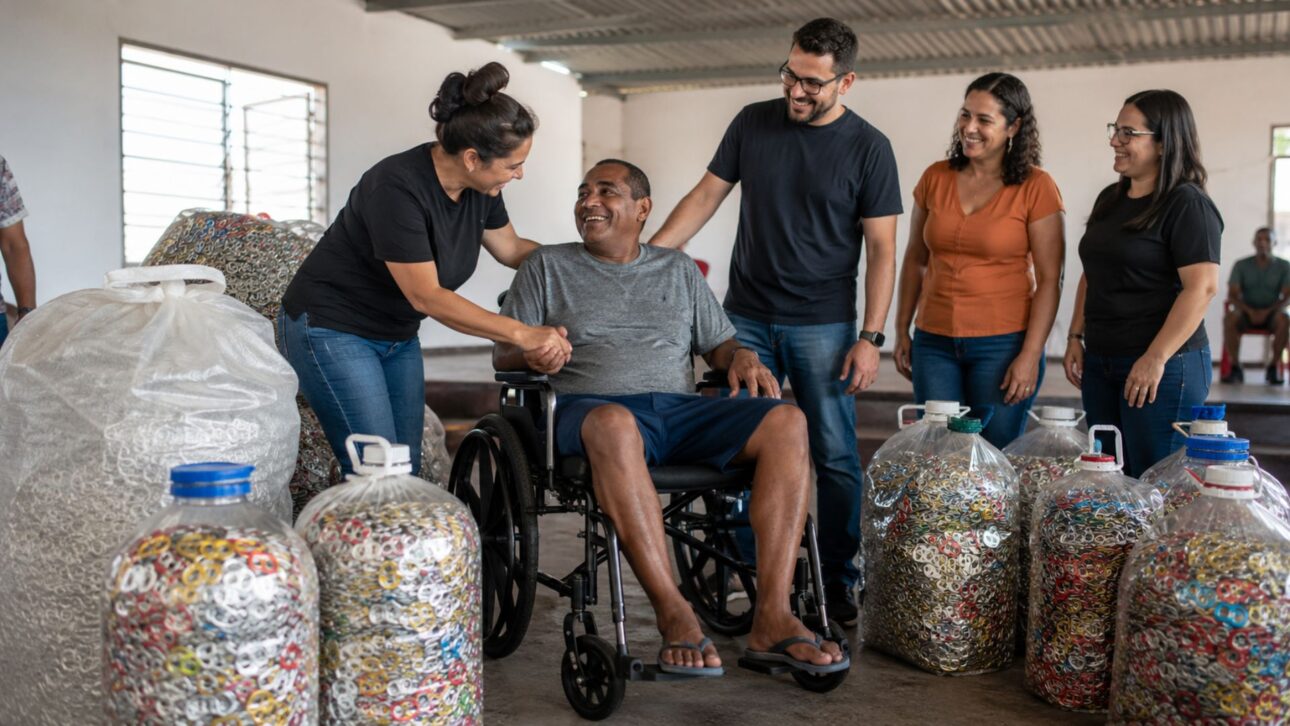
People collect the aluminum tabs from cans and deliver them to one of the collection points spread across the country.
-
Explore the History, Architecture, and Unique Features of Arena Fonte Nova, One of Brazil’s Most Iconic and Modern Football Stadiums

-
Indian School in Assam Expands Enrollment by Accepting Plastic Waste as Tuition Payment

-
Parintins Festival 2026 Celebrates Amazonian Tradition with Three Nights of Competition Between Caprichoso and Garantido, Highlighting Its Cultural Significance in Brazil
-
Brazilian Mayor Goes Undercover as a Person with Disability, Exposes Public Service Flaws


This aluminum is then sold to recycling companies, and the money raised funds the purchase of the wheelchairs.
It’s not the tab that “magically” turns into a wheelchair: it is first converted into financial resources.
To fund a single wheelchair, about 105 kilos of tabs are needed, or hundreds of thousands of units.
That’s why Lacre do Bem depends on scale: alone, a handful of tabs won’t go far.
The strength of the model lies precisely in multiplying small gestures into a volume that pays for expensive equipment.
Why Only the Tab, and Not the Entire Can
This is a question that surrounds all campaigns of this type.
Many people believe that the tab has a special value that the can does not, but this is a myth.
From a recycling perspective, the entire can is also aluminum and is worth more than just the tab.
The choice for the tab is practical, not chemical: it is small, light, easy to store at home, and easy to transport.
A bottle full of tabs takes up little space and does not require the logistics of storing crushed cans.
The tab acts as a “symbolic currency” that engages people and fits in a drawer until it’s time to donate.
In other words, Lacre do Bem bets on what is easy to collect, not on what is more valuable per kilogram.
The Network of 2,550 Collection Points Across the Country
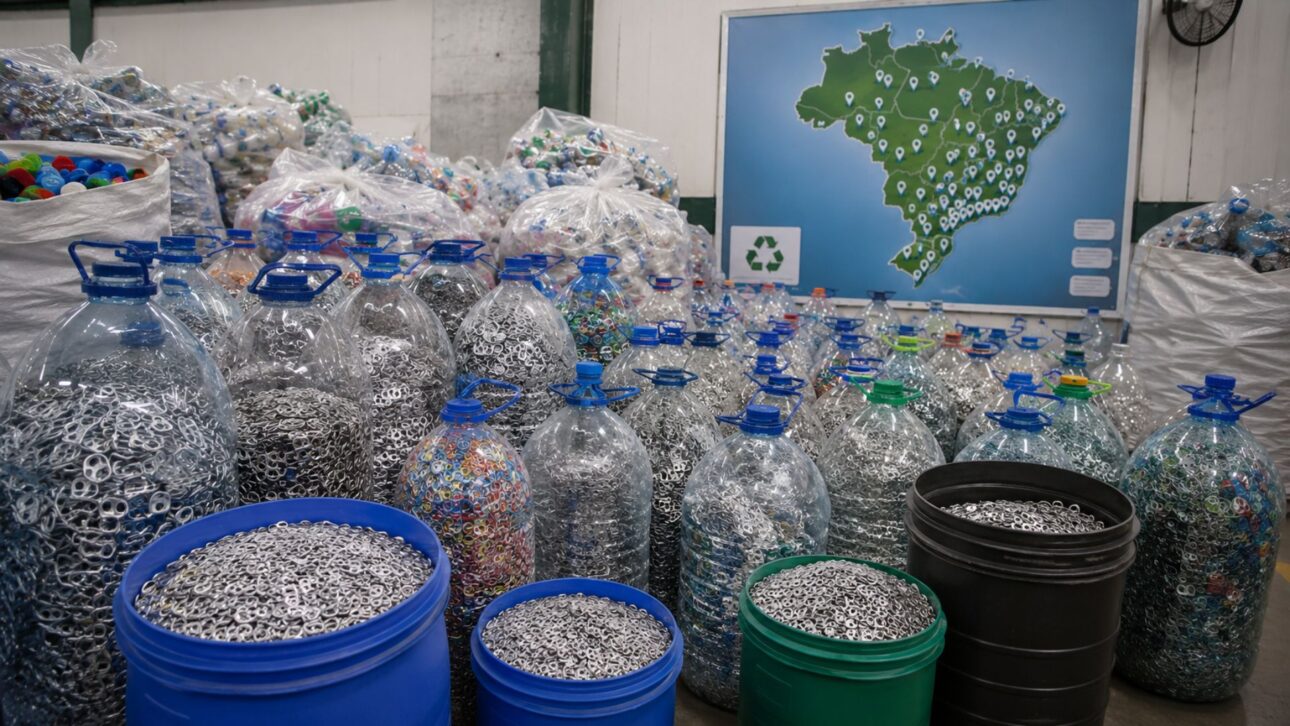
The project set up more than 2,550 official collection points spread across schools, companies, public agencies, and businesses.
This national network is what allows collecting tabs in sufficient volume to reach 102 tons.
Each point becomes a mini collection center, where the local community gradually deposits the material.
The logic is similar to a crowdfunding campaign, but paid in aluminum instead of money.
The more collection points, the more constant the flow of tabs and the more wheelchairs are distributed at the end of the year.
Decentralization also spreads the recycling message to every neighborhood that adopts a point.
Who Receives the Wheelchairs
On the other side of the chain are those who most need the result.
The wheelchairs go to people with reduced mobility who cannot afford to buy the equipment.
For many people, receiving a wheelchair means returning to study, work, or simply leaving the house.
Requests usually go through institutions, hospitals, and partners who help identify those in line.
The delivery of a wheelchair, in this context, is the visible tip of months of anonymous collection.
It is the part of the story that gives meaning to each seal kept at home by an unknown donor.
Recycling ceases to be an end in itself and becomes a means for concrete social gain.
The Lacre do Bem and partners like TJMG
The national scale is only possible because the project relies on institutional partners.
The NGO Lacre do Bem was founded in 2013 and has been adding companies, schools, and public agencies to the network.
TJMG, for example, has maintained a permanent campaign since 2020 as a partner of the initiative.
The Minas Gerais court alone has collected about 914 kilograms of seals, which allowed the donation of eight wheelchairs.
The court’s collection points are distributed across dozens of districts and buildings in the capital of Minas.
Each partner like TJMG functions as a tributary that feeds the main river of Lacre do Bem.
It is the sum of these branches that makes the national numbers grow year after year.
The mathematics of recycling behind the project
The numbers help to understand why aluminum is the invisible hero of the story.
Aluminum is one of the few materials that can be recycled infinitely without losing quality.
Recycling aluminum consumes much less energy than producing the metal from scratch from ore.
Each ton reused avoids extraction, energy consumption, and emissions related to new production.
With more than 102 tons recycled, Lacre do Bem adds an environmental impact that goes beyond the chairs.
In the end, the project delivers two results at the same time: mobility for people and less pressure on the environment.
It is recycling showing that it can have a social address, not just an economic one.
What the case of Lacre do Bem shows
The project’s trajectory is a lesson in how to turn a small gesture into a big impact.
It proves that recycling with a social purpose engages much more than common collection.
But it’s worth keeping your feet on the ground.
The seal is not magical: those who really want to help the environment should also recycle the entire can.
The numbers of chairs and tons come from the NGO itself and partners, without independent auditing here.
And, like any action that depends on donations, the pace varies according to the engagement of people and companies.
Even so, few projects summarize so well how recycling can turn into mobility and inclusion throughout Brazil.
From a small metal ring to 1,060 wheelchairs, Lacre do Bem showed that well-destined waste is very valuable.
And you, do you already separate aluminum tabs at home or do they go straight to the common trash?
Comment here if there is a Lacre do Bem collection point near you or if you would consider setting one up.