Portuguese
  Spanish


Astronaut Aboard The Space Station Captures Lake Iro Reflecting The Sun In Rare Sunglint, Sparking Interest In Its Possible Impact Origin
In December 2024, an astronaut aboard the International Space Station captured an impressive scene in Chad. Lake Iro appeared as a massive silver mirror, reflecting sunlight almost perfectly.
The effect, known as sunglint, occurs when the sun, the water’s surface, and the observer align precisely.
The record was made on December 21 and released by NASA’s Earth Observatory. The lake, approximately 12 km wide, is located about 100 km from the border with the Central African Republic.
-
Scientists Convert Food Waste into Aviation Fuel, Successfully Test 50% Blend with Conventional Kerosene to Cut Emissions and Promote Sustainable Flights

-
OnePlus N6 Smartphone to Launch in India with 8,000mAh Battery and 45W SuperVOOC Charging, Lasting Up to Three Days
-
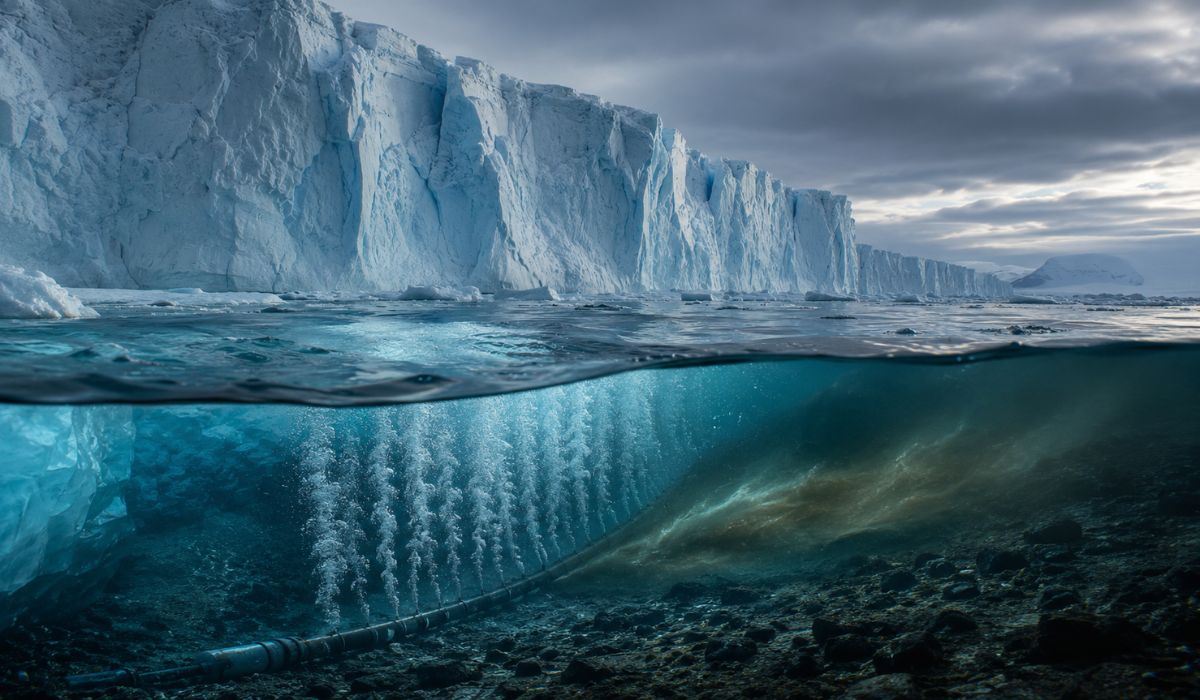
Scientists Plan to Release Air Bubbles Underwater to Protect Antarctica’s “Doomsday Glacier” from Melting

-
Chinese R6000 Drone Combines Airplane and Helicopter Features, Carries Up to 12 People for Multiple Missions



Situated in the Sahel region, it lies in a savanna belt that separates the Sahara Desert from the tropical forests of Central Africa.
The Sunglint Phenomenon and Its Unique Appearance
Sunglint creates an intense metallic shine on water surfaces. In the photo, both Lake Iro and the Bahr Salamat River, which surrounds it to the south, exhibit this effect.
The river, famous for its winding path of about 200 km, gained even more visual prominence with the solar reflection.
Parts of the image show whiter areas on the lake’s surface. This occurs because light also reflected off the clouds above, enhancing brightness at certain points.
For scientists, the phenomenon is not only beautiful but also useful for observations and environmental studies from space.
Astronauts and the Privileged Point of View
Astronauts aboard the International Space Station have an advantage over conventional satellites. They can adjust their angle of observation to achieve the perfect alignment between light, water, and viewpoint.
This flexibility increases the chances of capturing rare images like that of Lake Iro.
Thanks to this mobility, other remarkable moments have been recorded. Among them, images of Greek islands revealing unusual ocean patterns and a view of a volcanic lake in Russia surrounded by a “sea” of clouds. These perspectives offer a different understanding of Earth’s dynamics.
Possible Impact Origin
Besides its beauty, Lake Iro sparks scientific interest due to its possible origin. Some researchers believe it was formed from a meteor impact crater.
This hypothesis emerged in the 1980s when geologists identified fragments of ancient crystals in the region’s rocks.
In 2024, a new study revisited this line of investigation. Analyses suggest that the impact of a large space rock, millions of years ago, may have significantly altered the local terrain.
Among the changes would be the very trajectory of the Bahr Salamat River, which exhibits sharp and unusual curves.
Lake with Cyclic Behavior
Another aspect that reinforces the theory is the lake’s behavior. Its depth varies significantly throughout the year, and in periods of extreme drought, it can dry up completely.
This cyclical pattern is also observed in other lakes formed by impact craters.
For scientists, understanding the cycle of Lake Iro is essential. It may provide clues on how large impacts shape ecosystems and waterways over time.
Ongoing Research
Despite the evidence, the impact origin is still unconfirmed. Researchers advocate for more detailed studies to identify geological marks typical of space collisions.
The region may harbor preserved records that help unveil part of the planet’s geological history.
The most important thing is that, while the investigation advances, phenomena like sunglint continue to offer unique opportunities to observe the lake spectacularly.
The images not only visually captivate but also reinforce the role of space observation in understanding Earth.
With information from Daily Galaxe.