






 Portuguese
  Spanish
 3 min of reading
  0 comments


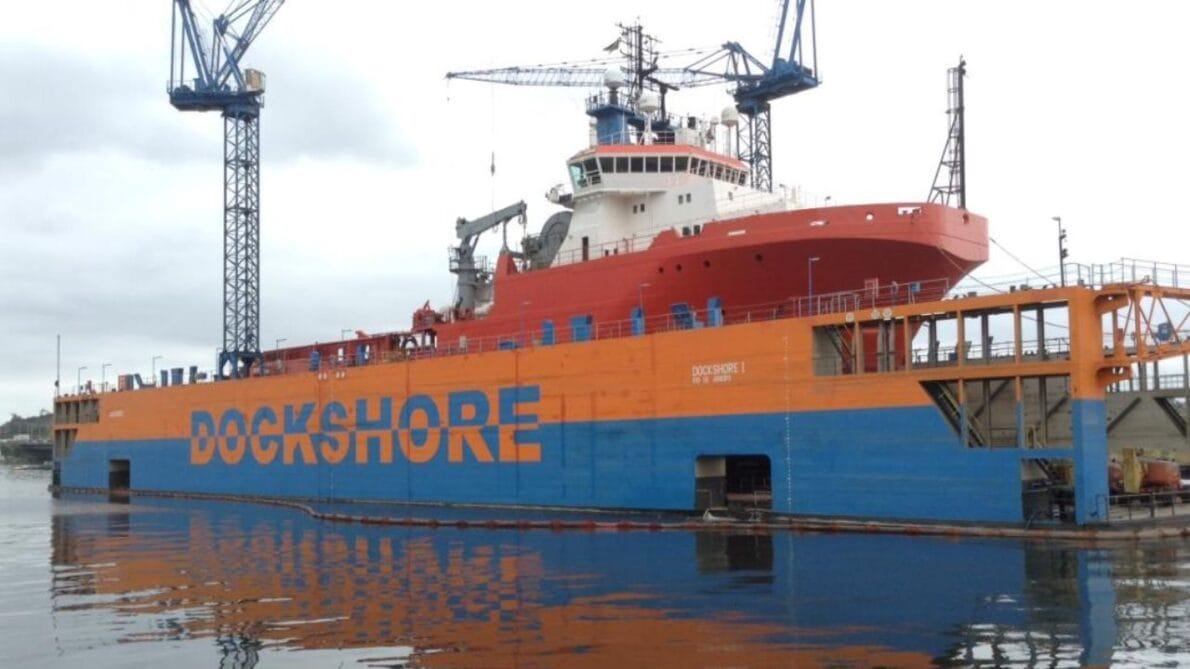
The Tamandaré Frigate Is About to Be Launched into the Sea, and the Wait Is Coming to an End. The Floating Dock That Will Assist in This Process Is Already on Its Way to the ThyssenKrupp Brasil Sul Shipyard in Itajaí, Santa Catarina.
The floating dock, known as Dockshore I, departed from Rio de Janeiro and is being towed by four tugboats to Itajaí. With no self-propulsion, the dock is being carefully navigated upstream, a delicate operation fraught with challenges. The maneuver involves two pilots on board the dock, ensuring it safely navigates the river’s narrow channel, avoiding obstacles like fishing boats and shipyards along the banks.
For those unfamiliar, a floating dock is a structure mainly used for ship repairs and maintenance. It works like a portable dry dock, allowing vessels to be lifted out of the water for inspections, repairs, and painting that cannot be performed while the ship is submerged. Additionally, the floating dock is also used to launch ships into the water safely and in a controlled manner.
Launch of the Tamandaré Frigate
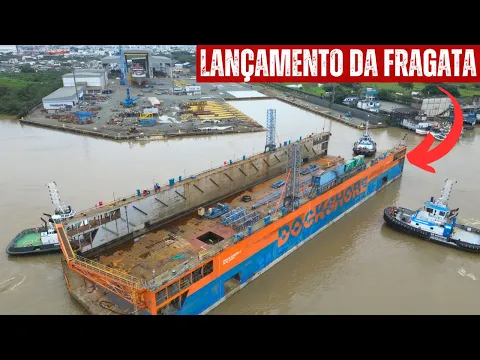

The Tamandaré Frigate will be the first of four frigates to be launched using this floating dock. The launch is expected to take place in August. The second frigate, Jerônimo de Albuquerque, is already under construction, with its keel laying already completed.
-
North Korean Fiasco: Launch of the Largest Warship Ends in Sinking

-
While giant ships still burn heavy fuel and the maritime sector races against climate targets, Maersk and Vale are starting to bet on ethanol as a new route to reduce emissions at sea.

-
China begins construction of the world’s largest LNG ship, a 344-meter giant capable of supplying 4.7 million homes for a month, carrying 271,000 m³ of gas, and placing QatarEnergy in the largest naval order ever recorded in world history.
-
China is designing a container ship with a thorium nuclear reactor that will operate for 40 years without refueling, and the 25,000-container giant from Jiangnan Shipyard will cross oceans without emitting carbon in an industry that burns 300 million tons of fuel per year.



The launch process using a floating dock is the reverse of the lifting procedure. The ship is placed on the floating dock, which is initially out of the water. As the dock’s ballast tanks are filled, it begins to sink slowly, allowing the ship to float. When the dock is sufficiently submerged and the ship is floating, the moorings are released, allowing the ship to leave the dock, either being towed or sailing on its own.
Dimensions of the Floating Dock Dockshore I
The floating dock Dockshore I is 118 meters long and 34 meters wide. These dimensions allow it to support large vessels, such as the Tamandaré Frigate, ensuring a safe and efficient launch.
Recently, dredging took place in front of the shipyard’s dock to deepen the river, facilitating the launch of the frigates. The first frigate, Tamandaré, is receiving final touches of paint and adjustments, with all preparations in progress to ensure a successful launch.
The arrival of the floating dock marks an important step for the Brazilian Navy and shipbuilding in Santa Catarina. With the Tamandaré Frigate about to be launched, Brazil is making a significant stride in strengthening its naval fleet, showcasing innovation and competence in warship construction. Stay tuned for more updates on this exciting launch!







Be the first to react!