





 Portuguese
  English
  Spanish
  6 min of reading
  0 comments


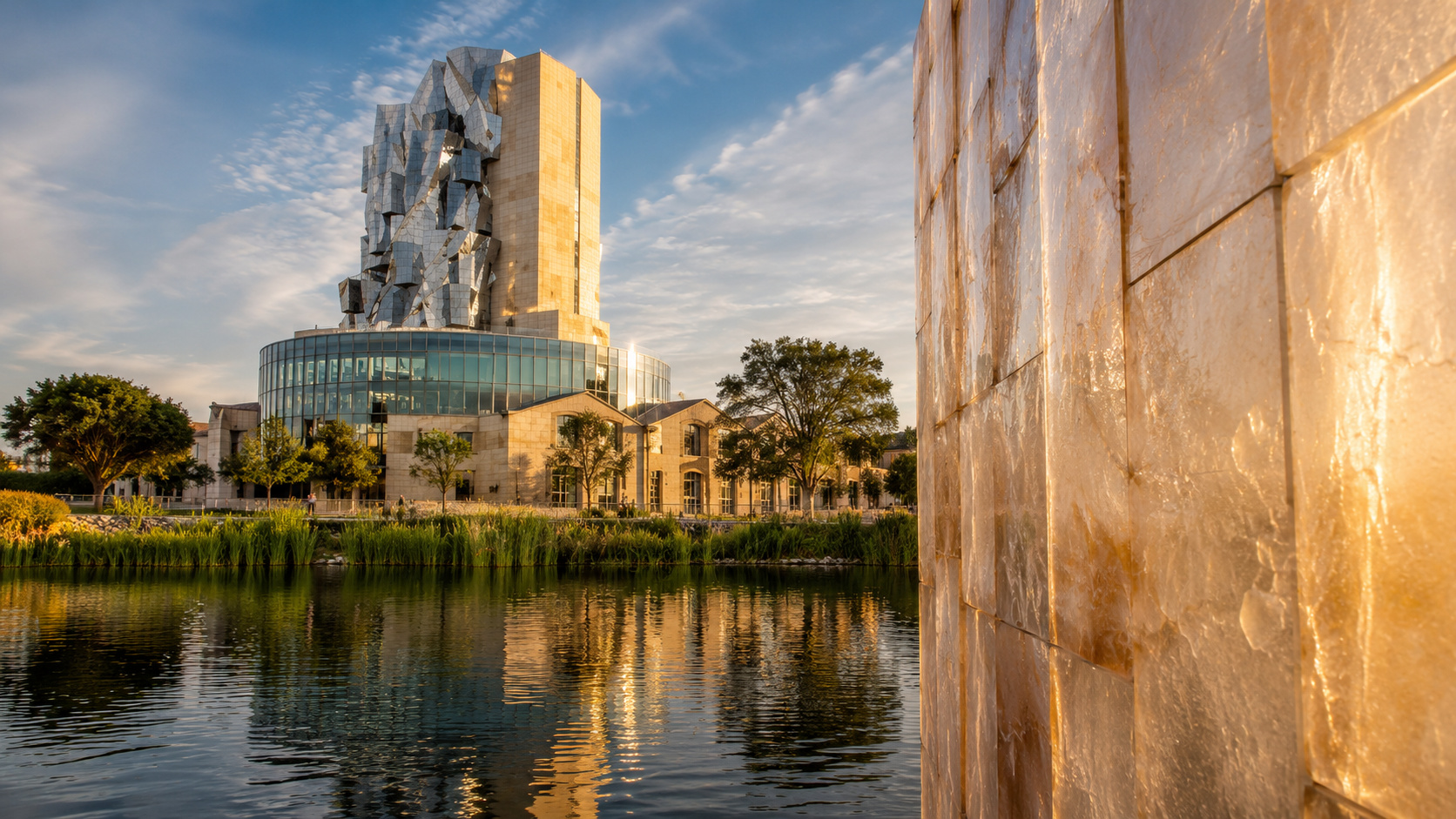
At LUMA Arles, the salt from Camargue was cultivated in panels crystallized by the sun and wind. The experience shows how a mineral associated with corrosion became cladding in a tower designed by Frank Gehry, without assuming a structural function in the building.
The Frank Gehry tower in the south of France received more than 4,000 salt panels and turned a classic construction problem into an architectural finish. Salt, so feared in buildings near the sea because of corrosion and wear, appeared in LUMA Arles as a visual part of the building.
The application draws attention because it changes the common perception of the material. Instead of attacking structures, salt was used as internal cladding, applied in elevator areas of nine of the twelve floors of the tower.
The information was published by Materially, a platform specialized in materials and design. The experience was developed by Atelier LUMA, a research and design laboratory linked to LUMA Arles, with salt cultivated in the fields of Camargue, a region in the south of France.
-
After witnessing mines closing and entire neighborhoods losing jobs, friends, and identity in the 1990s, Poland is trying to swap coal for clean energy without leaving cities behind.

-
One of the first farms in Rio Grande do Sul, Fazenda do Socorro once had 22,000 hectares and gave rise to the municipality of Vacaria; centuries of cousin marriages brought infertility, inheritance disputes, and even murder over the land.

-
Want to live without neighbors? For R$ 2.3 million, this private island of 35.6 hectares has only one house with solar power, rainwater, an eco-friendly bathroom, and access by electric boat — all in Scotland.
-
Divers record images of a Soviet pier sunk more than 30 years ago in Siberia; built in the 1960s with cedar logs, the structure still preserves metal chains and today houses aquatic species in a UNESCO reserve.


The salt that usually worries coastal constructions became a visual part of a famous tower
Salt is known in civil construction as a problematic material. In cities near the sea, it can accelerate the corrosion of metals, damage facades, and increase the need for maintenance in buildings, bridges, and other structures.


Therefore, the idea of using salt in a tower designed by Frank Gehry seems contradictory. The central point is in the type of use. The material does not support the building, does not replace concrete, steel, pillars, or beams.
At LUMA Arles, salt appears as architectural finish. This means it covers surfaces and contributes to the appearance of environments, but does not have the function of bearing weight.
This difference is essential to avoid exaggerations. The project does not show salt as a structural solution for constructions. It shows salt as cladding, in a controlled and internal application.
More than 4,000 panels were cultivated with salt from Camargue
The panels used in the tower were produced with salt from the Camargue, an area in the south of France marked by salt fields. This connection with the local landscape is one of the most important parts of the project.
The process took advantage of saltwater, sun, and wind. Metal mesh structures were placed in contact with the water from the salt fields, allowing the formation of crystals.
This process is called crystallization. In simple terms, it’s when salt forms into small crystals on a surface. In the case of LUMA Arles, this growth took about two weeks.
Since the result depends on the climate, each panel has its own appearance. The color, texture, and intensity of the crystals can vary, making the coating less standardized and more connected to the environment where it was born.
Materially detailed how Atelier LUMA brought salt into architecture
Materially, a platform specialized in materials and design, detailed that Atelier LUMA developed the salt wall for the LUMA Arles tower. The project involves research on local materials and shows a different way of thinking about building finishes.
The salt wall covers areas of the elevators on nine of the twelve floors. This fact shows that the application was not limited to a small decorative piece. It gained scale within the building.
Even so, the function remains visual. The panels are part of the space experience, the texture of the walls, and the relationship between architecture and landscape.
The case also helps to understand an important change in contemporary architecture. Instead of relying solely on common industrial materials, some projects seek resources from the territory itself to create identity and reduce distances between work and place.
The tower uses salt as a coating, not as a structure
The most important part for the reader to understand is simple: the salt panels do not hold up the tower. They do not serve the role of foundation, column, beam, or slab.
In construction, the structure is what keeps the building standing. The coating is the layer applied over walls and surfaces, often with the function of protection, finish, or appearance.
In the case of LUMA Arles, the salt is in the second group. It comes in as a finish, in internal areas, within an architectural project with technical control.
This care avoids a wrong interpretation. Salt remains a sensitive material, especially when it appears in environments with humidity and sea air. The French experience does not eliminate the known risks, it only shows a specific application.
The project addresses challenges seen on the Brazilian coast
In Brazil, salinity is a real concern in many coastal constructions. Buildings, bridges, metal structures, and facades in cities near the sea have to deal with sea spray, humidity, and accelerated wear.
Therefore, the case of the French tower provokes curiosity. The same element that causes headaches in coastal works was used as a finish in a building with high visual impact.
The difference lies in control. The experience of LUMA Arles does not suggest applying salt to any construction. It shows that difficult materials can gain new uses when subjected to research, testing, and proper application.
For the Brazilian public, the main lesson is not to copy the material indiscriminately. The most interesting point is to observe how local resources, often seen as common or problematic, can be studied for new functions.
Saline fields became part of the building’s identity
The Camargue not only appears as the origin of the salt. The region helped define the final appearance of the coating. The sun, wind, saltwater, and crystallization time directly contributed to the result.
This gives the building a stronger connection to the place where it is located. Instead of using a finish completely distant from the landscape, the tower incorporated a material born in the surroundings.
The idea also broadens the debate on sustainable construction. Not every solution needs to look technological or futuristic. Sometimes, innovation lies in looking at an old material in a different way.
The salt used in LUMA Arles shows this contrast. It is simple, known, and fragile, but gained architectural presence when applied with a function compatible with its limits.
A fragile mineral became a sign of research, but not a solution for everything
Frank Gehry’s tower in the south of France shows that architecture can transform the perception of a material. Salt, normally associated with corrosion and wear, became an architectural finish in a work marked by research and connection with the local landscape.
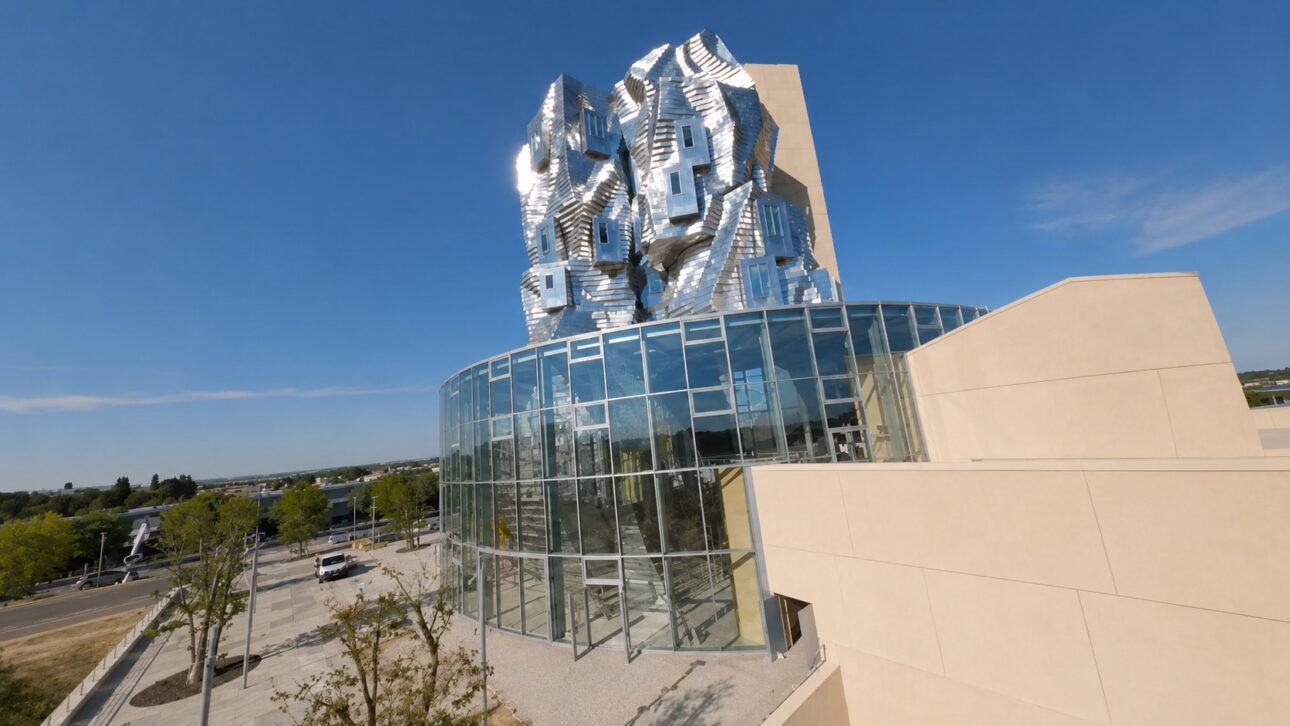
At the same time, the project requires careful reading. The more than 4,000 salt panels do not make the mineral a universal solution for constructions. They show a visual, internal, and controlled application, with a function very different from the structural part of a building.
If even salt, known for damaging constructions near the sea, can become a coating when used in the right place, what other common materials in Brazil could still be reconsidered by engineering and architecture?







Be the first to react!