






 Portuguese
  Spanish


The Ancient Peoples Developed A Fridge That Preserved Ice In The Desert. Known As “yakhchal”, This Ingenious Structure Was Over 18 Meters High And Had Underground Chambers To Store Ice And Food, Utilizing Advanced Thermal Insulation And Natural Ventilation Techniques.
The invention of refrigerators undoubtedly represented a true revolution in food preservation. However, long before that, the ancient Persians, ancestors of modern Iranians, had already developed their own refrigeration technology. The technology not only preserved food but also played a fundamental role: storing ice in the desert. By utilizing ingenious engineering methods and taking advantage of the arid climate, the Persians managed to create structures that preserved ice year-round, transforming resource management in desert regions.
The Operation Process Of The Fridge That Preserved Ice In The Desert
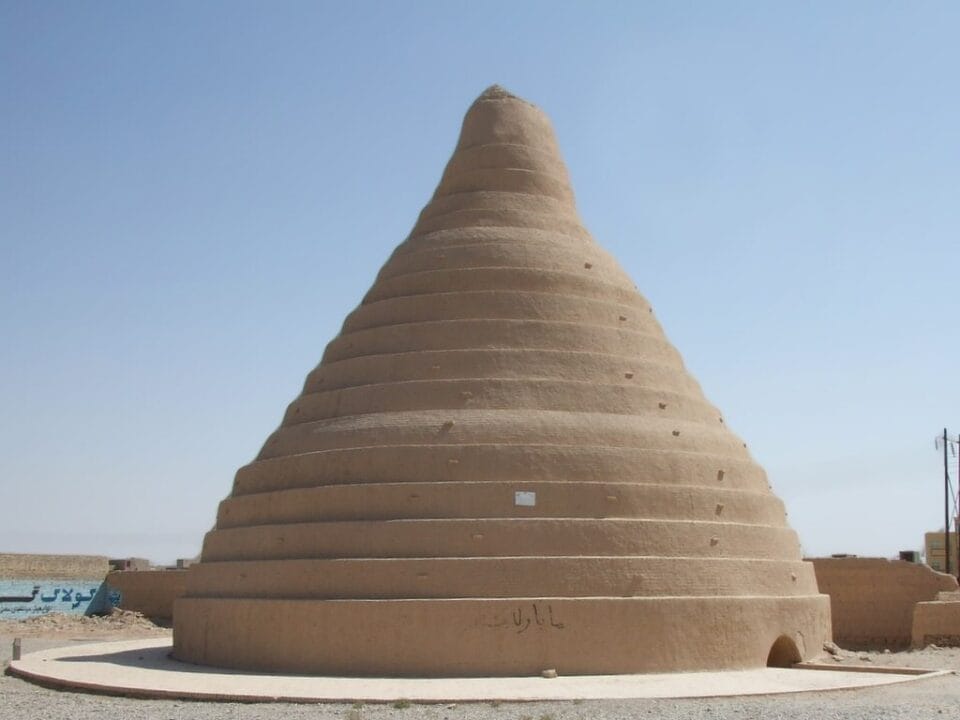
The “ancestor” of the refrigerator was very different from the appliances we have in our homes today. Known as yakhchal, it was, in fact, a giant structure. The fridge preserved ice in the desert and was built above ground. It looked like a rounded clay dome but had a huge storage space below the surface. According to researchers, it was created about 2,500 years ago.
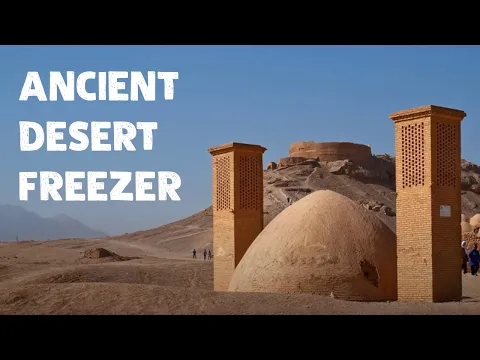

A yakhchal had an average height of about 18 meters and large underground storage spaces. Some located ruins indicate that its total capacity could reach six thousand cubic meters. The underground chambers of evaporative cooling systems worked through wind collectors and spring waters brought by channels.
-
AI Video Generator Automatically Creates Subtitles and Animated Captions

-
São Paulo Unveils Latin America’s Largest Underground Reservoir, Holding 900 Million Liters, in the Greater São Paulo Area

-
Chinese Teen Wins Gold in Germany for Invention Turning Air Moisture into Underground Irrigation in Drought-Stricken Areas

-
Desertification Threatens Brazil’s Caatinga: 85% of Semi-Arid Region Affected, 30 Million at Risk, and Efforts Underway to Restore 10 Million Hectares by 2045




Water absorbs heat from the environment and evaporates, reducing the ambient temperature. The sensation inside the yakhchal would be similar to that of a refrigeration chamber; thus, the fridge preserved ice in the desert.
The Construction Process Of The Persian ‘Fridge’
The walls of the Persian “fridge” were built with a special type of mortar (a mixture of sand, clay, and other elements, such as egg white and goat hair) that provided insulation and protection from the sun. It is worth noting that this people inhabited large portions of the desert and had to create ways to withstand intense heat.
The trenches underground were built to collect all the water from melted ice. This volume was refrozen at night when temperatures in the desert drop below zero. This fridge preserved ice in the desert but also, many times, stored food for long years.
Typically, a wall was built in the east-west direction near the yakhchal, and water was channeled from the north side of the wall so that the shadow of the wall kept the water cool to help it freeze faster. In some yakhchals, ice is also brought from nearby mountains for storage or to feed the water freezing process.
The Division Process
The ice is created and stored actively and passively in these specially developed refrigerators. The specific design of the building allows cold air to enter from openings at the base of the structure and descend to the lowest part of the yakhchal; at the same time, the conical and tall shape of the building guides any remaining heat upward and out through the openings at the top of the building, and through this active process, the air inside the fridge remains colder than outside.
Commonly, the fridge preserved ice in the desert and had access to a Qanat (channels or water conduits), sometimes equipped with a Bâdgirs system (an ancient design for wind catchers or wind towers) that could easily bring temperatures inside the space to frigid levels, even during summer days.
Built of clay or mud bricks, in square or round shapes, Bâdgirs captures the slightest breeze through openings at the top and channels cold air down through vertically placed wooden slats, to the water or structure below. Alternatively, the Bâdgir can function as a chimney, expelling hot air upward to draw in cold air from an opening at the base or from a connected Qanat.







Gostei muito deste artigo, sem eletricidade, eles tinham uma ótima forma de conservação de gelo e alimentos.
Sensacional, os povos antigos eram mais inteligentes que os atuais, não tinham todas as tecnologias de hoje, como energia elétricas, maquinários e outras e faziam acontecer.
Os povos atuais só vieram para, de certa maneira, atualizar e aperfeiçoar as coisas, sendo que tem muitas obras que os povos antigos faziam, que hoje com todas as tecnologias e maquinários que os atuais tem, nao sabem como foram feitas e não conseguem fazer e nem o que utilizaram para ter tanta durabilidade.
Entre elas, várias construções como as pirâmides, até mesmo as construções da Roma antiga, e muitas outras com mais de 3.500 anos.
As tais tecnologias modernas, teriam vindo de onde, não teria sido da inteligência do homem moderno?
No. “EGITO”. no. “SUDAO”. antigos. existem. “estudos” e. “relatos”. sobre. a. confecção de. “SORVETE” proveniente. do. “GELO”. que. eram. “removidos”. das. “PONTAS”. das. “PIRAMIDES”. e. das. partes. mais. “ALTAS” durante. o. horário. das. “MADRUGADAS”. que. eram. “adicionados”. a. “SUCOS”. e. pedaços de. “FRUTAS” !!! 😁😁.