Portuguese
  Spanish



General Motors (GM) Announces Billion-Dollar Investment in New Engine Manufacturing, Also Focusing on Other Sectors of the Automotive Industry to Better Serve Its Customers in Brazil.
General Motors (GM) announced an investment of R$ 5.5 billion in São Paulo, surprising the automotive industry. The amount will be mainly allocated for the development of new flex hybrid engines, updating the portfolio, and modernizing all its production and operational facilities in the State. This is one of the actions in the first phase of the R$ 7 billion package that will be invested from 2024 to 2028, marking the period of greatest transformation for the company in Brazil.
General Motors Speaks on Its New Investment in the Brazilian Automotive Industry
According to GM’s Executive Vice President and President of Global Markets, Rory Harvey, the investments the multinational is announcing will strengthen General Motors’ plans for sustainable mobility in Brazil and also help drive the company’s future growth.
Brazil will be the first market to offer GM’s flex hybrid technology worldwide, providing Chevrolet customers with more options in propulsion systems. It is an addition to its portfolio of new combustion and electric engines.
-
Rolls-Royce Turns Heads with 30-Inch Floating Wheels, 6.6-Liter V12 Engine, and 563 Horsepower

-
2019 Kia Sportage EX: A Spacious and Cost-Effective SUV with 2.0 Flex Engine and Panoramic Roof
-
Fiat Strada Becomes Top Seller in June, Surpassing Onix, Polo, Hilux, and T-Cross with 107 HP Engine and 732 km Range.

-
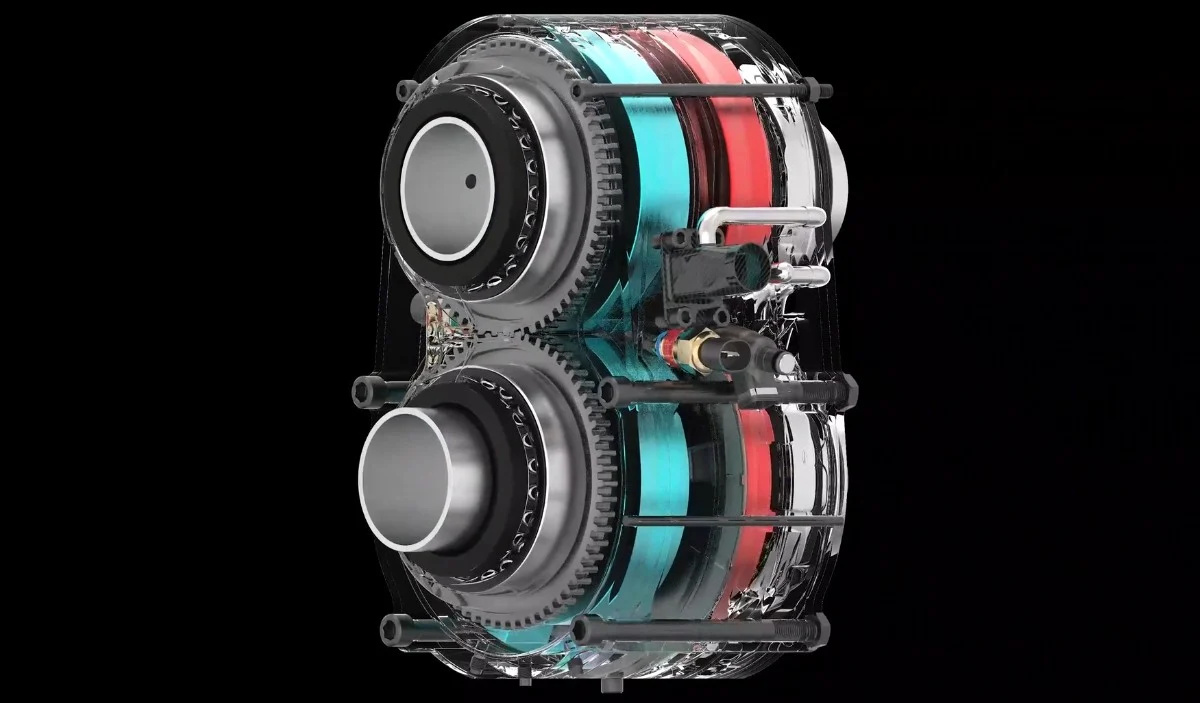
Suitcase-sized hydrogen engine spins at 25,000 rpm, nearly doubling the efficiency of conventional cars and replacing exhaust smoke with water vapor




Shilpan Amin, Senior Vice President of GM and President of GM International, stated that this investment will support the largest transformation in GM’s history in Brazil. Chevrolet is part of Brazilian history, playing a key role in the economy and in the lives of families for generations.
Energy efficiency and fuel economy are becoming increasingly essential for consumers in the Brazilian automotive industry. That is why General Motors is making investments with its customers for a new era, with increasingly connected and sustainable vehicles.
GM Continues to Explore Other Innovations in the Automotive Industry
According to Santiago Chamorro, President of GM South America, the production of flex hybrid vehicles in the country strengthens the industry and reaffirms its commitment to decarbonization by adding benefits to the use of biofuels and electrification. The expectation is to start local production with two light hybrid models, which will allow access to this new technology for a larger potential number of consumers.
It is also worth mentioning that, in parallel, GM continues to explore other innovations, such as the plug-in flex hybrid that allows the vehicle to be fueled with ethanol, gasoline, or electricity. According to Chamorro, the company plans to expand its line of electric vehicles starting in 2025, and its goal is to meet the diverse demands of the automotive industry.
This first phase of the new cycle of investments in new engines coincides with the celebrations for the company’s centenary in Brazil, which will take place in 2025. With this financial contribution, the company will completely renew its vehicle portfolio, reinforce its commitment to sustainable practices and increase the supply of zero-emission vehicles, in addition to exploring new business opportunities.
General Motors Also Focuses on Sustainability
The focus on sustainability for these investments in the State of São Paulo goes beyond products. In the factories, it involves the entire production process, and there are already important innovations underway. One of the pioneering initiatives is the technology created and patented by GM in Brazil for reducing water in the painting process.
Using metallic boxes produced at the São Caetano unit, the new system performs dry filtering, eliminating the use of water in this process. This and other combined initiatives amount to a reduction of approximately 4,000 water trucks per year. Thus, this practice is being replicated in other GM units.