Portuguese
  Spanish


Engineers create photosensitive artificial muscle that uses light to move synthetic cells and drives biological robotics and future engineering.
Engineers at the Georgia Institute of Technology have taken a significant step by developing a photosensitive artificial muscle capable of generating movement in synthetic cells using light and calcium. The innovation, described in a study published in Phys.Org on April 19, presents a new path for future engineering, with direct impacts on medicine, biotechnology, and biological robotics.
In practice, it is a system that reduces the direct use of ATP as the primary energy source for contraction, which is unusual in traditional biological processes. Instead, it uses a mechanism of controlled calcium storage and release, activated by light. This detail introduces a new approach to the operating logic of a synthetic muscle, allowing greater control and precision at a microscopic scale.
Right from the start, what stands out is the ability to program movement with a simple beam of light. This positions the discovery as a relevant recent advance within future engineering, mainly due to its potential for practical application.
-
Spain Launches World’s Largest Floating Dry Dock: 56-Meter Giant Produces Massive Concrete Structures in A Coruña Using Technology Proven in Brazil

-
AI-powered toys that talk, recognize faces, and collect data face scrutiny from Brazilian government over children’s privacy concerns

-
4,000-Year-Old Child’s Skull Unveils Ancient Burial in 7,500-Year-Old Norwegian Rock Shelter, Impressing Archaeologists

-
Norway Defeats Brazil in World Cup but Invests Billions to Preserve the Amazon, Strengthens Amazon Fund, and Joins Brazil in Leading Global Effort Against Tropical Deforestation




Engineers reproduce natural mechanism to create photosensitive artificial muscle
The starting point for this innovation was the observation of unicellular organisms known as ciliates. These microorganisms have a highly efficient contraction system based on calcium pulses.
The team led by Saad Bhamla, a professor in chemical and biomolecular engineering, sought to reproduce this mechanism in the laboratory. To do this, the engineers isolated the Tcb2 protein, found in the organism Tetrahymena thermophila.
This protein has the ability to form fibrous networks that contract when they come into contact with calcium. From this property, it was possible to build a functional synthetic muscle.
The difference lies in controlling this process. The researchers used a light-sensitive calcium chelator, which keeps the ion “trapped” until it receives a light stimulus. When light strikes, calcium is released, and contraction occurs.
This type of precise control is essential for the evolution of future engineering, especially in applications requiring high sensitivity and rapid response.
Synthetic muscle with light control advances biological robotics
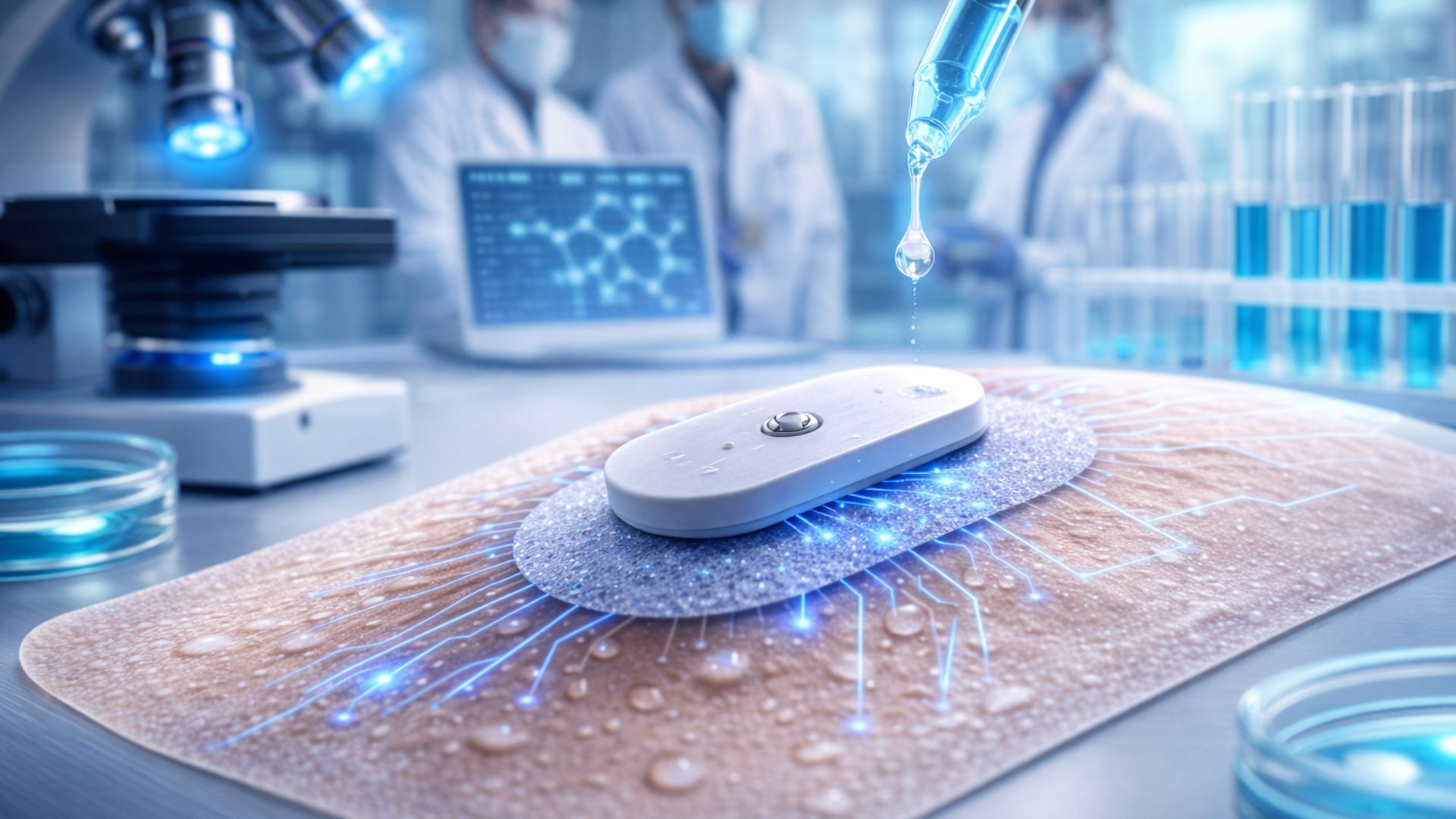
The combination of synthetic muscle and optical control represents a significant advance for biological robotics. During the experiments, the engineers were able to project light patterns in specific shapes, such as stars and circles, and observe how the proteins organized and contracted exactly into these designs.
This behavior is not just visually interesting. It demonstrates that it is possible to direct forces at a microscopic scale with a high degree of precision.
Among the main observed results are:
- Repetition of the contraction process about 150 times
- Average speed of approximately 0.4 micrometers per second
- Capacity for structural reorganization after each cycle
These numbers indicate that the photosensitive artificial muscle not only functions but also exhibits consistency and stability — fundamental factors for practical applications.
Furthermore, the use of light as a trigger reduces the need for complex chemical mechanisms, making the system simpler and potentially safer.
Future engineering gains precision with spatial and temporal activation
One of the most innovative aspects of the study is how movement is controlled. Light acts not just as a switch, but as a precision instrument.
According to Xiangting Lei, a doctor in chemical engineering and co-author of the research, illumination acts as a trigger that defines when and where contraction occurs. This allows for simultaneous spatial and temporal control.
In practice, this means that the photosensitive artificial muscle can be activated at specific points, with adjustable intensity and at programmed intervals.
This capability opens doors for applications such as:
- Systems that respond intelligently to external stimuli
- Microscopic devices with programmable movements
- Structures capable of performing complex tasks in biological environments
Within future engineering, this level of control is considered one of the pillars for the development of advanced technologies.
Engineers use artificial intelligence to optimize microscopic movements

Another relevant point of the study was the integration with computational tools. Researcher Carlos Floyd, with postdoctoral work at the University of Chicago, contributed with simulations and models based on machine learning.
These models helped optimize the light patterns used in the experiments, allowing for the generation of more efficient and directional movements.
With this, the synthetic muscle became capable of pushing and pulling microscopic particles in a controlled manner. This type of functionality is essential for practical applications in biological robotics.
The combination of biology, physics, and artificial intelligence reinforces the multidisciplinary nature of future engineering, where different areas of knowledge connect to solve complex problems.
Medical applications of the photosensitive artificial muscle and its impact
The potential of the photosensitive artificial muscle in medicine is one of the most promising aspects of the research. Experts believe that this technology could enable the development of microsystems capable of operating within the human body with high precision.
Among the most discussed possibilities are:
- Targeted drug delivery to specific regions
- Devices that react to stimuli such as light and temperature
- Systems capable of transporting substances in biological environments
The use of a light-controlled synthetic muscle reduces the need for invasive interventions, which could transform how treatments are performed.
Furthermore, integration with biological robotics could lead to the creation of hybrid structures, combining living and artificial components to perform specific functions.
Inspiration from nature reinforces advances in biological robotics
Nature continues to be one of the main sources of inspiration for science. In this case, engineers observed how simple organisms use calcium to generate movement and adapted this mechanism for an artificial system.
This type of approach, known as bioinspiration, had previously been explored by Saad Bhamla’s team in projects involving insect-inspired robots and devices that mimic aquatic movements.
Now, with the advancement of the synthetic muscle, biological robotics gains a new essential component, capable of expanding the possibilities of movement and control.
The trend is that, in the coming years, more technologies will follow this path, leveraging natural solutions to solve challenges in future engineering.
Paths opened by a synthetic muscle that responds to light
Despite the advancements, important challenges still need to be overcome. The scalability of the system, for example, is one of the main points of attention. Making the photosensitive artificial muscle applicable on a large scale requires adjustments and new tests.
Another challenge lies in integration with more complex biological systems. Although laboratory results are promising, application in real environments still depends on additional validations.
Even so, the outlook is optimistic. The combination of factors such as light control, efficient energy use, and integration with artificial intelligence places this technology in a strategic position within the engineering of the future.
The work of the engineers from Georgia shows that we are increasingly closer to creating systems that not only imitate life but also interact with it in a functional and intelligent way.
As these researches advance, synthetic muscle tends to become a key component in areas such as precision medicine, biotechnology, and biological robotics, consolidating a new generation of technological solutions inspired by nature itself.