






 Portuguese
  Spanish


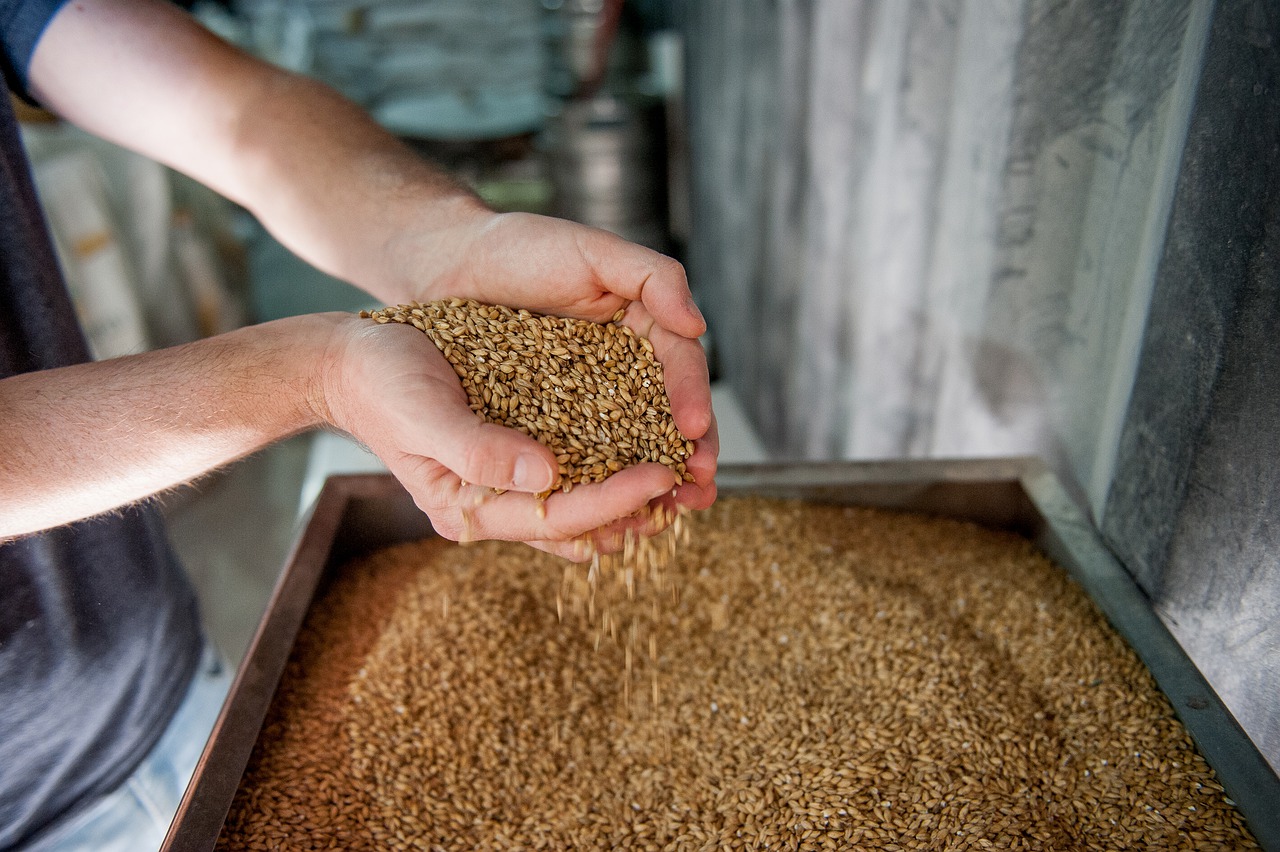

With New Technology, Besides Malt Being Used for Renewable Energy Generation, It Is Also Used as Biofuel and Biofertilizer
A study conducted by four scientists from Brazil and two from the United States detailed a new technology that allows the gain of electrical and thermal renewable energy, as well as the production of biofuel, obtained from malt residue when subjected to ultrasound treatment, and a microbiological process that surrounds the consumption of organic matter and the production of methane.
The pre-treatment that the residue undergoes resulted in biogas with 56% methane, 27% more than that obtained without the application of ultrasound.
After being transformed into methane, the biogas obtained can be used as biofuel in vehicles, as it has a decarbonization footprint, meaning very low carbon usage compared to traditional fossil sources.
-
Brazilian scientists are simultaneously advancing two research projects on clean hydrogen and driving solutions that could transform the energy matrix, enhance industrial competitiveness, and accelerate large-scale emission reduction targets.

-
Advancement in renewable energy: A R$ 150 million project launched by Petrobras and Finep aims to create state-of-the-art electrolyzers for green hydrogen, strengthening national research and preparing Brazil to compete in a billion-dollar energy market.
-
Illiterate or semi-literate grandmothers were trained to repair solar systems, open rural workshops, and light up homes that still depended on kerosene.
-
US$ 7 billion, green hydrogen, and steel with up to 95% less CO₂: the first green steel plant on the planet emerges in Sweden and targets Brazil as the next chapter





With the combustion of methane obtained from the technology, it is still possible to develop renewable electric energy and heat in cogenerators, for use by the brewing industry.
The final residue of the process is used as biofertilizer and can be applied to replace mineral fertilizers.
New Energy Generation Technology Developed at a Federal University
This new technology that generates renewable energy and biofuel was developed at Biotar, the Laboratory of Bioengineering and Treatment of Water and Waste at the Food Engineering Faculty of FEA, Unicamp, where the research group leader, Tânia Forster Carneiro, also manages a project supported by FAPESP.
Also contributing to the project are postdoctoral researcher Luz Selene Buller and PhD student William Sganzerla, both FAPESP scholarship holders.
William comments that the residues from the brewing industry are lignocellulosic, meaning composed of lignin, cellulose, and hemicellulose, which have cell walls that are difficult for microorganisms that use anaerobic digestion to access.
The study also considered the energy recovery routes throughout the process, concluding that energy from biogas offset 80% of the energy needed for ultrasound pre-treatment and anaerobic digestion, generating a thermal energy surplus greater than 50% compared to the excess heat that would be obtained in the process without ultrasound application.
“The technology barrier is subjecting the malt residue to a clean pre-treatment that consumes little energy, as a pre-treatment with high energy consumption would not be viable for industrial-scale applications.
Thus, the renewable energy generated by the combustion of biogas will be used for ultrasound treatment, while the heat produced can be used in industries for various processes that utilize thermal energy.
All considerations follow the principles of circular economy to produce food with low carbon emissions,” reports Sganzerla.
Buller also emphasizes that nutrient recycling and the generation of renewable energy are important strategies for sustainable development and to accelerate the decarbonization process in food production.
Research and Detailed Studies
According to Forster-Carneiro, a determining factor for the article to capture the attention of the academic community was the level of detail in the measurements of the work.
“We executed all calculations for all input and output flows. We demonstrated in detail that for each ton of malt residue, it is possible to produce 0.23 megawatt-hours of renewable energy.”
The research also presents the potential to reduce greenhouse gases through the generation of renewable energy. The scientist also comments that she has been studying together with Michael Timko, a professor at Worcester Polytechnic Institute (Massachusetts, United States), who is also a specialist in waste valorization and co-author of the article on this subject.
This study, among others, emerged from the good relationship between FEA-Unicamp and the brewing industry, originating from technical visits and solid waste donations.
This beer production unit produces around 120 to 250 tons of malt residue weekly.
“Nowadays, the factory does not charge for the residues; it simply donates them for animal feed. However, they could treat the residue while producing energy and biofuel,” comments Forster-Carneiro.
Effects of the National Solid Waste Policy
Sganzerla highlights the imminent results of the National Solid Waste Policy (Law 12.305, of 2010).
“At some point, all companies will need to submit their residues, which generate biofuel and renewable energy, to treatment, as well as start using the technologies available.
Technically, it is already possible to apply these changes in industries; in our research, we highlighted several possibilities. Currently, there are no industries that carry out this type of waste treatment on a large scale because, although anaerobic digestion technology exists and is good for waste, more in-depth studies still need to be adjusted for solid and lignocellulosic waste.”








