






 Portuguese
  Spanish
  3 min of reading


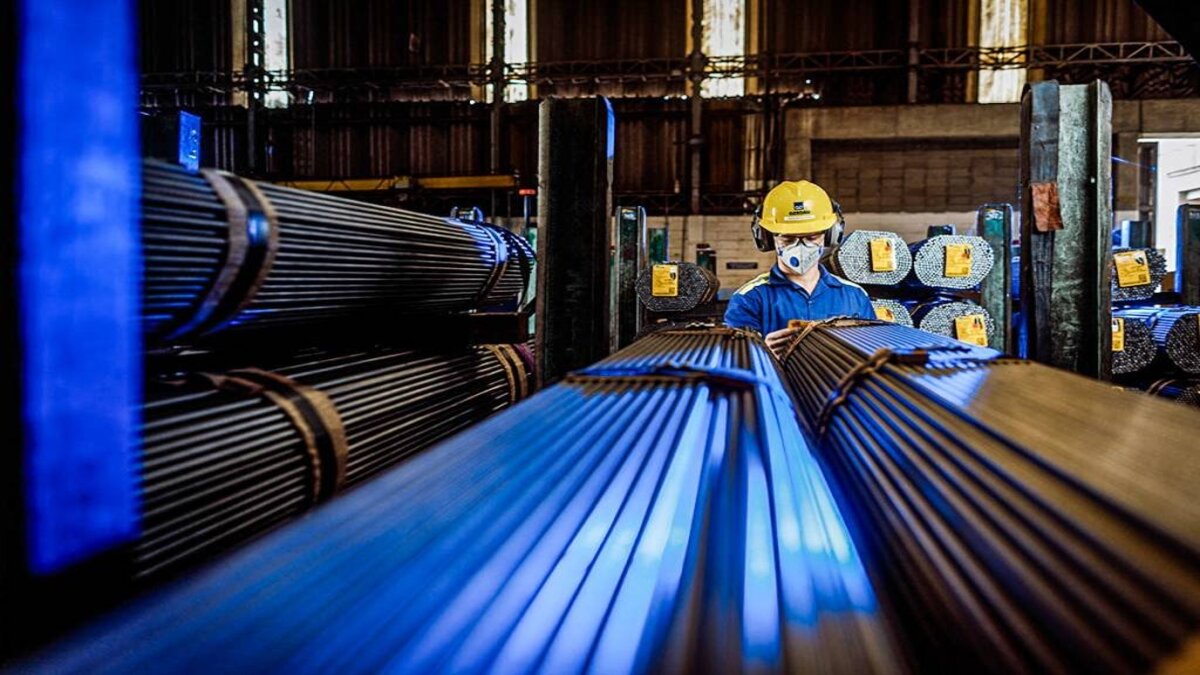
Although it claims that there are no substitutes for steel in the steel industry today, Gerdau is seeking to bring sustainability to its production chain by using ESG practices as a way to ensure a reduction in carbon emissions.
Gerdau is the largest steel producer in the Brazilian market and, for this Monday (06/27), seeks to bring sustainability practices to its production chain as a way to make the steel industry cleaner. This is because the company stated that steel is still a product without substitutes in the current market, but that adopting ESG practices during the production chain, especially to reduce carbon emissions, can help make the sector more environmentally responsible.
Gerdau’s Carbon Emission Reduction Project is the Company’s Main Alternative to Bring Sustainability to the Steel Sector in Brazil
With an impressive business portfolio across the national territory, Gerdau has become a reference in the country and abroad regarding steel production, as the company is the national leader in steelmaking. However, this is still a sector that brings various impacts to the environment during its production chain, and with sustainability increasingly prominent in international debates, the steelmaker is now seeking to play its role in this scenario.
Thus, the company commented on the future of the steel production market and said that, unfortunately, this is still an essential material for the industry and that it cannot be substituted. Despite this, Gustavo Werneck, CEO of Gerdau, believes that the best alternative for the sector today is to seek innovation in production and adopt sustainability practices to make it cleaner. To this end, the company has a program to reduce carbon emissions in the steel production chain.
-
Race for data centers in Brazil increases pressure on critical energy

-
Growth without profit has become one of the most costly management mistakes in Brazil.

-
Anvisa blocks batch of antibiotic after unexpected discovery in sealed vial and also suspends clindamycin with impurities and saline solution used in intravenous application

-
“Dude, it was bizarre”: Nubank founder admits mistake that triggered bank liquidation alert for thousands of customers and explains what really happened.




During February 2022, Gerdau announced its new sustainability project focused on reducing pollutant gas emissions, such as carbon. And, as the main goal for the initiative, the steel company aims to reduce emissions from 0.93 tons of carbon equivalent per ton of steel to 0.83 by the year 2030.
With the completion of the project, the company will achieve a result lower than the global target, currently set at 1.89 tons of carbon per ton of steel, bringing more sustainability to steelmaking.
Adoption of Renewable Energies and Recycling are the Main Goals for Gerdau’s Carbon Emission Reduction Project for Steelmaking
Gerdau is continuing its search for sustainability in the steel sector and, to that end, plans to focus on two main fronts in its low carbon emission project: the adoption of renewable energies and the recycling of materials. To this end, the company announced a series of solar parks built both in Brazil and the U.S. as a way to ensure a sustainable energy supply.
Recycling is already an initiative present in the company and will continue to be a focus during the low carbon steel production project. Currently, 73% of the steel produced by the company comes from the recycling of ferrous scrap, making it the largest recycler in Latin America.
As a result, for every ton of recycled scrap, 1.5 tons of carbon dioxide emissions are avoided, contributing to the neutralization of emissions over the next few years.
Finally, executive Gustavo Werneck, CEO of Gerdau, emphasized the need for more investments in scrap recycling for steel production and said, “When I produce steel from scrap, there’s no mining or dam. It’s the best of both worlds,” reaffirming the company’s commitment to the environment.





Be the first to react!