






 Portuguese
  Spanish
  4 min of reading
  0 comments


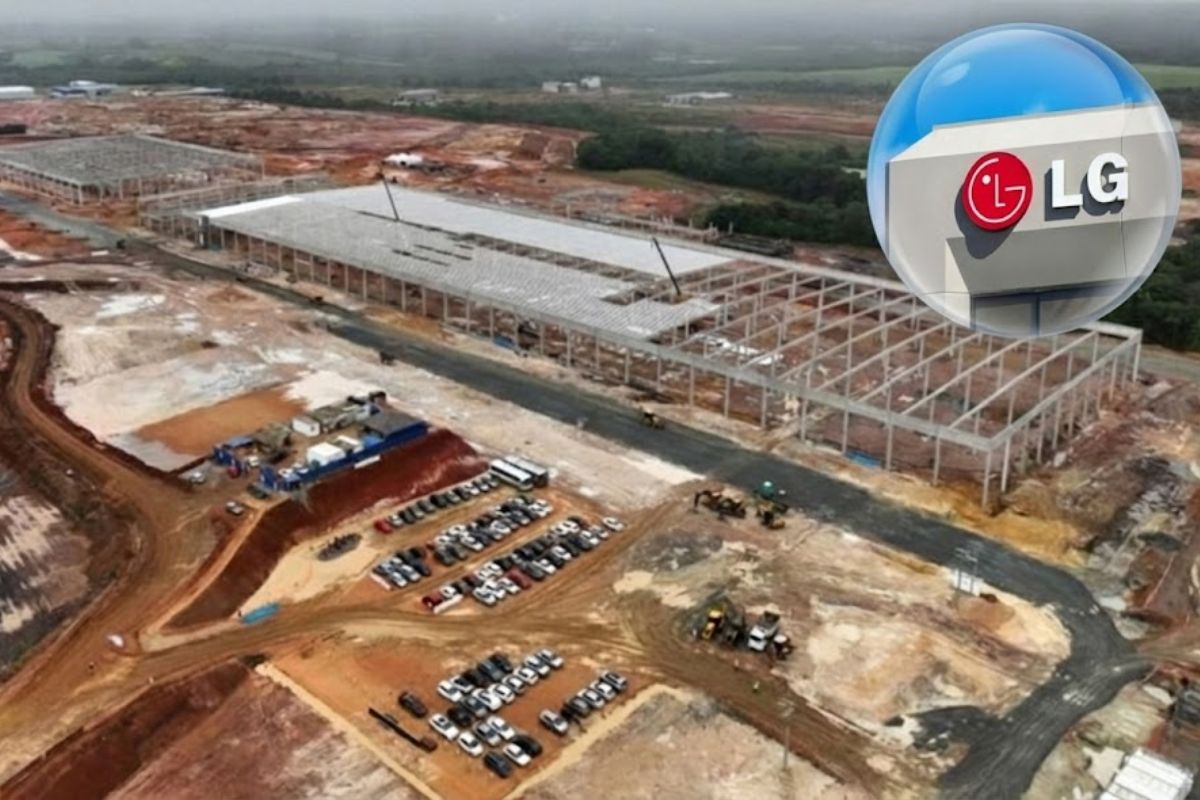
South Korean Giant Announces LG Factory in Fazenda Rio Grande, in the Metropolitan Region of Curitiba, with Investment of R$ 1.5 Billion and Promise of One Thousand Direct and Indirect Jobs. The Plant of 770 Thousand m² Begins with 500 Thousand Refrigerators Annually and Forese
The South Korean giant decided to anchor a R$ 1.5 billion project in southern Brazil that changes the industrial landscape of the metropolitan region of Curitiba. In Fazenda Rio Grande (PR), LG’s new factory is born with the goal of producing white goods on a large scale and creating around one thousand jobs among direct and indirect vacancies.
The plan arrives at a time when the national market for appliances is still pressured by imports and logistical costs. By bringing production closer to suppliers and strategic routes, the South Korean giant places a clear bet on the table: increase supply, accelerate presence in retail, and compete in a space where price and availability usually decide the purchase.
Fazenda Rio Grande on the Radar: Logistics, Suppliers, and Operating Cost
The choice of Fazenda Rio Grande was not random. The city is located 29.3 kilometers from Curitiba, a detail that matters when the objective is to shorten transport distances, gain logistical efficiency, and maintain quick access to suppliers, services, and labor in the metropolitan area.
-
São Paulo Offers Over 13,000 Job Openings: Opportunities in Industry, Logistics, and More Across the State

-
Brazil’s BNDES Allocates $65 Million to Fund 85,000 E-Bikes for App-Based Delivery Workers, Offering Purchase Discounts and Leasing Options to Boost Income and Improve Delivery Operations
-
JBS Invests Nearly $160 Million in Texas Megaproject to Expand Beef Production and Operations Through 2027

-
The urgent need to implement a severe cut in public spending and a massive increase in taxes, in addition to drastically compromising the quality of basic services and the purchasing power of the population, could result in social unrest in the country, with the population leading protests, strikes, and frequent disturbances.


In an industrial project, logistics is not just the final transport: it involves incoming components, packaging, parts, and materials, in addition to the outgoing flow of finished products.
By aiming for a location that facilitates this back and forth, the South Korean giant seeks to reduce operating costs and create a more predictable base for continuous production.
The Plant of 770 Thousand m² and the Initial Scale: 500 Thousand Refrigerators Per Year
With a planned area of 770 thousand m², the new unit is already born dimensioned for volume. The initial capacity announced is 500 thousand refrigerators per year, a level that helps explain why the investment reached R$ 1.5 billion and why the expected impact goes beyond the construction site.
This scale also signals the type of competition that is being outlined. Local production in large quantities tends to reduce reliance on imports and give more breathing room to adjust the portfolio to the pace of retail. The future expansion into washers and dryers is a natural next step as the operation matures.
Jobs and Supply Chain: The Effect That Goes Beyond the Factory Gate
When a South Korean giant announces around one thousand jobs among direct and indirect positions, the number draws attention, but the effect usually spreads. The municipality may feel the movement in services, transport, maintenance, food, logistics, and suppliers that start to orbit the factory.
Furthermore, the supply chain tends to strengthen with more stable and close demands. More local contracts and greater predictability of orders help consolidate Fazenda Rio Grande as a hub of manufacturing and innovation, especially if some suppliers manage to establish or expand their presence in the region.
Timeline and Key Turning: Works in 2024, Structure in Early 2026
The machines are set to work in 2024, with the expectation that the physical structure will be completed in early 2026. This interval is crucial because, while the construction progresses, the company also prepares the commercial and industrial landscape for when national production officially begins.
In the meantime, the South Korean giant continues to adjust the design and functionalities for the Brazilian consumer. This usually means calibrating features, ergonomics, and daily use details, so the product arrives on the market better suited to local habits, without solely relying on versions designed for other countries.
Competition with Imports and the “Price Game”: Why it Affects the Market
Competition becomes more sensitive when it comes to refrigerators. The sector moves around R$ 28.5 billion annually just from refrigerator sales, and this size means that any change in supply or cost reverberates quickly in retail.
Producing here can reduce the need for imports, which tends to change the dynamics of prices and availability.
The goal of tripling the presence in points of sale reinforces this perspective: it is not enough to produce; it is necessary to reach the market. By combining local manufacturing, scale, and more aggressive distribution, the South Korean giant tries to carve out space, especially in the mid-range segment, where consumers tend to compare cost-benefit more rigorously and with less brand loyalty.
The arrival of the South Korean giant in Paraná places Fazenda Rio Grande at the center of a strategy that mixes industry, logistics, and commercial competition.
Between the promise of jobs, the strengthening of the local supply chain, and mass production of appliances, the question that remains is how this will translate into practice when the products start rolling off the line.
Do you believe that manufacturing in Brazil really reduces prices and improves supply, or does the impact show more on the local economy than on the consumer’s wallet? And, if you live in the South, how do you see this movement: more job opportunities, more pressure for qualification, or both at the same time?






Be the first to react!