






 Portuguese
  Spanish
  3 min of reading
  0 comments


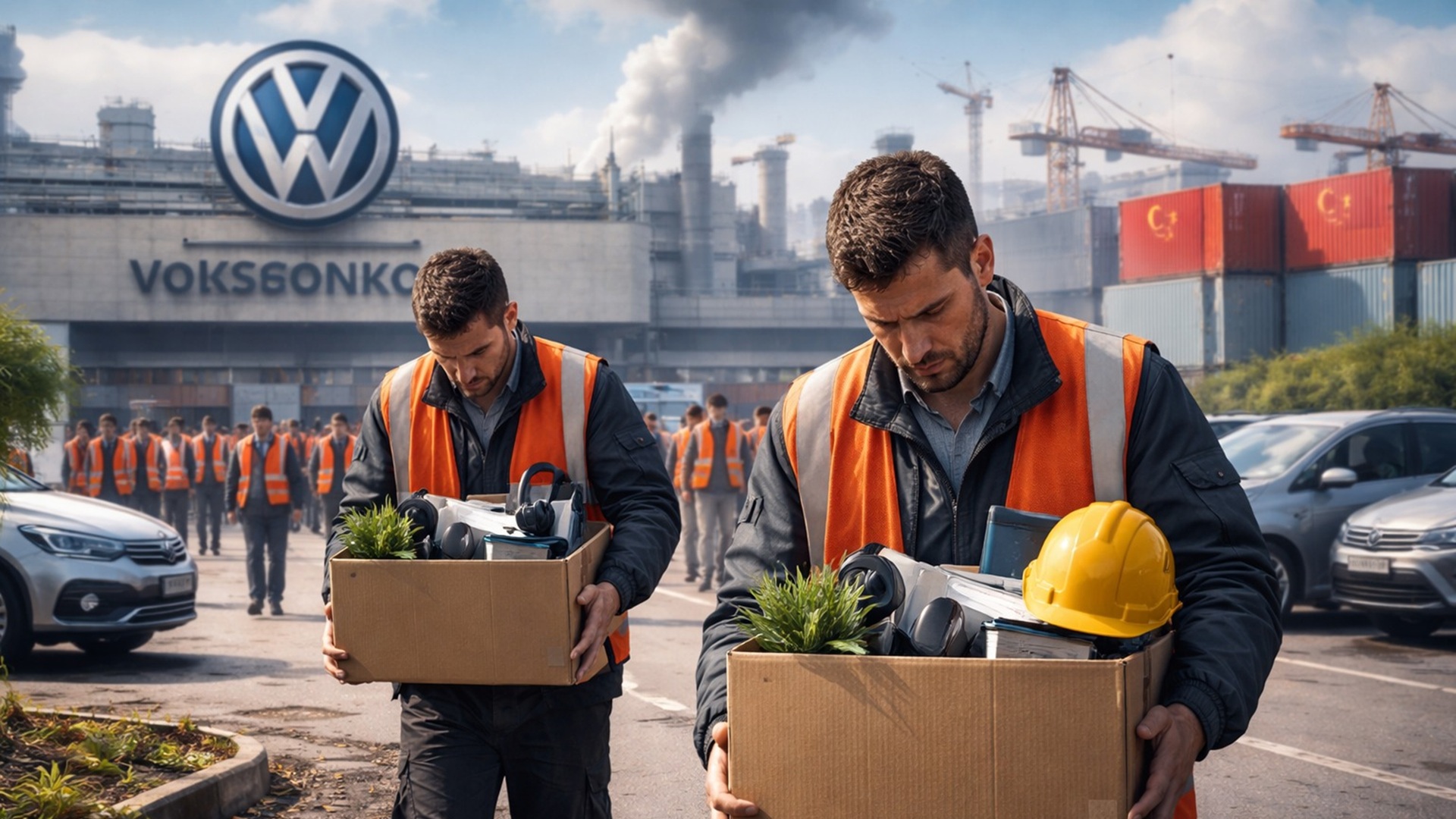
Volkswagen Announced the Elimination of About 50,000 Jobs in Germany by 2030 After Reporting a 44% Drop in Net Profit in 2025, While Facing Growing Competition from Chinese Automakers, U.S. Tariffs and Stagnation in Demand in the European Market
Volkswagen announced on Tuesday its intention to cut around 50,000 jobs in Germany by 2030. The decision is part of a cost-cutting plan in the face of competition from China, stagnation in demand in Europe, and U.S. tariffs.
The announcement was made by Volkswagen’s CEO, Oliver Blume, in a letter sent to shareholders during the group’s annual results presentation. According to him, the cuts will affect various business areas of the company in Germany.
Volkswagen Plan Expands Job Cuts Planned in Agreement with Unions
Volkswagen had already signed, at the end of 2024, an agreement with unions to reduce 35,000 jobs by 2030. The goal was to implement cost-saving measures capable of generating an annual cost reduction of €15 billion.
-
Better than in Brazil? Havan’s owner wants to take the chain to Paraguay and Uruguay: “I confess I had never thought about it.”

-
How much does a gas station owner earn? A business that seems like a money-making machine can generate R$ 1.5 million per month and still profit only R$ 40,000, while the real earnings come from convenience, car wash, and extra services.

-
Elderly individuals may obtain essential documents without paying fees: a project that includes CIN, CNH, CPF, and work card advances in the Chamber, eliminates issuance and renewal charges, and leaves Brazilians waiting for decisive steps to see if the benefit will actually be implemented.
-
Paper money is disappearing from Brazilians’ pockets, with the issuance of new banknotes dropping by 31% from 2020 to 2025, amid the explosion of Pix, which became the most frequent payment method for 46% of the population, while cash plummeted from 42% to 22%.





Now, with the revision of the plan, Volkswagen has increased the number of cuts to around 50,000 jobs in Germany. According to Oliver Blume, the personnel reduction will affect all areas of the group’s operations.
In addition to core operations, Volkswagen’s cuts will also impact luxury brands owned by the group. Among them are Audi and Porsche, as well as the software subsidiary Cariad.
Volkswagen Seeks Annual Savings of Over €6 Billion by 2030
According to data released by the company, the measures adopted by Volkswagen have already generated savings of €1 billion in 2025. The expectation is that the annual savings will exceed €6 billion by 2030.
The expense containment plan was accelerated after the disclosure of the group’s financial results. In 2025, Volkswagen’s net profit fell by 44%, reaching €6.9 billion.
The decline occurred in a context of increased additional charges totaling €9 billion. Among them are €5 billion linked to Porsche’s change of electric strategy and €3 billion associated with tariffs imposed by the United States.
Financial Results Show Decline in Profit and Stagnation in Revenues
In addition to the drop in net profit, Volkswagen also recorded a significant decline in operating profit. The metric fell by nearly 53%, totaling €8.9 billion for the period.
The group’s revenue remained virtually stable, reaching €322 billion. In the same period, Volkswagen delivered around nine million vehicles, a figure 0.2% lower than that recorded the previous year.
Sales exhibited different behaviors across markets. While Europe and South America experienced growth of between 5% and 10%, North America registered a decline of 12%, affected by U.S. tariffs.
Volkswagen Plans to Expand Production in the United States and Launch New Models in China
To face customs barriers, Volkswagen intends to transfer part of its production to the United States.
The strategy will be conducted through the American brand Scout, relaunched to manufacture electric SUVs and pickup trucks starting in 2027.
Meanwhile, Volkswagen announced changes to the group’s management structure. Starting April 1, Oliver Blume will oversee development, purchasing, production, and sales across all company operations.
For 2026, Volkswagen expects profitability to remain under pressure. The scenario includes rising raw material costs, intense competition, and geopolitical tensions affecting the global market.
In China, a market that was once the main one for Volkswagen and is now experiencing a 6% decline, the group plans to react with the launch of the largest product campaign in its history, with new models developed specifically for the local market.




-

1 person reacted to this.