






 Portuguese
  Spanish


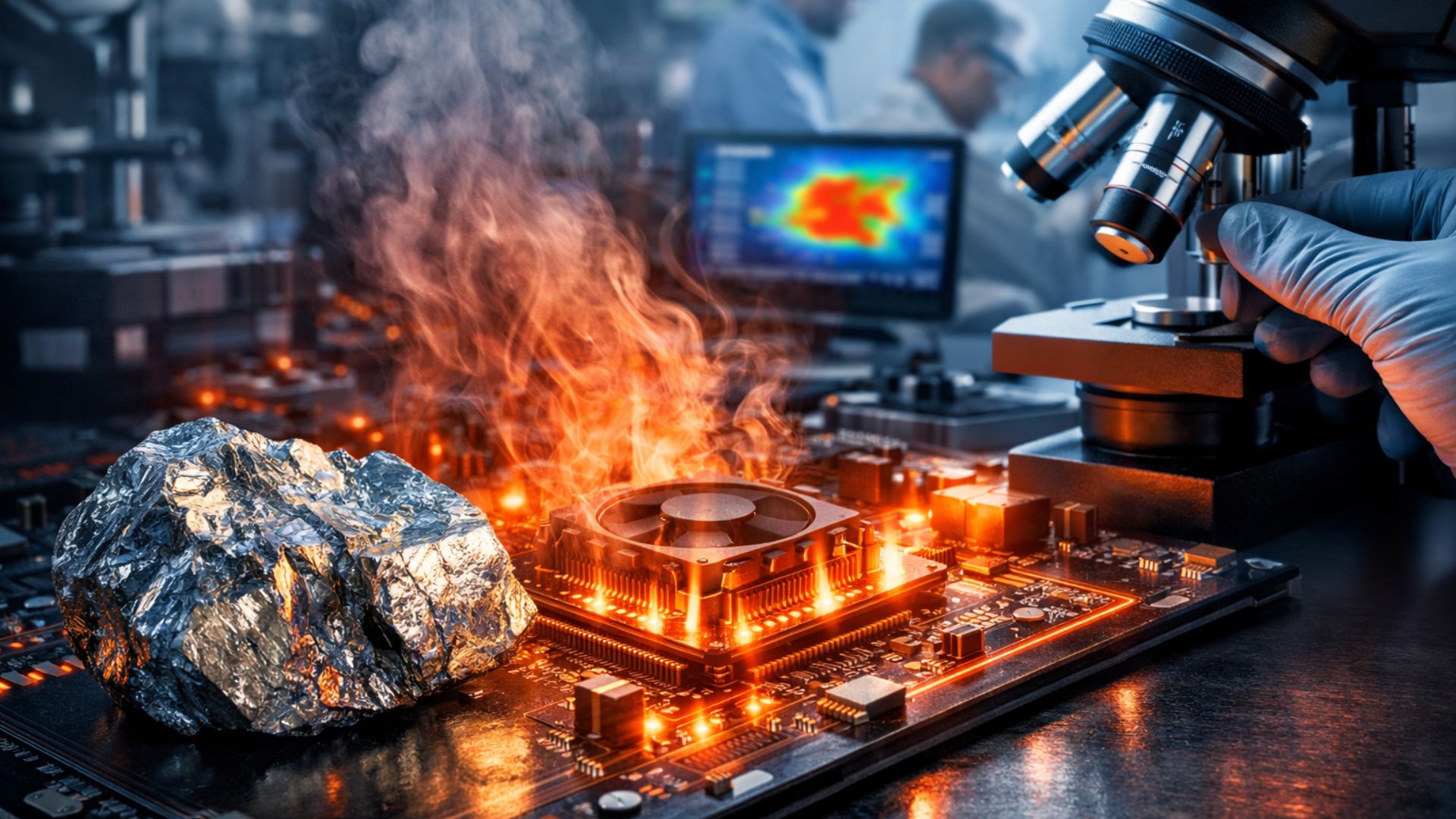

Discovery by UCLA scientists presents a new material with high thermal conductivity that reduces overheating in electronics, boosts energy efficiency, and could redefine performance standards in modern technology.
Overheating in electronic devices, one of the main challenges of modern engineering, may be facing a significant inflection point. UCLA scientists have identified a new material with thermal conductivity far superior to copper, suggesting a change in how heat is managed in technological systems.
The discovery, published in the journal Science, not only expands scientific understanding of thermal conduction but also points to a practical path to overcome limits that currently restrict the advancement of chips and devices.
Overheating as an invisible limit of current technology
Overheating is a silent but decisive problem. In virtually all electronic devices, from smartphones to supercomputers, the heat generated during operation imposes direct restrictions on performance.
-
China Develops Custom 140-Ton Electric Mining Truck with 770 kWh Swappable Battery, Deploys 290 Units in Xinjiang’s Largest Zinc Mine

-
Meta to Launch Arena, a New Prediction App Targeting 3.56 Billion Users, Competing with Polymarket and Kalshi

-
Scientist Challenges Famous Human Evolution Theory, Argues Homo Sapiens Evolved Gradually Over Thousands of Years
-
15-Year-Old American Builds Ocean Generator with PVC Pipe and 3D-Printed Propeller for $12, Wins National Prize, Presents at White House, and Makes Forbes 30 Under 30 List




As processors become faster and denser, the amount of heat generated increases proportionally. Without efficient dissipation, systems need to reduce speed or intensify energy use to maintain stability. This scenario creates a technical limit that is not in the processing capability itself, but in thermal management.
Today, copper dominates about 30% of commercial applications aimed at temperature control. Its popularity is due to its high thermal conductivity, close to 400 watts per meter-Kelvin, as well as ease of industrial use. Still, this standard is beginning to show signs of saturation in light of current demands.

UCLA scientists and the new material that challenges copper
It was in this context that UCLA scientists identified a new material with thermal properties outside the standard observed in conventional metals. This is metallic tantalum nitride in the theta phase, known as θ-TaN.
According to the study, the material achieves a thermal conductivity close to 1,100 watts per meter-Kelvin, a value that makes it nearly three times more efficient than copper in conducting heat.
Researcher Yongjie Hu, the leader of the study, points out that the material could represent a fundamentally new alternative for thermal applications. The discovery is not limited to an incremental gain but suggests a new direction for the development of materials.
This type of advancement is rare in established areas, where improvements tend to occur gradually.


How the new material reduces overheating in electronics
To understand the impact of the discovery, it is necessary to observe how heat moves within a material. In traditional metals, thermal transport occurs through two main mechanisms:
- Movement of free electrons
- Vibrations of the crystal lattice, known as phonons
These two processes coexist but also interact with each other. This interaction tends to generate resistance to thermal flow, limiting the efficiency of heat conduction.
In the case of θ-TaN, scientists identified an unusual behavior. Simulations showed that the interactions between electrons and phonons are significantly weaker than the pattern observed in other metals.
In practice, this allows heat to propagate with fewer obstacles. The result is faster and more efficient dissipation, reducing the thermal buildup that causes overheating in electronics.
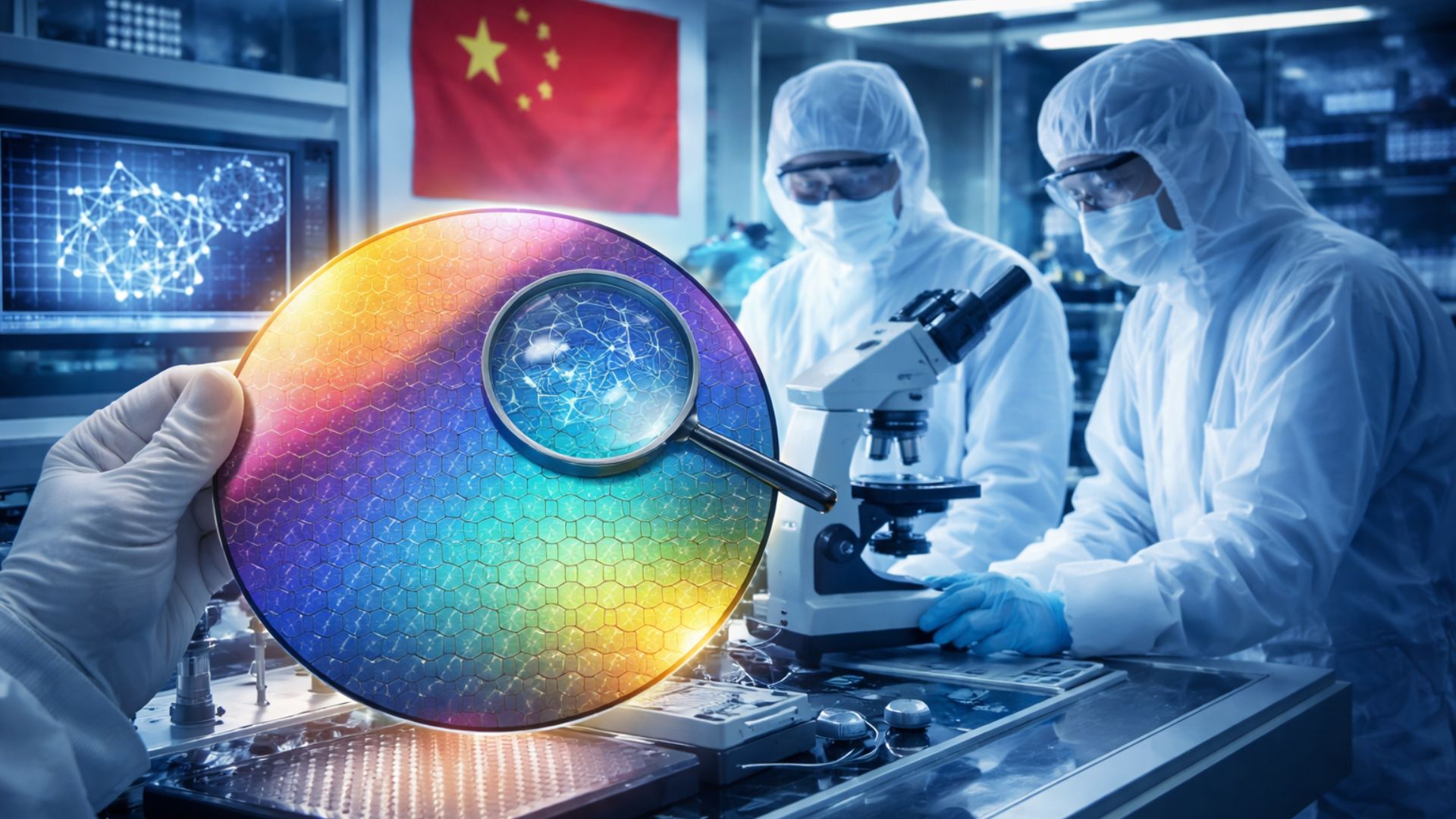
Experimental validation confirms the performance of the new material
The team did not rely solely on computational simulations. To validate the behavior of the material, the researchers used the Advanced Photon Source at Argonne National Laboratory in the United States.
With the use of high-energy X-rays, it was possible to analyze the atomic structure of θ-TaN on a microscopic scale. This technique allows us to observe how the atoms are organized and how thermal vibrations behave within the material.
The experimental results confirmed the theoretical predictions. The heat flow proved to be more efficient, reinforcing the hypothesis that the material’s structure favors thermal conduction.
This type of validation is essential, as small structural variations can completely alter performance in real applications.
A direct contrast between copper and the new generation of materials
The comparison between copper and θ-TaN reveals a relevant contrast in the evolution of thermal materials. For decades, copper has been considered the ideal standard for balancing performance, cost, and availability.
With thermal conductivity around 400 watts per meter-Kelvin, it meets most industrial applications. However, the new material exhibits performance close to 1,100 watts per meter-Kelvin, significantly raising the technical standard.
This leap suggests a paradigm shift. Instead of optimizing traditional materials, the industry may begin to explore compounds with distinct structural properties capable of overcoming historical limitations.
Still, factors such as production cost, scalability, and integration with existing processes will continue to determine the speed of this transition.
Practical impacts on technology and the global industry
The improvement in heat dissipation can generate direct effects in different sectors. In electronic devices, more efficient thermal control allows for enhanced performance without compromising stability.
Among the main observed impacts, the following stand out:
- Possibility of faster chips with lower risk of failure
- Reduction in the need for complex cooling systems
- Increased lifespan of electronic components
- Lower energy consumption in intensive operations
In data centers, where thermal control represents a significant portion of operational costs, the adoption of more efficient materials can reduce the energy used for cooling.
This effect has economic and environmental implications, especially in a scenario of accelerated growth in cloud computing.
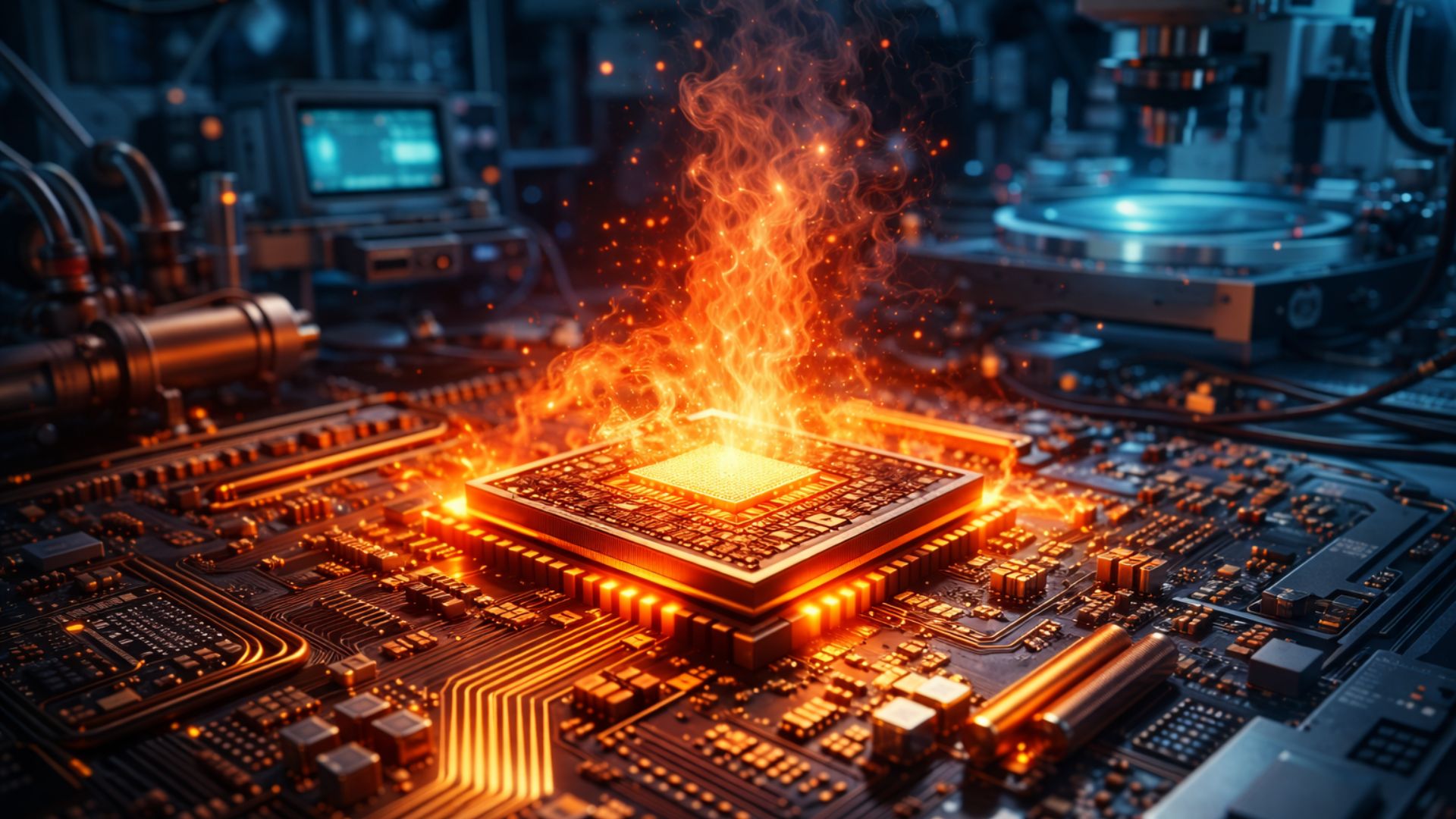
Overheating and the Advancement of Artificial Intelligence
The debate about overheating becomes even more relevant with the advancement of artificial intelligence. More complex computational models require greater processing capacity, resulting in increased heat generation.
In this context, the new material identified by UCLA scientists can act as a technological facilitator. By improving thermal dissipation, it expands the space for hardware evolution without relying solely on external solutions, such as more robust cooling systems.
This type of innovation can contribute to the development of new chip architectures, making systems more efficient and compact. A little-discussed fact reinforces this importance: in many cases, the performance limit of devices is not in computing capacity, but in the difficulty of dissipating heat efficiently.
What Still Needs to Advance for Large-Scale Application
Despite the potential, the adoption of θ-TaN on a large scale still depends on practical factors. The transition from the lab to industry involves challenges that go beyond technical performance.
Among the main points of attention are:
- Economic viability of production
- Compatibility with existing industrial processes
- Long-term stability of the material
- Commercial scale production capacity
Historically, many promising materials face difficulties in this adaptation process. Nevertheless, the level of validation presented in the study indicates that the technology has already surpassed the initial stages of research.
A Silent Change That Could Redefine Technology
The discovery led by UCLA scientists introduces a new element in the debate about the limits of modern technology. By presenting a material with thermal performance significantly superior to copper, the study points to a possible reconfiguration of the foundations that support electronic development.
More than just an incremental improvement, this represents a structural change in how heat is managed within systems. In a scenario where overheating has become one of the main obstacles to technological evolution, solutions of this kind gain strategic relevance.
If confirmed in practical applications, the innovation could allow devices to operate with greater efficiency, stability, and longevity, paving the way for advancements that today still stumble upon difficult thermal limits.





