Portuguese
  Spanish


New aluminum developed by scientists could reduce dependence on critical metals, cut industrial costs, and boost the global energy transition in the coming years
A new scientific discovery is beginning to attract the attention of experts and industry worldwide. Scientists have developed a new aluminum with properties that could redefine production processes and significantly reduce dependence on critical metals, which are currently considered essential but are expensive and limited.
At first glance, the impact is direct: reduced industrial costs, greater predictability in supply chains, and a faster advancement of the energy transition. This movement could influence everything from the production of electronic equipment to large energy infrastructure projects.
The relevance of the topic is growing precisely at a time when the world faces challenges related to the scarcity of strategic resources and the need for more sustainable solutions. The new aluminum emerges as a concrete alternative within this scenario.
-
Dog Walker in English Forest Uncovers 3,400-Year-Old Bronze Age Axe

-
Texas Blackout Inspires Student to Develop Bionic Leaf Catalyst for Converting Sunlight, Water, and Bacteria into Fuel

-
Brazilian Students Develop Process to Turn Styrofoam Waste into Water-Purifying Charcoal

-
Study Warns: Wi-Fi Routers Can Act as Invisible Radars, Identifying People with 99.5% Accuracy Without Cameras or Wearable Devices


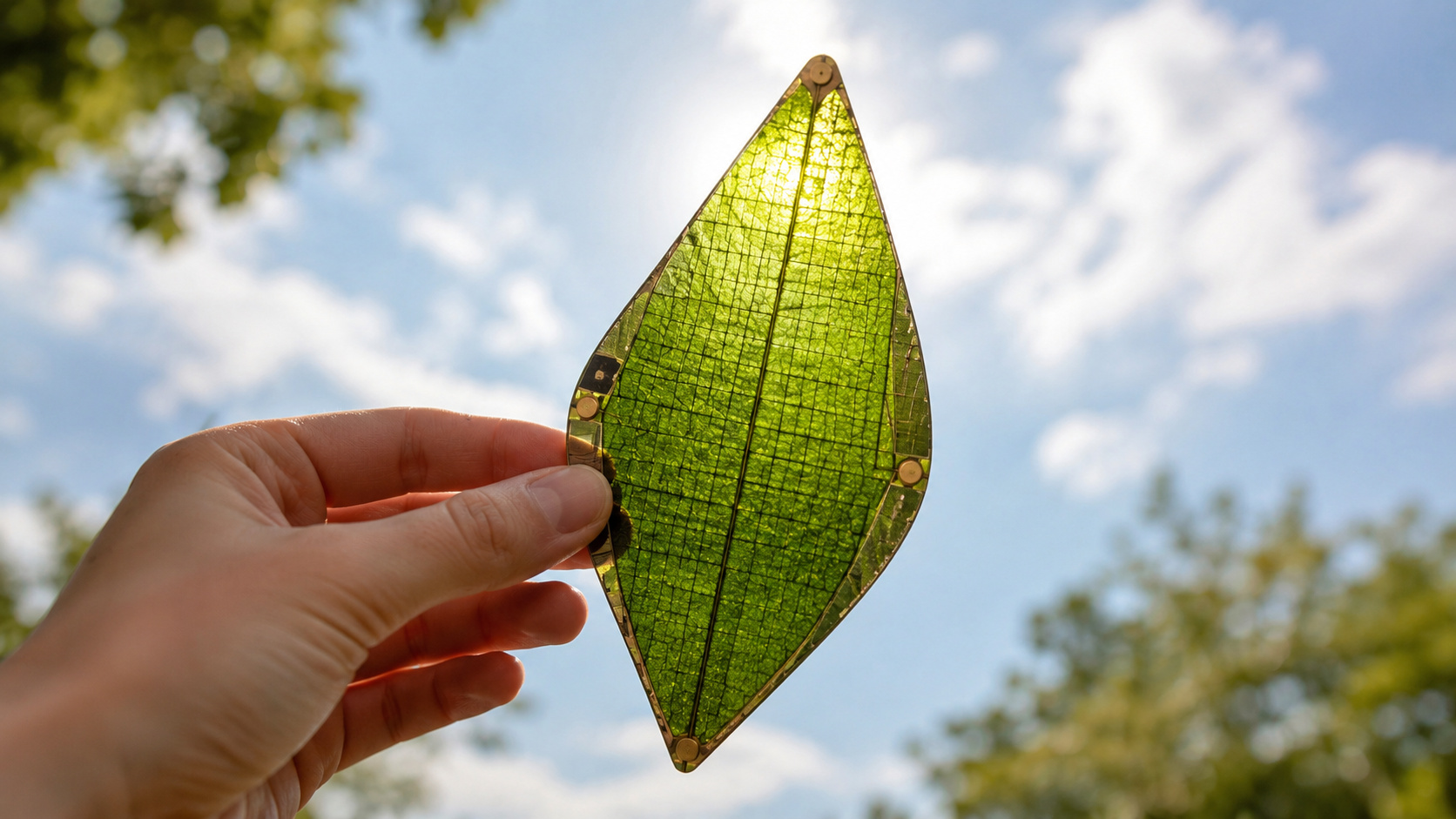


Critical metals under pressure: why scientists are seeking more abundant alternatives
Critical metals play a central role in the modern economy. Elements like lithium, cobalt, and nickel are widely used in batteries, energy systems, and electronic devices. However, their extraction involves environmental challenges, high costs, and geopolitical dependence.
In light of this, scientists are intensifying research to find more abundant and less complex materials to produce. The new aluminum stands out precisely for this characteristic: it is based on an element widely available in nature, with already established production chains.
Furthermore, growing global demand places even more pressure on critical metals. Widely published estimates indicate that the consumption of these materials could grow up to 4 times in the coming decades, driven mainly by the energy transition.
This context makes the search for solutions that balance cost, availability, and performance urgent.
New aluminum and the energy transition: a combination that could accelerate global changes
The advancement of the new aluminum is directly connected to the challenges of the energy transition. To expand the use of renewable energies, it is necessary to reduce costs and ensure access to materials on a large scale.
On this point, scientists highlight that the material can partially replace critical metals in various applications, maintaining adequate technical performance and expanding economic viability.
Among the most relevant impacts of this combination are:
- Reduced production cost of clean technologies
- Greater stability in the prices of industrial components
- Expanded access to modern energy solutions
The use of the new aluminum can also help accelerate projects that currently face financial limitations, making the energy transition more inclusive and viable in different regions of the world.
How the new aluminum can transform the global economy and reduce industrial costs
The introduction of the new aluminum to the market has the potential to profoundly alter the economic logic of global industry. Unlike critical metals, whose supply is limited and concentrated in a few countries, aluminum is widely available.
This means that companies can reduce their dependence on imports and minimize risks associated with price volatility. Scientists involved in the development of this material highlight that the change could generate gains throughout the entire production chain.
Among the main economic effects observed are:
- Immediate reduction in dependence on external suppliers of rare minerals
- Stabilization of prices for high-performance electronic components
- Increased profit margins for manufacturers of energy equipment
These factors make the new aluminum a strategic piece for companies seeking competitiveness in an increasingly demanding global scenario.
Properties of the new aluminum impress scientists and expand industrial applications
One of the points that most draws the attention of scientists is the technical properties of the material. The new aluminum has characteristics that, according to initial studies, can overcome the limitations of traditional alloys.
Among the observed differentials, enhanced mechanical resistance, good thermal conductivity, and greater efficiency in industrial processes stand out. These characteristics broaden the range of applications and reduce the need for critical metals.
In practice, this means that sectors that require lightweight and resistant materials can benefit directly from this innovation.
See some advantages identified during laboratory tests:
- Significant decrease in the weight of metal structures
- Improved heat dissipation in industrial equipment
- Simpler recycling process compared to complex alloys
These advances reinforce the role of the new aluminum as a strategic element within the energy transition and industrial modernization.
Environmental impacts and sustainability in the substitution of critical metals
Another relevant point is sustainability. The extraction of critical metals usually generates significant environmental impacts, including soil degradation and high consumption of natural resources.
Aluminum, on the other hand, has an important advantage: it can be recycled several times without losing its main properties. This makes the new aluminum an alternative more aligned with global environmental goals.
Scientists point out that the partial substitution of these materials can contribute to:
- Reduction of pressure on sensitive mining areas
- Lower emission of pollutants associated with mineral extraction
- Stimulus to the circular economy
At the same time, the advance strengthens the energy transition, since cleaner technologies depend on sustainable production chains.
Practical applications of the new aluminum in modern and technological industry
The versatility of the new aluminum allows its use in different sectors. Scientists are already identifying promising applications that can reduce dependence on critical metals and increase productive efficiency.
Among the main impacted segments are:
Renewable energy
The material can be used in the structures of solar panels and wind turbines, contributing directly to the energy transition.
Electric mobility
Modern vehicles require lightness and efficiency. The new aluminum can reduce weight and improve energy performance.
Electronics industry
Equipment that requires thermal control can benefit from the material’s properties, reducing costs and extending durability.
These applications show how innovation can quickly leave laboratories and reach the market.
Current limitations and challenges for substituting critical metals on a large scale
Despite the potential, the complete substitution of critical metals is not yet immediate. Scientists emphasize that the new aluminum is still undergoing validation and industrial adaptation stages.
Some challenges include:
- Need for commercial-scale testing
- Adjustments to existing production processes
- Limitations in highly specific applications
Even so, the advance already represents an important change in the direction of an industry less dependent on scarce resources.
The trend is for adoption to occur gradually, keeping pace with technological evolution and market demands.
A new industrial scenario begins to take shape with the advancement of scientists
The development of the new aluminum marks a turning point in how the industry faces its challenges. By offering a viable alternative to critical metals, this innovation paves the way for more efficient, sustainable, and accessible production.
The role of scientists in this process is fundamental, as it shows how applied research can generate concrete impacts on the economy and the environment. At the same time, the energy transition gains an important ally, capable of reducing costs and expanding the reach of clean technologies.
The scenario emerging for the coming years is one of gradual but consistent transformation. Companies, governments, and research centers are likely to intensify investments in innovative materials, seeking to reduce risks and increase competitiveness.
In the end, the new aluminum does not just represent a technical evolution. It symbolizes a change in mindset: producing more, with less dependence on limited resources, and with greater environmental responsibility.
What if an abundant and cheap material could replace critical metals and change the course of global industry? The new aluminum created by scientists could be the turning point — but how far can this revolution really go?
With information from Nature Communications.