Portuguese
  Spanish


Breakthrough by Chinese scientists creates low-cost iron battery that could expand clean energy storage and boost renewable energy worldwide
Renewable energy may be at a major turning point with the development of a new iron battery created by Chinese scientists. The breakthrough was led by researchers from the Institute of Metal Research of the Chinese Academy of Sciences (CAS) and reported by the South China Morning Post on April 27.
The highlight is an ultra-cheap battery, based on iron—an abundant and low-cost material—that promises to significantly reduce the price of energy storage. This point is crucial, as storing electricity is still one of the biggest challenges to expanding clean energy worldwide.
Right from the start, the proposal is noteworthy: to offer a solution capable of withstanding thousands of charge and discharge cycles without perceptible loss of capacity, something that could change how renewable energy is used on a large scale.
-
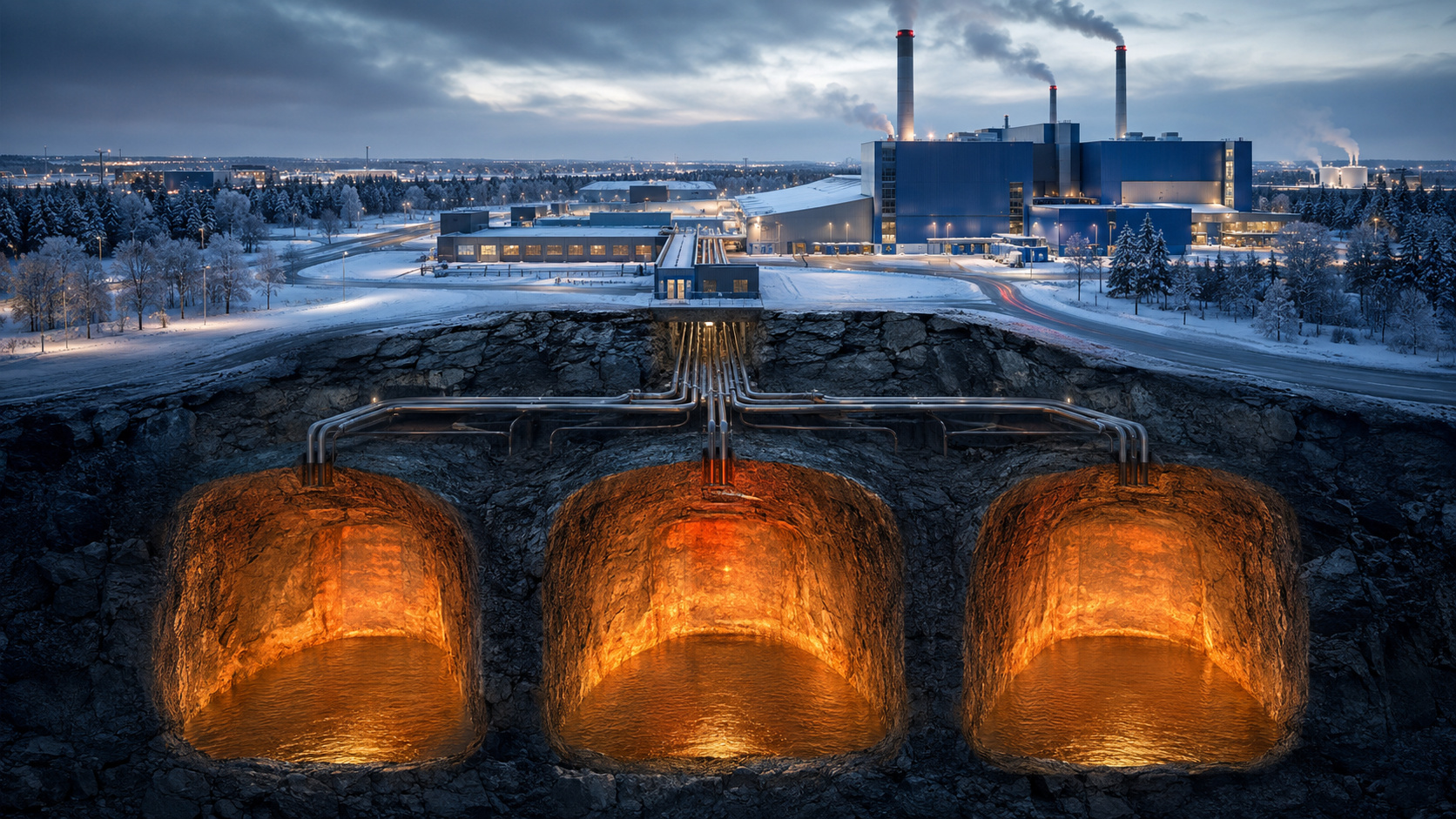
California Project Aims to Store Heat Underground in Former Oil Reservoir to Generate 100 kW of Electricity for Over 12 Hours

-
French Port Harnesses Industrial Waste Heat to Power Up to 30,000 Homes
-
Belgian Port to Install Shore Power for Cruise Ships by 2027, Cutting Dock Emissions by Up to 5% and Meeting EU Regulations
-
Canadian Project Converts Hot Water from Mature Oil Fields into Electricity, Repurposing Existing Wells and Infrastructure




How the ultra-cheap battery developed by Chinese scientists works in practice
The core innovation lies in the electrolyte developed by the Chinese scientists, designed to be highly stable over time. This component is essential to ensure that the iron battery maintains consistent performance even after prolonged use.
According to data released by the CAS-affiliated institute, the technology has achieved unprecedented chemical stability within the flow battery category. This means the ultra-cheap battery not only reduces costs but also increases the system’s reliability.
In practice, its operation allows for storing energy generated from sources like solar and wind and releasing it when needed, ensuring greater balance for grids based on clean energy.
Furthermore, the structure of the iron battery favors stationary applications, where size and weight are not critical factors, but durability and cost are decisive.
Why iron can replace lithium in the advancement of clean energy
One of the most relevant points of this breakthrough is the choice of iron as the basis of the technology. Unlike lithium, which has a concentrated production chain and high cost, iron is widely available in various regions of the planet.
This brings clear advantages for renewable energy, especially in developing countries. The iron battery can reduce dependence on strategic minerals and decrease geopolitical risks associated with their extraction.
Among the main benefits of using iron are:
- Global abundance of the material
- Low extraction and processing cost
- Lower geopolitical impact on the supply chain
- Potential for large-scale production
With this, the ultra-cheap battery emerges as a real alternative to expand access to clean energy, making it more competitive against traditional sources.
Renewable energy faces the challenge of intermittency and finds a new solution
Intermittency is still one of the biggest obstacles for renewable energy. Sources like solar and wind do not produce energy continuously, which requires efficient storage systems.
In this context, the iron battery developed by Chinese scientists appears as a concrete answer. Its ability to operate for thousands of cycles without significant performance loss represents an important breakthrough.
According to the published study, the new system managed to maintain stability even after thousands of complete charge and discharge cycles, which is considered a record within this technological category.
This characteristic significantly reduces the total cost over time, making the ultra-cheap battery a viable option for large-scale applications.
Practical applications of the iron battery in the advancement of global clean energy
The versatility of the iron battery allows its use in different scenarios. As the focus is on stationary storage, the technology can be applied directly to renewable energy projects.
Among the main intended uses, the following stand out:
- Integration with solar power plants and wind farms
- Stabilization of smart grids
- Energy storage in isolated communities
- Industrial and commercial applications
These applications show how the ultra-cheap battery can contribute to expanding clean energy more efficiently and affordably.
The Chinese scientists involved in the project highlight that the technology has the potential to decentralize the energy system, allowing remote regions to store their own energy.
China’s strategic role in the race for renewable energy
China already holds a leading position in the renewable energy sector, with a strong presence in the production of solar panels, wind turbines, and lithium-ion batteries.
Now, with the advancement of the iron battery, Chinese scientists are reinforcing this position by betting on more affordable and sustainable solutions.
The development is also aligned with the carbon neutrality goals set by the country for mid-century. This means that investments in clean energy are expected to continue growing in the coming years.
The ultra-cheap battery fits perfectly into this scenario, offering an alternative with lower cost and less dependence on strategic resources.
Economic and social impacts of the ultra-cheap battery on clean energy
The impact of this innovation goes beyond technology. The iron battery can directly influence the global economy and access to renewable energy.
With reduced costs, generation and storage projects can become more viable, especially in regions with lower investment capacity.
Among the main expected impacts are:
- Reduction in the cost of electricity
- Expansion of energy access in remote areas
- Stimulus for innovation in the energy sector
- Greater stability in electrical systems
The ultra-cheap battery can, therefore, accelerate the transition to a matrix based on clean energy, benefiting both consumers and companies.
What to expect from the evolution of this technology in the coming years
Despite the advances, the technology still needs to go through important stages before reaching a commercial scale. Chinese scientists continue to work on validating its performance under different conditions.
The expectation is that, with new tests and investments, the iron battery will become a competitive alternative to current technologies.
Renewable energy directly depends on solutions like this to grow sustainably and reliably. In this scenario, the ultra-cheap battery can play a central role.
A silent change that could redefine global energy
The combination of low cost, durability, and abundance of materials places the iron battery in a strategic position for the future of renewable energy. Developed by Chinese scientists, this innovation emerges as a direct response to the challenges of energy storage.
By making clean energy more accessible and efficient, the technology can accelerate the global energy transition and reduce dependence on fossil fuels.
If the results observed in the laboratory are confirmed on a commercial scale, the ultra-cheap battery could mark the beginning of a new phase for renewable energy, expanding its reach and consolidating its role as the main source of energy in the coming decades.
And you, do you believe that this iron battery can really transform renewable energy and make clean energy more accessible in daily life?
With information from SCMP.