Portuguese
  Spanish


At the University of Turku, in Finland, a doctoral researcher was inspired by chlorophyll and used porphyrin molecules to create films that change color and store electricity. The promise is smart windows capable of storing solar energy and darkening on their own, but the technology is still in the laboratory.
Nature solved millions of years ago a problem that engineering has pursued for decades, and now science has tried to copy the trick. A doctoral researcher at the University of Turku, in Finland, developed materials inspired by chlorophyll that could, in the future, give rise to smart windows capable of storing solar energy and darkening on their own.
The secret lies in porphyrins, the same molecules that help chlorophyll capture sunlight in plants. From them, researcher Sachin Kochrekar created films that change color and, at the same time, store energy. The result is promising, but still confined to the laboratory: much engineering is needed before it becomes a product.
How chlorophyll inspired porphyrin films
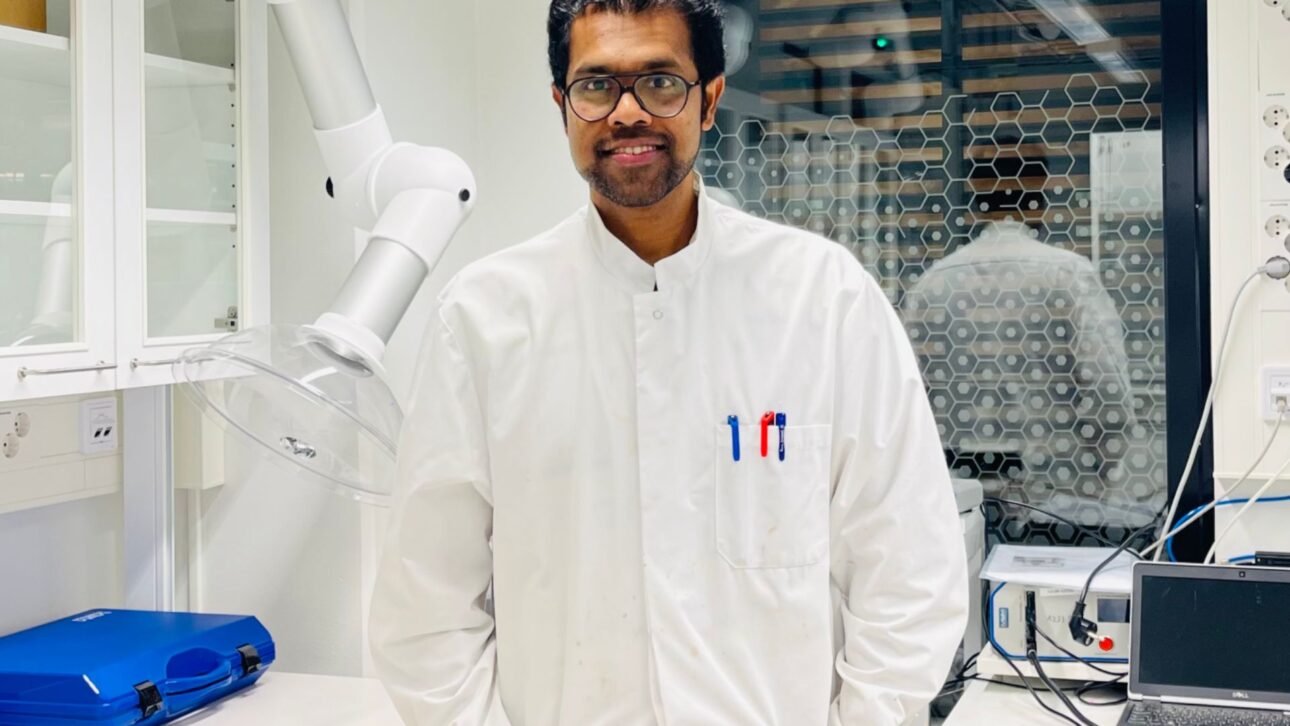
The work focused on porphyrins, natural molecules present in biological systems such as chlorophyll in plants and hemoglobin in blood.
-
The Trap of Modern Technology: How Screen Overload and Digital Connections Can Impact Your Mental Health and Well-being

-
Wyoming Couple Grows Tropical Fruits Year-Round in -40°C Using Geothermal Greenhouse, Demonstrating Earth’s Heat Can Produce Oranges and Lemons in Snow Without Traditional Heating

-
Ship Returns from Brazilian Coast with Thirty Newly Discovered Life Forms
-
Nigerian Professor Invents Electricity-Free Refrigerator Using Clay Pots and Wet Sand, Extending Shelf Life of Vegetables to 27 Days; 7,000 Units Distributed in Energy-Deprived Villages



They are known for transferring electrons and changing chemical states under controlled conditions, precisely what makes them interesting for materials science.
As Kochrekar explains, it is thanks to the porphyrin structure in chlorophyll that the plant can recover energy from sunlight through photosynthesis.
It was this behavior that inspired the polymer films. They combine, in a single material, two roles that are usually separate: the electrochromic behavior, which changes color when it receives electricity, and energy storage, which captures and releases electrical charge.
The research was conducted in the Materials Chemistry group of Professor Carita Kvarnström, at the University of Turku, which has been studying color-changing materials for about a decade.
Films that change color and store energy at the same time
To achieve this, the study used two synthesis routes. In one, the porphyrins were combined with an electrically conductive compound; in the other, they were connected by bridge molecules, forming a polymer membrane without the need for specially modified starting materials.
Both paths generated films with combined electrochromic and storage properties, with performance varying according to the method.
The metal at the center of the molecule also made a difference. The film with nickel alternated reversibly between three colors, black, orange, and green, while the versions with zinc and without metal changed between only two states.
The color changes happened quickly, generally in two seconds, with strong contrast, and the films maintained the coloration even after the electricity was turned off, a memory effect that can reduce energy consumption in real applications.
Solar energy and smart windows: the bet for the future
The materials were evaluated as electrochromic supercapacitors using a water-based electrolyte, considered safer and more environmentally friendly than many conventional alternatives.
The films showed real storage capacity and maintained performance over thousands of charge and discharge cycles.
According to the University of Turku, this is the first study to use these polymeric porphyrin films as electrochromic supercapacitors in an aqueous medium.
The most exciting application is in smart windows. The idea is that such a glass could darken on its own under intense sunlight and, at the same time, store the captured solar energy throughout the day.
In practice, this would reduce the need for air conditioning and the consumption of solar energy and electricity in a building, combining thermal comfort and energy generation in a single surface.
Low cost, but still far from homes
A point in favor is the cost. According to Kochrekar, the materials have low production costs, are easy to control, and quite adaptable, being able to be integrated into flexible and elastic substrates.
Therefore, in addition to smart windows, the technology could extend to sensors, flexible electronics, smart clothing, and other solar energy solutions, not to mention uses like anti-reflective mirrors and vehicle solar roofs.
Even so, caution is advised. The research is still in the material development phase, and much engineering work will be necessary before it reaches commercial buildings or consumer products.
In other words, the smart windows that mimic chlorophyll to store solar energy are, for now, a promising proof of concept from the University of Turku, and not something you will install in your home tomorrow.
A window that mimics chlorophyll to darken itself and still store solar energy seems like the kind of idea capable of changing the way we build our homes.
Tell us in the comments if you would install such smart windows and how much you think it would be worth paying for them.